DuraFlex Chimney Sweep in Glendale: A Homeowner’s Guide
DuraFlex is a flexible stainless steel chimney liner system built for flues that don’t run straight, and that’s exactly what makes it the right choice for most Glendale homes built before 1960. If your chimney has offset clay tiles, a deteriorating mortar joint, or a flue path that snakes around framing, DuraFlex gets the job done where a rigid liner can’t even make the turn. Here’s what you need to know before you spend a dollar on any liner system. If you’d rather skip the research and just talk to someone who’s installed hundreds of these in Glendale, call (833) 467-6493.
Why DuraFlex Matters for Glendale’s Older Homes
Glendale’s housing stock skews older. Drive through Rossmoyne, El Miradero, or the streets around Glendale Avenue and you’ll see craftsman bungalows from the 1910s, Spanish revival homes from the 1920s and 1930s, and a fair number of mid-century ranch houses. What these homes share is masonry chimney construction that predates modern code standards. The flues were built with clay tile liners, often in sections that shifted over decades of Southern California seismic activity.
Here’s the problem: a rigid stainless steel liner needs a reasonably straight path from the firebox to the chimney crown. In our experience inspecting older Glendale chimneys, roughly three out of ten have flue paths with too many offsets for a rigid liner to navigate without cutting into masonry. That’s not a guess, it’s what we see when we run a camera up a flue on a 1920s Spanish revival in the Adams Hill neighborhood. The clay tiles have shifted. The path drifts. A rigid liner hits a wall.
DuraFlex solves this because it’s corrugated. The stainless steel flexes through bends and around offsets that would stop a rigid liner cold. It’s not a compromise material. It’s the correct engineering answer for a chimney that was never built to modern dimensions. You can learn more about how this fits into a full chimney inspection on our Chimney Sweep in Glendale page.
The Alloy Question: 316Ti vs. 304 Stainless
DuraFlex offers two alloy grades. The standard 304 stainless is perfectly serviceable for most gas appliances and wood-burning fireplaces in Glendale’s dry climate. But if you’re burning wood regularly or your flue carries exhaust from an oil-fired appliance, 316Ti is the better spec. The titanium addition improves resistance to chloride corrosion, which matters more than people think when it comes to creosote buildup and the acidic condensate that can form in flue systems.
We generally recommend 316Ti for Glendale homeowners who burn wood more than a few times a year. The cost difference is modest, and the alloy distinction is exactly the kind of thing a homeowner should know before someone hands them a quote. If you’re being quoted a liner without an alloy grade on the line item, ask why.
How DuraFlex Installation Actually Works
There’s a right way and a wrong way to size a liner. The most common installer mistake we see in Glendale, and it’s not a small one, is sizing the liner to the flue dimensions instead of the appliance’s BTU output. That’s backwards. The liner diameter is determined by what’s venting through it: the fireplace opening size, the gas insert’s BTU rating, the furnace draft requirements. A liner that’s too large creates poor draft and excessive creosote buildup. A liner that’s too small restricts exhaust flow and creates a carbon monoxide risk.
Here’s the installation sequence we follow, and the one you should expect from any contractor quoting the job:
- Sizing calculation: Based on appliance BTU output and venting requirements, not the existing flue’s cross-section.
- Flue prep: The existing clay tiles get cleaned of creosote and debris before the liner goes in. You can’t just drop a liner into a dirty flue.
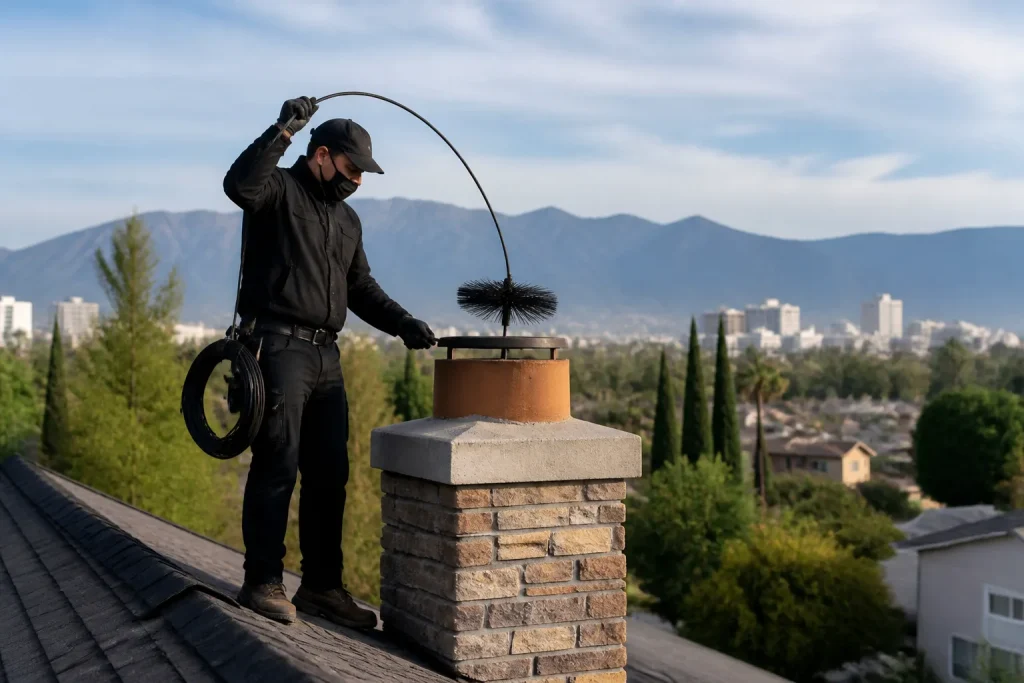
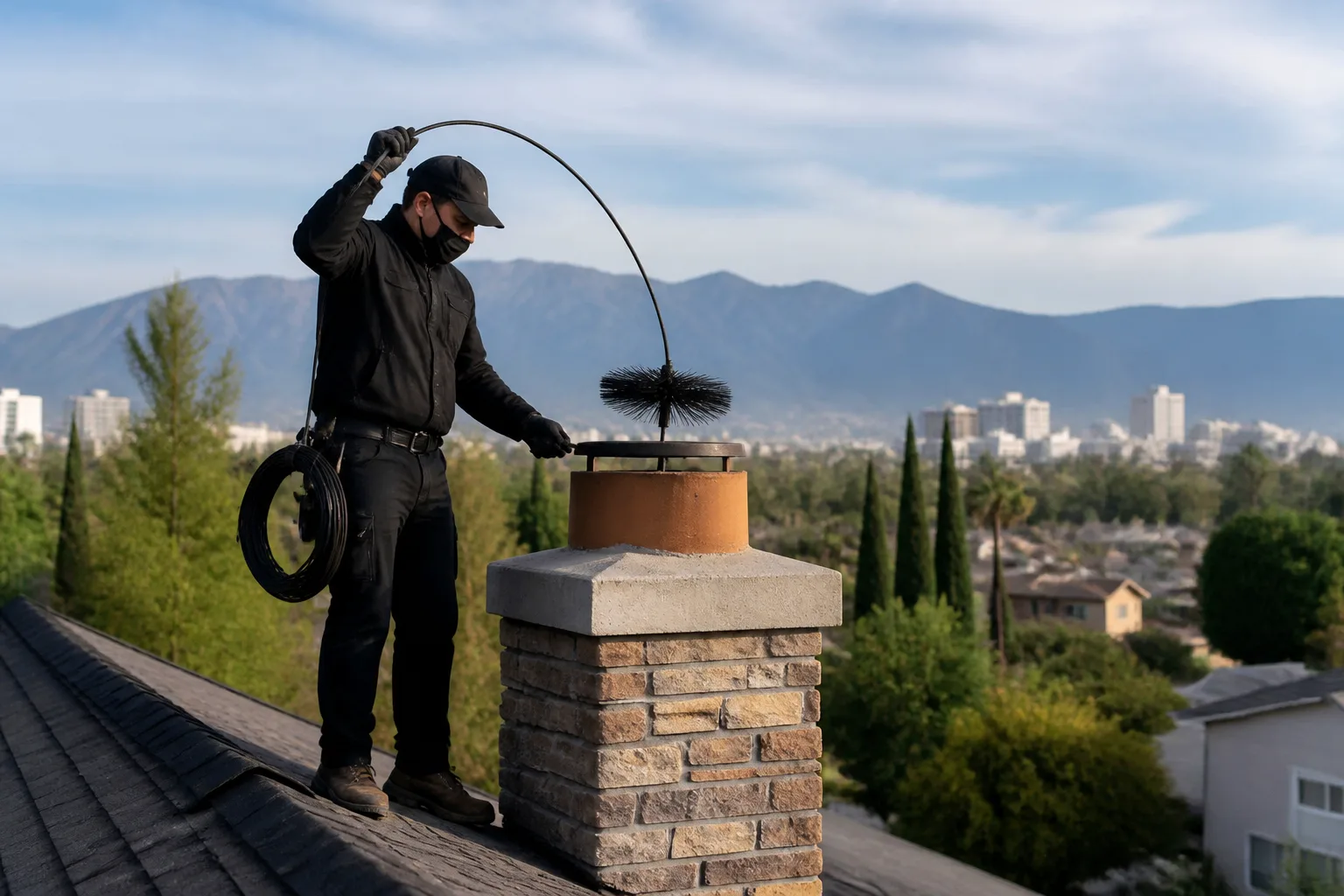
- Liner drop: DuraFlex’s corrugated construction lets us navigate the offsets that define Glendale’s older chimneys. The liner gets pulled through from the top, section by section.
- Insulation decision: Whether to use an insulation wrap depends on clearance-to-combustibles measurements. In older Glendale homes, we frequently find exterior wall chimneys with minimal clearance, which means insulation is often the right call.
- Top plate and cap: A proper installation terminates with a sealed top plate and rain cap, not just a liner sticking out of the crown.
The whole process typically takes one day for a standard single-story home. Two-story Spanish revivals with complicated rooflines sometimes need a second day. This is also where Chimney Repair in Glendale expertise matters, because a liner installation that reveals cracked masonry or a deteriorating crown means the repair work should be done at the same time, not as a separate visit.
How DuraFlex Handles California’s Seismic Reality
California building code treats chimneys as a structural element subject to earthquake loading. That’s not theoretical in Glendale. The 1971 Sylmar and 1994 Northridge earthquakes both did damage to masonry chimneys across the city. Cast-in-place liner systems, which pour a cementitious material around an inflatable form, have a real vulnerability in this environment: they’re brittle. They crack under lateral movement. Then you’ve spent thousands on a liner that’s compromised.
Rigid liners handle seismic movement better, but they fail on the installation path in older homes. DuraFlex’s corrugated stainless construction gives you both: it flexes through the offset flue path during installation, and it retains enough flexibility to absorb the small structural movements that occur during earthquakes and the settling that happens in all older homes.
This matters because Glendale sits in a seismically active zone, and any liner system that can’t tolerate movement is a liner you’ll be replacing sooner than you should. The brands we work with, including DuraFlex, Olympia Chimney, and Copperfield, all manufacture systems designed for exactly this kind of environment. We name those brands in our quotes because you have a right to know what materials are going into your home.
What a Completed DuraFlex Job Should Include
When the job is done, you should walk away with more than a receipt. Here’s what a professional DuraFlex installation includes at handoff:
- Documented sizing: The BTU calculation that determined the liner diameter. If your installer can’t show you this math, that’s a red flag.
- Top plate specifications: The manufacturer brand and model of the top plate and cap assembly, not a generic “termination kit.”
- Insulation decision record: Whether insulation was used and why, based on clearance measurements.
- Before and after photos: Camera inspection images showing the flue condition before the liner went in and the completed installation.
- Warranty information: The specific manufacturer warranty for the liner system. DuraFlex offers a limited lifetime warranty when installed correctly.
One thing we see too often in Glendale is a liner installed without any camera documentation. The homeowner has no way to verify the work was done properly without hiring someone else to inspect it. You shouldn’t have to do that. Ask for the camera footage. A real professional will show it to you without being asked.
DuraFlex vs. HeatShield: When You Don’t Need a Full Liner
Not every deteriorating flue in Glendale needs a full DuraFlex liner installation. If the clay tiles are cracked or spalled but the overall flue structure is sound, HeatShield resurfacing can be a smarter move. HeatShield is a cerfractory sealant system that gets applied to the inside of the existing flue, restoring a smooth, insulated surface without tearing anything out. It’s faster and costs less than a full relining.
The decision comes down to what our camera inspection shows. If the flue has minor cracking and spalling, HeatShield is often the answer. If the flue path has structural offsets, significant deterioration, or the appliance requires a specific UL listing, DuraFlex is usually the right call. A good chimney contractor in Glendale will present both options honestly. We’ve recommended HeatShield when it’s appropriate and DuraFlex when it’s necessary, and we’ll walk you through the specific reasoning for your chimney.
If you’re dealing with a dryer vent in addition to a fireplace, the same principle applies: diagnose before prescribing. Our Dryer Vent Cleaning in Glendale service starts with a visual inspection, not a pitch.
When to Call a Pro
Liner installation is not a DIY project. The materials are heavy, the work happens on a roof, and the sizing calculations have real safety implications. An undersized liner can send carbon monoxide back into your living space. An improperly terminated liner can leak exhaust into the attic. This is one of those jobs where the cost of doing it wrong isn’t measured in dollars, it’s measured in what you can’t see building up inside your chimney.
If you’ve been told you need a liner, or you’ve noticed crumbling clay tile pieces in your firebox, or you’re buying a home in Glendale with an older masonry chimney, get a camera inspection. It’s the only way to know what you’re actually dealing with. And if you need a second opinion on a quote another company gave you, we’re happy to look at it. The Glendale Chimney Sweep home page has more on how we work.
The Bottom Line
DuraFlex is the liner system that makes sense for Glendale’s older housing stock. Its corrugated 316Ti construction handles the offset flue paths common in pre-war craftsman and Spanish revival homes, and it holds up to the seismic reality of Southern California. The key is proper sizing to BTU output and a professional installation with full documentation. If you’re in Glendale and you want a straight answer about whether your chimney needs a liner, what type, and what it’ll cost, call us at (833) 467-6493. Estimates are free, and we’ll show you the camera footage either way.
Frequently Asked Questions
Most DuraFlex installations in Glendale run between $3,500 and $9,000 depending on the flue height, the liner diameter required by your appliance’s BTU rating, whether insulation is needed, and the roof complexity. Two-story homes with difficult access cost more than single-story ranches. A quality install includes sizing documentation, before and after camera footage, and the manufacturer warranty. Call (833) 467-6493 for a specific quote on your chimney.
For chimneys with offset flue paths, a corrugated liner like DuraFlex is not just as good as rigid, it’s the only option that installs correctly without cutting into masonry. Corrugated liners do have slightly more internal surface area, which can mean marginally more creosote accumulation in wood-burning applications, but a properly sized liner swept annually handles that without issue.
DuraFlex carries a limited lifetime warranty for the original homeowner when installed to manufacturer specifications. The real-world lifespan depends on what you burn, how often you use the fireplace, and whether the liner was sized correctly. Wood burning produces more corrosive creosote than gas, which is why we recommend 316Ti alloy for wood-burning applications.
If your Glendale home was built before 1960 and the chimney has never been relined, the clay tile liner is past its expected service life. Clay tiles crack and separate over time, especially after decades of seismic activity. The only way to know is a camera inspection. If the tiles are in good shape, you don’t need a liner. If they’re cracked, spalled, or shifted, you do. That’s the conversation we have with Glendale homeowners every week, and we’ll show you exactly what we’re seeing.
Written by the team at Glendale Chimney Sweep, serving Glendale since 2011.
Need Chimney Cleaning Help?
Call Glendale Chimney Sweep — licensed & insured, here with fast after-hours help in Glendale.
(833) 467-6493