 Sweep & inspection
 Caps & crowns
 Flue relining
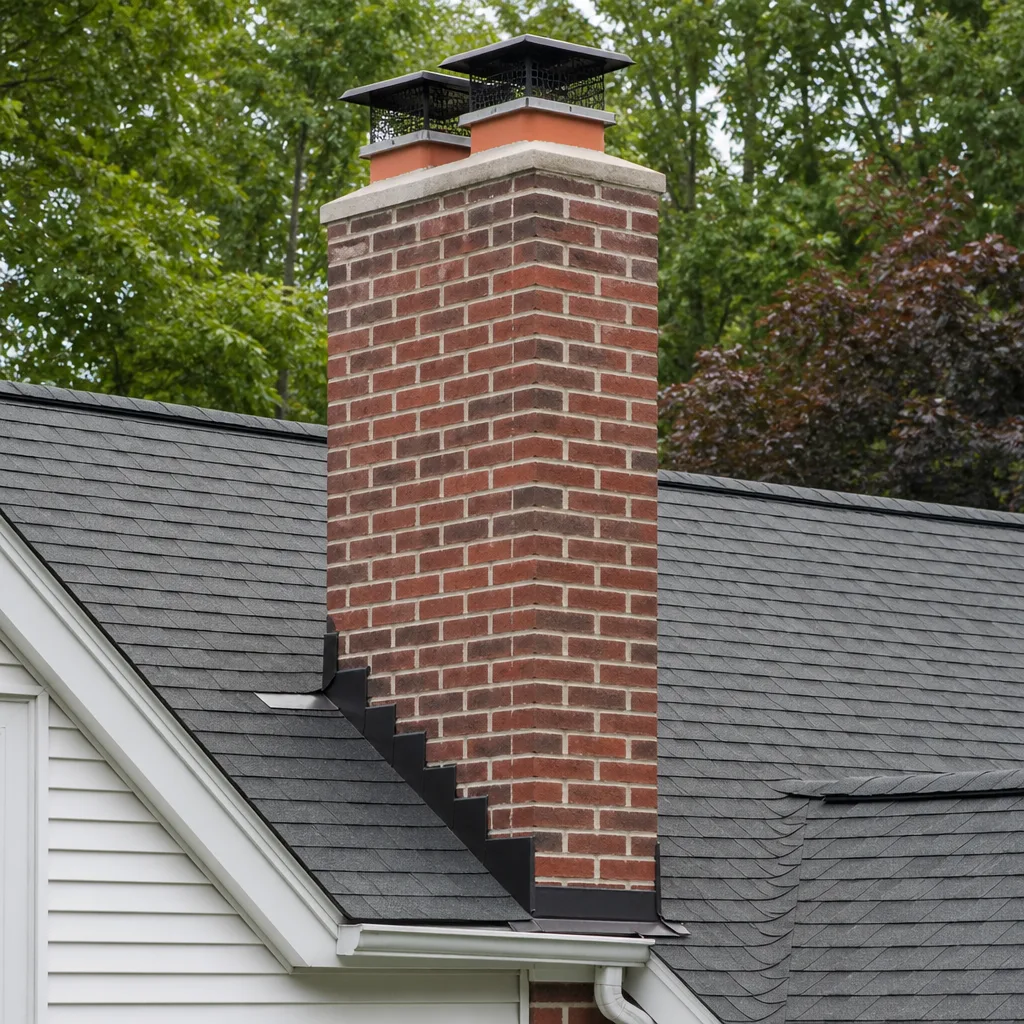 Masonry repair
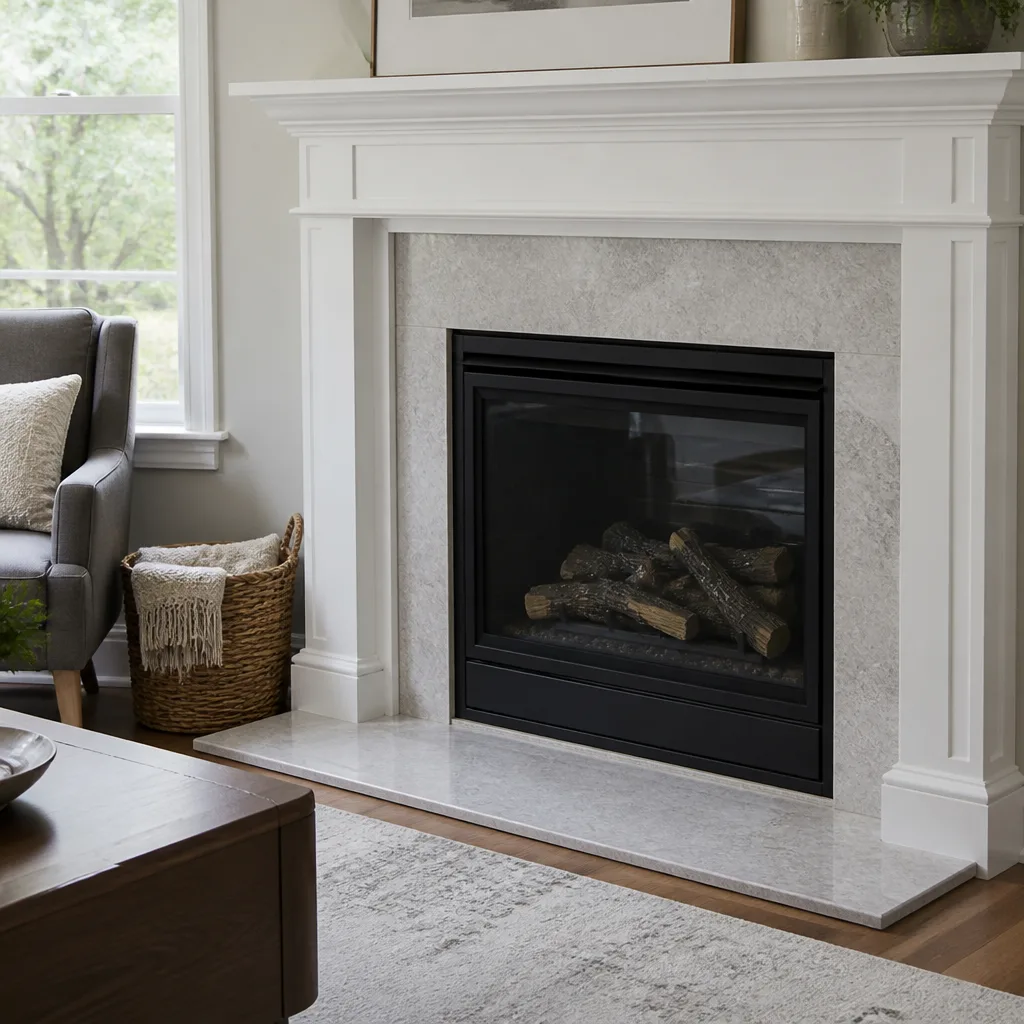 Gas fireplace service
Level 1 sweep and inspection to the NFPA 211 annual standard - flue, crown, cap, and flashing checked and photographed
Chimney sweep logs do not sweep chimneys. They loosen some creosote - which then falls where a brush and vacuum still have to collect it.
Why Glendale Homeowners Choose HeatShield Chimney Cleaning
We provide independent HeatShield service in Glendale, California, with specific field experience diagnosing and repairing the Armorflex and Resurfacing Compound systems this brand is built on. Our team works on HeatShield-lined flues throughout Glendale’s older hillside neighborhoods, where pre-war masonry and earthquake retrofits create conditions that test any relining product. We are not a manufacturer-authorized service provider, and we say that plainly: our HeatShield expertise comes from years of hands-on work with these materials in real Glendale chimneys, not from a corporate training manual. Call (833) 467-6493 for a HeatShield-specific inspection or cleaning quote.
HeatShield is a recognized name in cast-in-place ceramic flue resurfacing, and Glendale’s housing stock makes it a logical fit. The city’s 1920s – 1950s Spanish Colonial Revival and Tudor Revival homes in Rossmoor, Adams Hill, and the northwest hillsides carry original brick and rubble-stone chimneys with clay-tile flues that have endured decades of settlement, post-Northridge strap-and-brace retrofits, and Santa Ana-driven weather cycles. When those clay tiles spall or crack, HeatShield’s Armorflex system is one credible way to restore the flue without tearing out the entire chimney. We service those systems, clean them correctly, and when they fail, we explain exactly why and what the honest fix looks like.
Key takeaways:
- Independent HeatShield service provider in Glendale – no manufacturer affiliation, no empty promises.
- We diagnose Armorflex delamination, Resurfacing Compound flaking, and smoke chamber coating cracks on a regular basis.
- Same-day cleaning visits often reveal the condition of older HeatShield work – we document everything on camera.
- We stock genuine HeatShield compound and Armorflex components for repairs that matter.
- Free estimates: call (833) 467-6493.
Why Trust Glendale Chimney Sweep for Your HeatShield Chimney Cleaning?
HeatShield work is not difficult to clean, but it is easy to damage if you do not understand what you are looking at. A high-pressure rotary sweep head run too aggressively against a thin Armorflex cast can gouge the ceramic surface. A chemical creosote treatment left to sit too long on damaged Resurfacing Compound can accelerate flaking. We train our technicians to identify HeatShield and Armorflex materials before any tool touches the flue, then adjust the cleaning approach accordingly. That is the difference between maintaining a liner and shortening its life by a decade.
Noel Tarkanian, owner of Glendale Chimney Sweep, grew up in the Montrose neighborhood of Glendale, where his family’s 1950s craftsman had a fireplace that needed attention every winter. He spent well over a decade cleaning and inspecting chimneys throughout Glendale before building this company around the diagnostic side of the work: finding the crack, the delamination, the failed cast, and explaining it in plain terms. That background matters when a technician shows up to service a HeatShield liner. The job is not just sweeping. It is reading the condition of the resurfacing and telling the homeowner whether the next step is maintenance, repair, or full replacement. We use genuine HeatShield compound and Armorflex components for any resurfacing repair because the ceramic chemistry is what makes the product work, and cutting that corner makes the warranty meaningless.
Styles & brands we work with
Common HeatShield Chimney Cleaning Problems We Fix in Glendale
After years of servicing these systems across Glendale, we see the same failure patterns repeat. Here are the five most common, with the causes and what we do about them.
- Armorflex delamination from the original flue tile. This is the most serious HeatShield failure we encounter, and it usually traces back to a cast that was applied too thinly or over a substrate that was not properly cleaned before installation. The ceramic layer separates from the clay tile behind it, creating gaps where moisture and creosote accumulate. On a 1920s Spanish-revival bungalow near Brand Boulevard, we found an Armorflex liner that had begun separating years after installation. We documented the delamination on camera during a Level 2 inspection, then walked the owner through whether a new cast was justified or a full reline made more financial sense for their heavily used fireplace.
- Resurfacing Compound blistering and flaking. When HeatShield’s Resurfacing Compound is applied over damp or creosote-fouled flue walls, it cannot bond properly. The surface blisters within the first few seasons, then flakes away in patches. This is a materials failure, not just wear and tear. We remove the loose material, evaluate the condition of the flue beneath, and tell you honestly whether reapplication will hold or whether the underlying problem is too advanced.
- Cracked smoke chamber refractory coating. Glendale’s older bungalow chimneys often have mortar joints that shifted decades ago. When HeatShield’s Smoke Chamber Refractory Coating is applied over those joints, the coating looks smooth for a year or two, then cracks form exactly where the mortar moved. The fix depends on the depth and pattern of the cracking. Surface-level cracks can sometimes be addressed with proper surface preparation and recasting. Structural movement beneath the coating means the coating will keep failing until the movement is addressed.
- Gaps at the top and bottom transitions of Armorflex liners. A poorly seated Armorflex liner leaves gaps where the cast ends meet the chimney crown or the firebox damper area. Those gaps allow moisture and debris to migrate behind the new lining, which quietly undermines the entire installation. During a cleaning, we check these transition points specifically. Customers rarely know to look there.
- Glazed creosote buildup on HeatShield surfaces. HeatShield products create a smoother flue surface than rough clay tile, but that does not mean you can skip cleanings. Glazed creosote still forms under the same conditions: low-temperature wood burning, restricted air supply, and infrequent use followed by heavy use during Glendale’s short winter burning season. Removing glazed creosote from a ceramic liner requires more care than standard sweeping, because aggressive mechanical removal can score the surface.
HeatShield Parts & Our Repair-vs-Replace Approach
We use genuine HeatShield compound and Armorflex components for any resurfacing work. The ceramic chemistry is the product. Off-brand resurfacing material does not bond the same way, does not cure the same way, and does not carry the same warranty weight. That said, we do not pay the brand premium on parts where it does not improve performance. Chimney caps, dampers, and standard mortar come from quality aftermarket suppliers we have vetted over years of installation work. If a part is structural and safety-critical, we use the real thing. If a part is commodity hardware, we buy the best version of it and pass the honest pricing on to you.
The repair-vs-replace decision starts with a camera inspection. If we find a HeatShield liner with minor surface flaking and the underlying clay tile is intact, resurfacing compound repair is a reasonable option. If the flue has structural movement, a collapsed tile, or an Armorflex liner that has separated so thoroughly that the passage is compromised, we tell the owner directly: another coating will not fix this. A full reline, often with a DuraFlex flexible liner, is the better money. We will not sell a HeatShield repair that we know will fail again in two years. Call (833) 467-6493 and we will show you the camera footage before we recommend anything.
Our HeatShield Service Process – Step by Step
- 1
Visual assessment of the HeatShield surface. Before any cleaning begins, we inspect the ceramic surface for flaking, blistering, discoloration, or separation from the substrate. We photograph what we find. If the liner shows signs of active failure, we say so before we touch it with a brush.
- 2
HeatShield-safe creosote removal. We select the cleaning method based on the liner’s condition. Light soot gets a manual brush pass. Moderate creosote gets rotary cleaning with speed and pressure adjusted for the ceramic surface. Glazed creosote often needs a staged approach so we do not gouge the liner chasing it all off in one pass.
- 3
Level 2 camera inspection. After cleaning, we run a camera through the full flue. This is where we check the cast thickness, look for delamination, examine the transition gaps, and evaluate the smoke chamber coating. Every homeowner gets a copy of the footage with our findings on it. That documentation is the only honest way to discuss what needs repair and what can wait.
- 4
Repair quote with the camera record attached. If repair is needed, we quote it based on what the camera showed, not what we think might be down there. You see what we see. If no repair is needed, we say so and show you the evidence.
- 5
Post-repair verification. If repair is performed, we recast, recoat, or reseat as needed, then verify the result with a follow-up camera pass. The work is not done until we can show you the repaired surface on camera.
See the difference
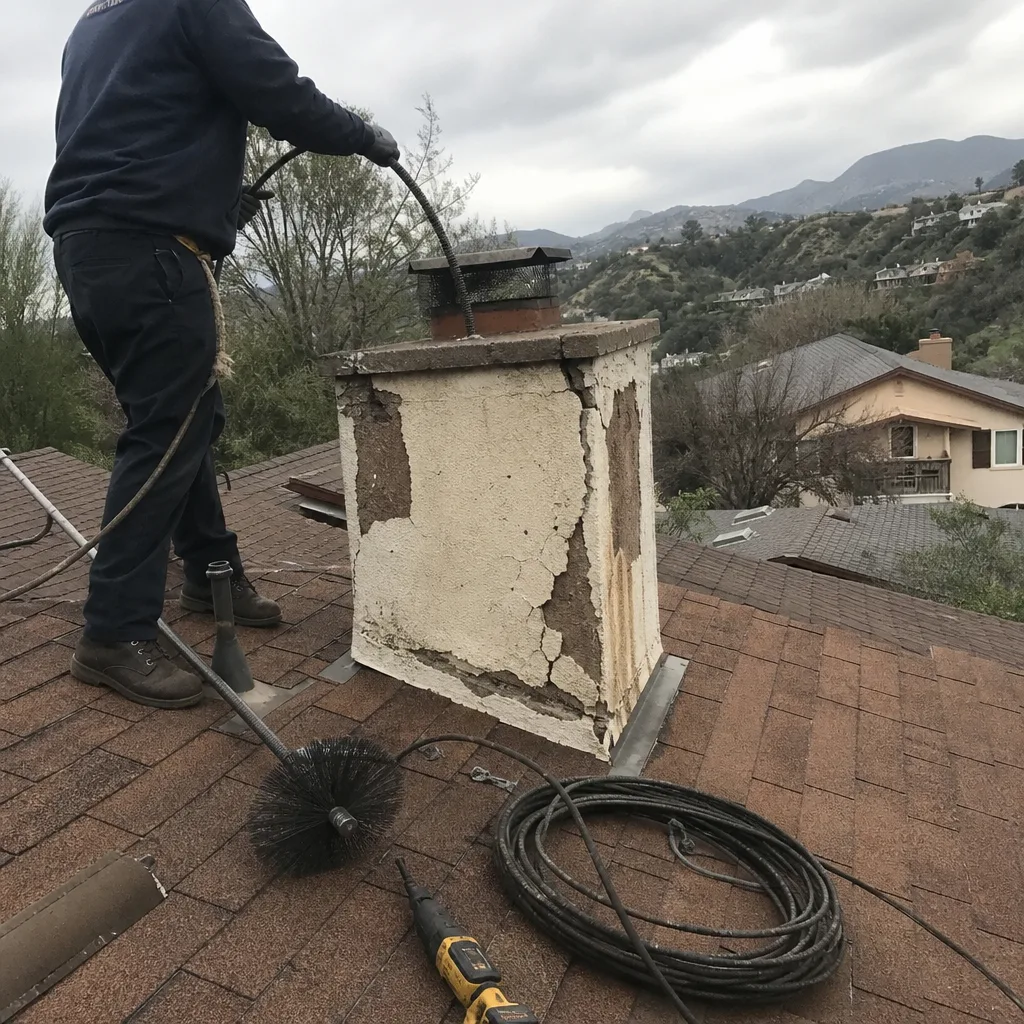 Before
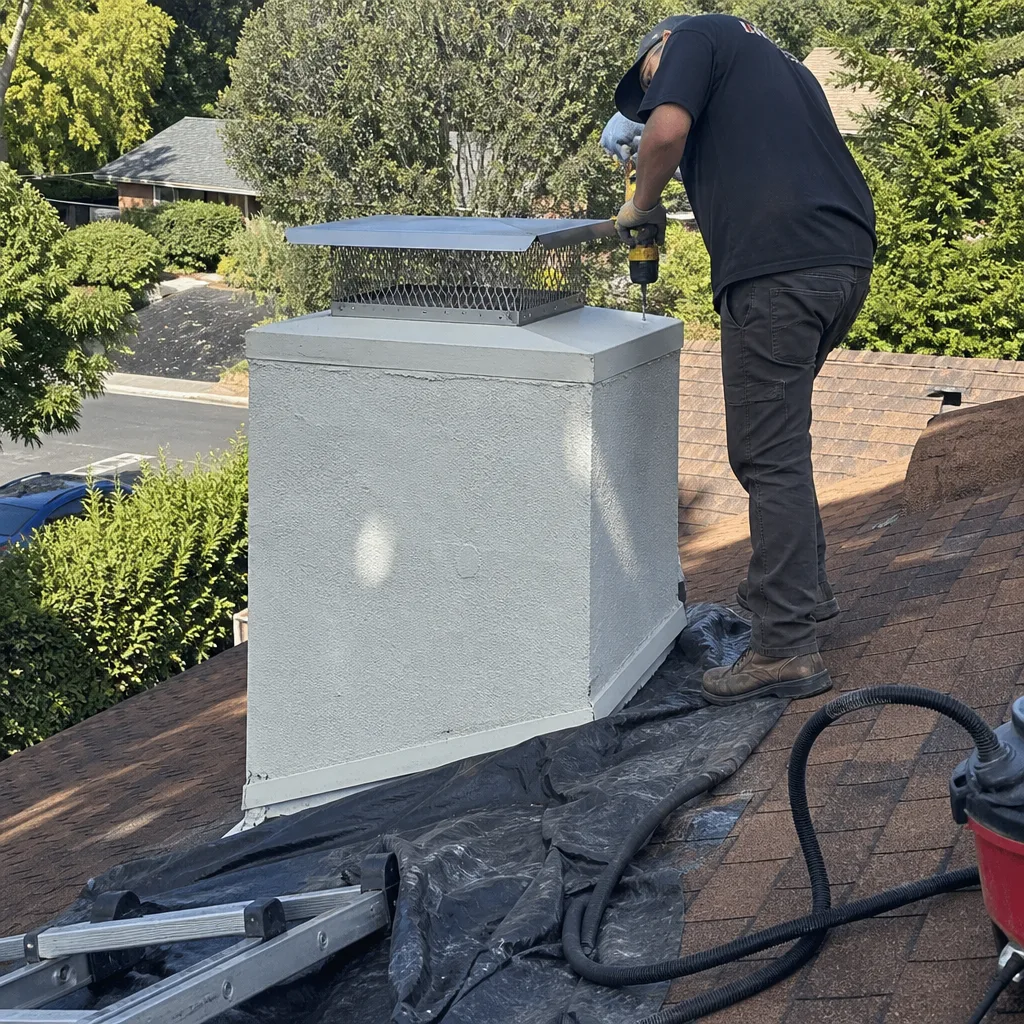 After
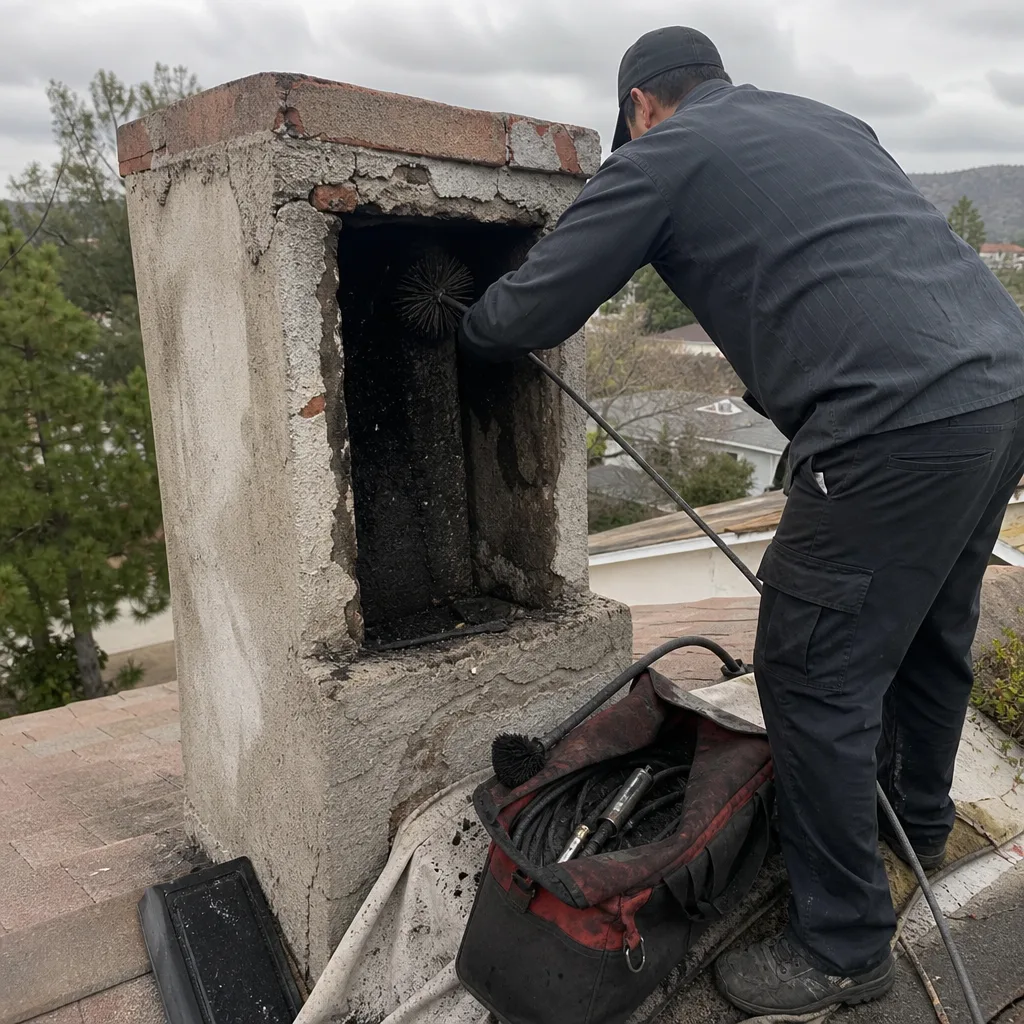 Before
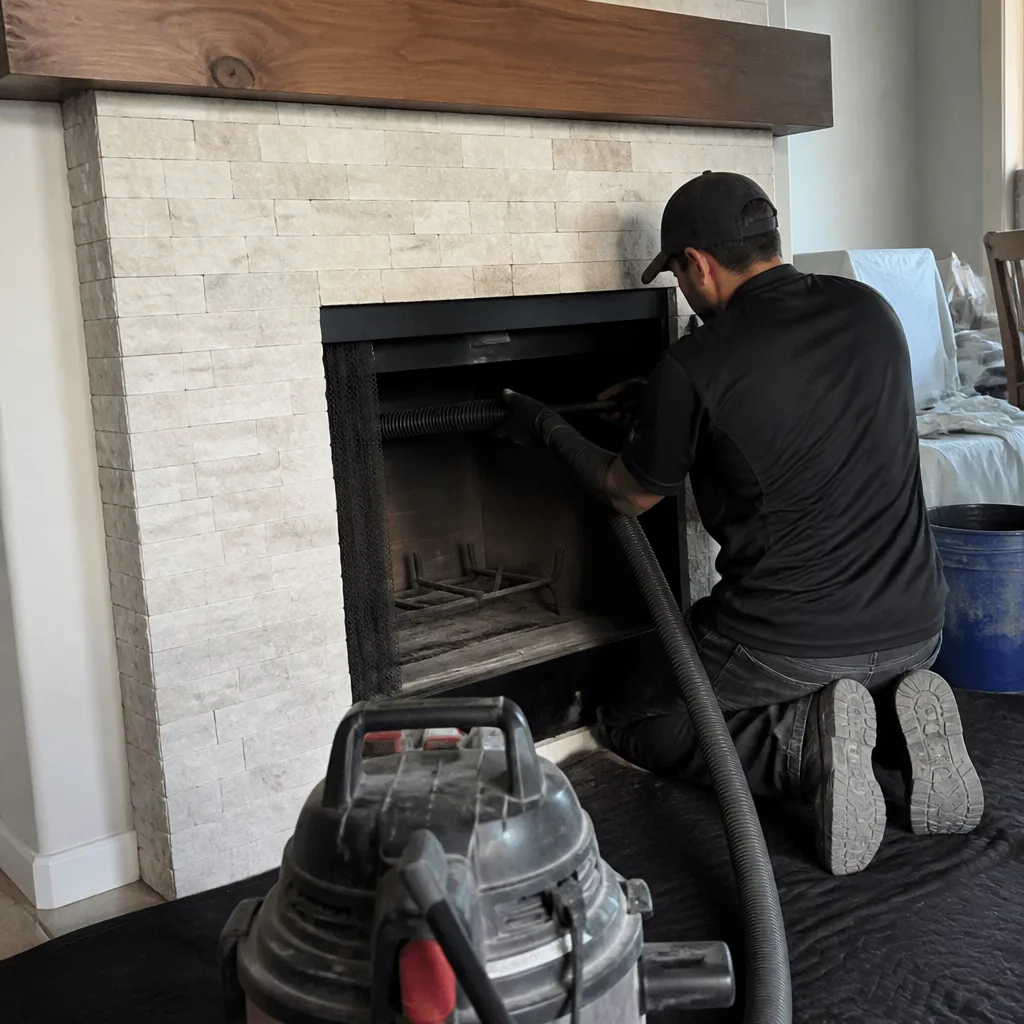 After
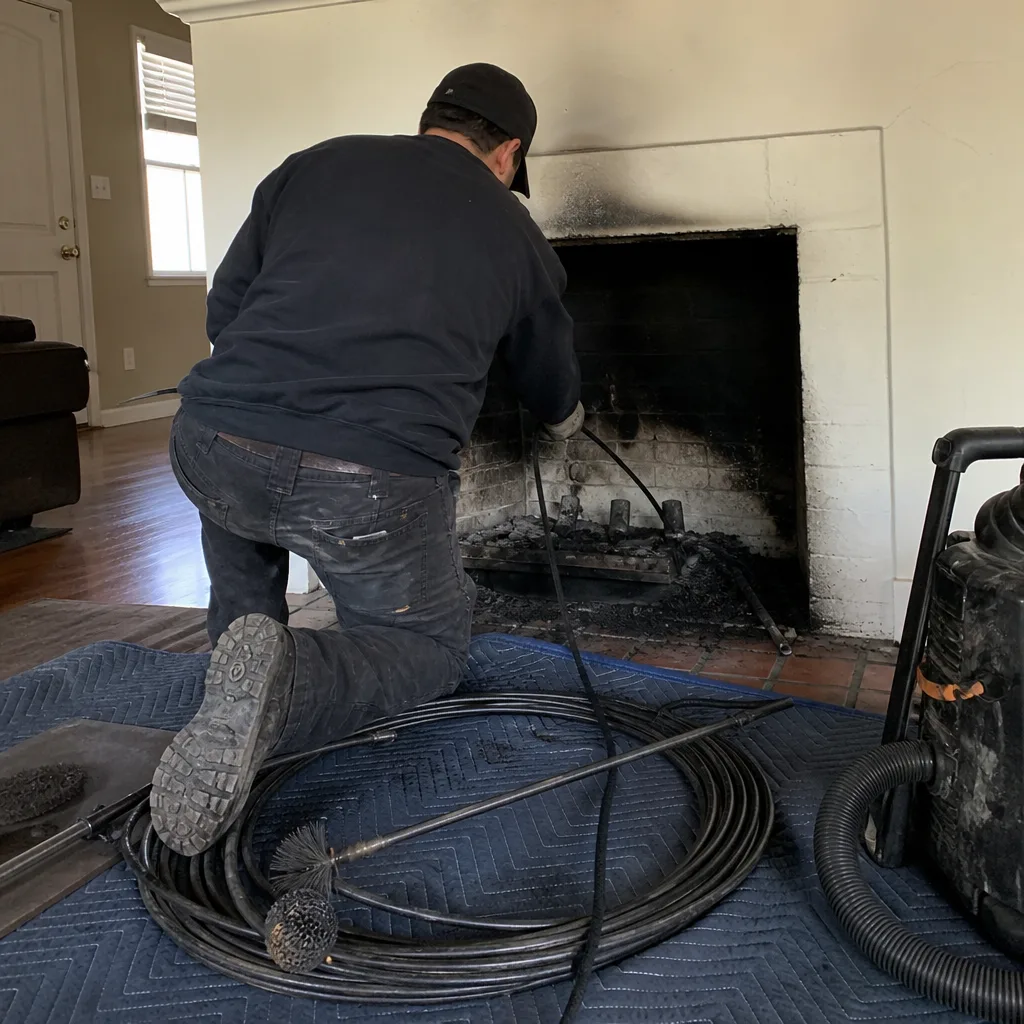 Before
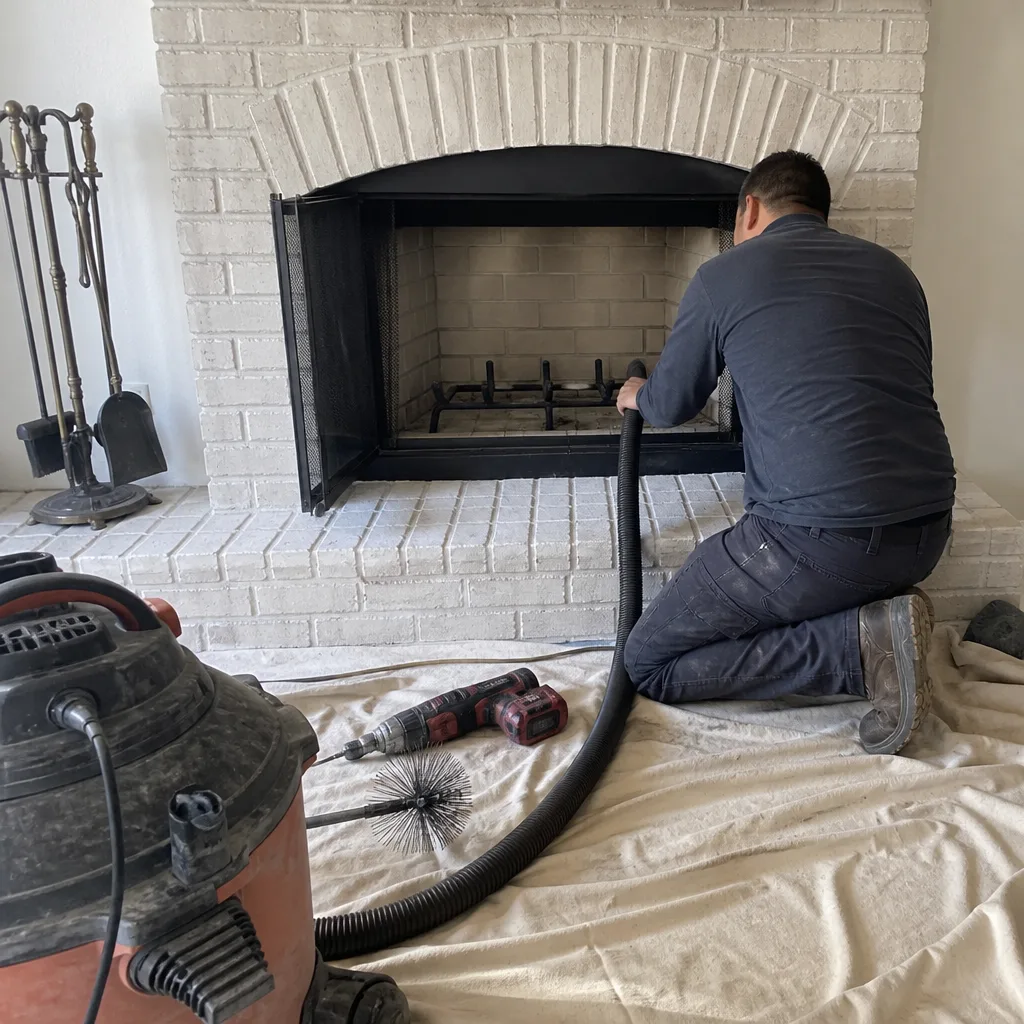 After
HeatShield Products We Service & Install in Glendale
We service and install the full HeatShield product line that matters for Glendale homes: the Armorflex cast-in-place ceramic relining system, the Resurfacing Compound for flue tile repair, and the Smoke Chamber Refractory Coating. We keep genuine HeatShield Resurfacing Compound in our local service vehicle inventory, which means many repair jobs do not require a second trip. Armorflex components are ordered per job because the cast is mixed on site. If your Glendale home has an existing HeatShield system we did not install, we are still the right call for inspection, cleaning, and repair work on it. Most of the HeatShield service we do in Glendale is on systems installed by other companies years ago.
We Also Service These Brands
HeatShield is one piece of a broader toolkit, not our only reference point. We also install and service DuraFlex flexible stainless steel liners for offset and retrofit flue configurations, and we work with Gelco chimney products where the application calls for them. If you need Burbank HeatShield service, we handle that too. If your Glendale house has multiple fuel-burning systems, we can evaluate whether the right answer is a HeatShield repair, a DuraFlex reline, or something else entirely.
FAQs – HeatShield Chimney Cleaning Service in Glendale
Is HeatShield Armorflex a good choice for my old Glendale home’s cracked flue tiles?
In many cases, yes. Armorflex works well when the original clay tile is cracked or spalled but the surrounding masonry is still structurally sound. The cast bonds to the existing flue surface and creates a new ceramic lining without demolition. The catch is preparation: the substrate must be clean, dry, and free of creosote for the bond to hold. On Glendale’s older hillside chimneys, where decades of settling have shifted masonry, we inspect carefully before recommending Armorflex. If movement is ongoing, even a quality cast will crack. Call (833) 467-6493 and we will give you our honest read on whether your chimney is a good candidate.
Why is my HeatShield resurfacing compound flaking off?
Flaking resurfacing compound almost always means the original application was done over a wet or creosote-fouled surface. The compound needs a clean, dry substrate to bond properly. If it was applied over damp masonry or a flue that had not been thoroughly swept, the bond fails and the surface blisters and flakes within a few seasons. We also see flaking on older installations where the underlying clay tile has shifted, stressing the coating from behind. The only way to know which one you have is a camera inspection.
Can you clean a chimney that already has a HeatShield liner without damaging it?
Yes, if the technician knows what they are working with. HeatShield ceramic surfaces are smoother than clay tile, but they will still scratch or gouge under aggressive rotary cleaning, especially if the cast is thin. We identify the liner type before the brush goes in, then adjust speed and pressure accordingly. Glazed creosote on a HeatShield surface takes patience. We would rather take two passes than one aggressive one that damages the liner.
Do you service HeatShield flues alongside DuraFlex or Gelco liners in the same house?
We do. It is not uncommon in Glendale for a home to have a HeatShield resurfaced fireplace flue on one level and a DuraFlex liner on a furnace or water heater flue, or a Gelco component in the mix. We also provide HeatShield service in Echo Park for homes with mixed venting systems. We service the whole venting system regardless of which brand is in place. No single-brand dependency can get in the way of us doing the job right.
What does a HeatShield resurfacing failure look like inside the firebox?
What you will notice from inside the firebox is usually flaking material, a powdery residue, or small chunks of ceramic compound collecting at the base of the flue. In more advanced cases, the liner itself will be visibly separated from the wall if you look up with a flashlight. The smoke chamber coating may show hairline cracks. These are signs the HeatShield system is failing, not normal wear. Get it inspected before you build another fire. Call (833) 467-6493 for a camera inspection and an honest assessment.
Is Glendale Chimney Sweep authorized by HeatShield?
No. We are an independent chimney sweep that installs and services HeatShield products based on field experience, not manufacturer authorization. We buy genuine HeatShield materials, we understand how they perform in Glendale’s specific housing stock, and we stand behind our own work. But we do not represent the manufacturer, and we will not pretend otherwise. What that means for you is an unbiased opinion on whether HeatShield repair is the right call.
How much does HeatShield chimney cleaning cost in Glendale?
A standard HeatShield chimney cleaning in Glendale typically runs in the same range as any professional chimney sweep, with the labor adjusted for the added care these ceramic liners require. A camera inspection costs extra and is worth every dollar on a HeatShield system because it is the only way to verify the liner’s condition after cleaning. Resurfacing repair pricing depends entirely on the extent of the failure. Call (833) 467-6493 for a free estimate and we will give you a firm number before any work begins. A clean chimney isn’t a luxury – it’s just basic fire safety.
Book Your HeatShield Service in Glendale, CA
If your Glendale chimney has a HeatShield system, or if you are considering one for cracked flue tiles, call us at (833) 467-6493. We will schedule a HeatShield-specific inspection, walk you through what we find on camera, and quote a repair that makes sense before we spend a dollar of your money.
Written by Noel Tarkanian, Owner at Glendale Chimney Sweep, serving Glendale, La Cañada Flintridge, and surrounding areas.