 Sweep & inspection
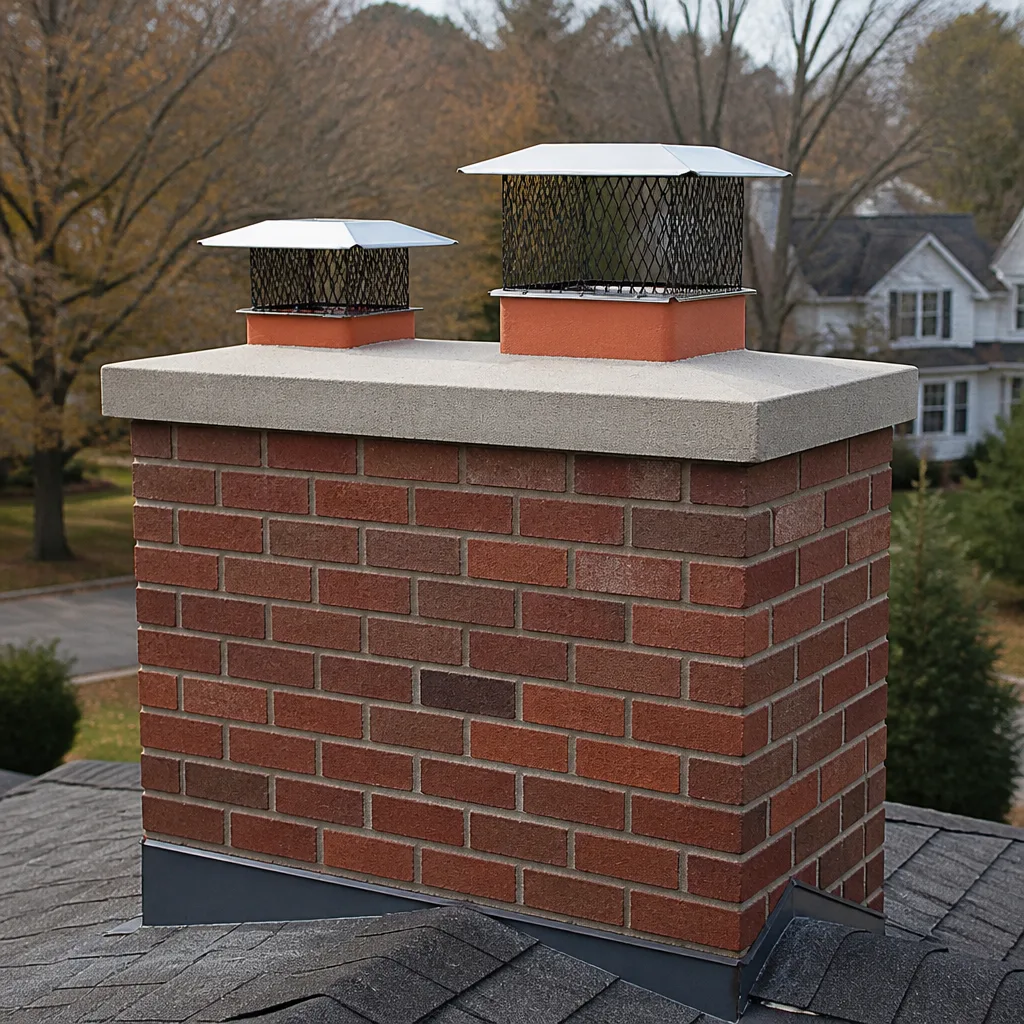 Caps & crowns
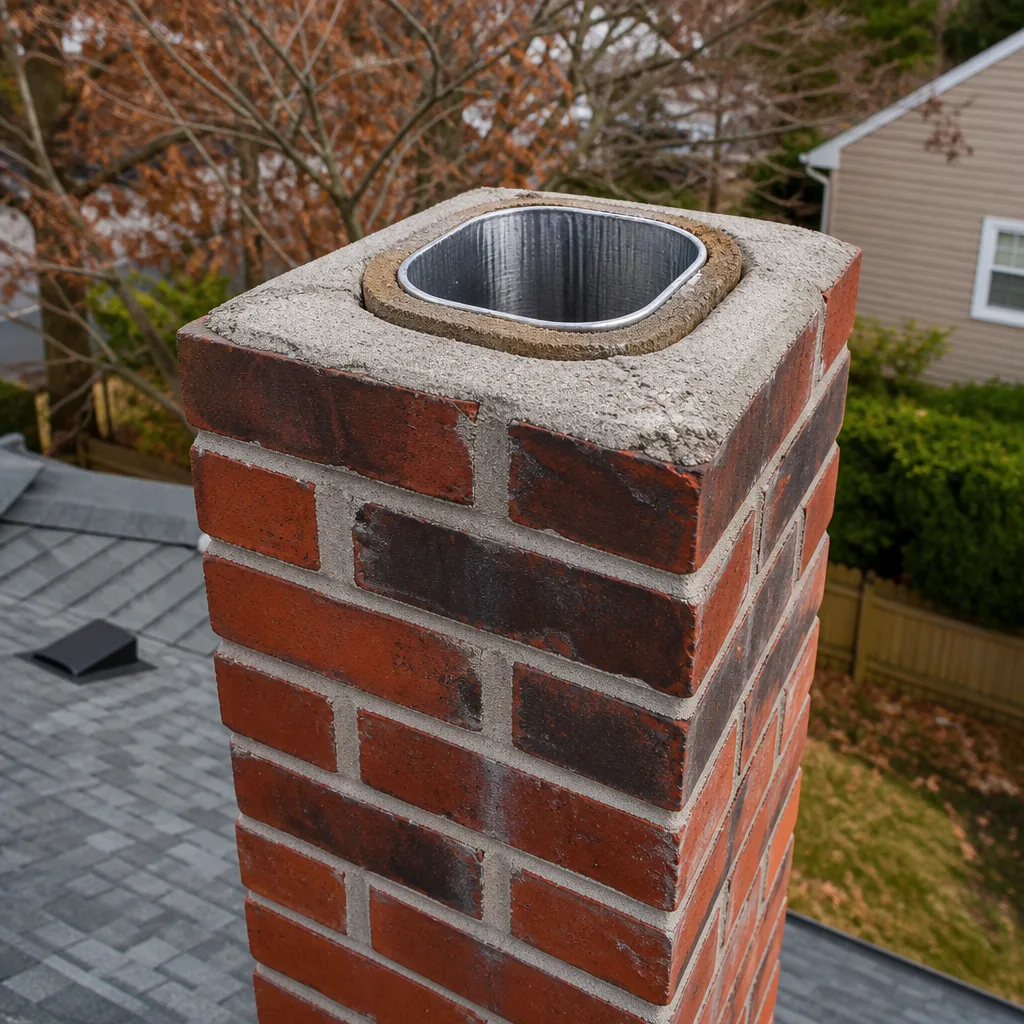 Flue relining
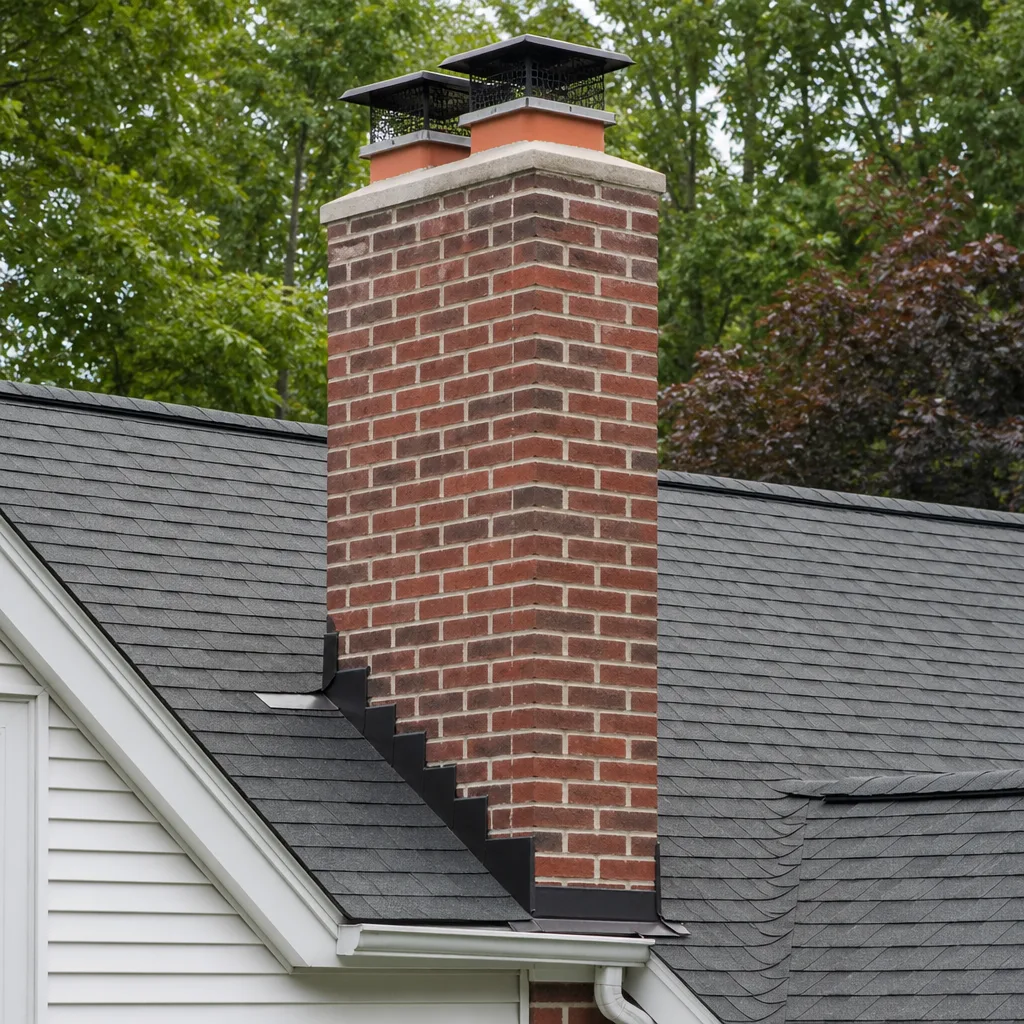 Masonry repair
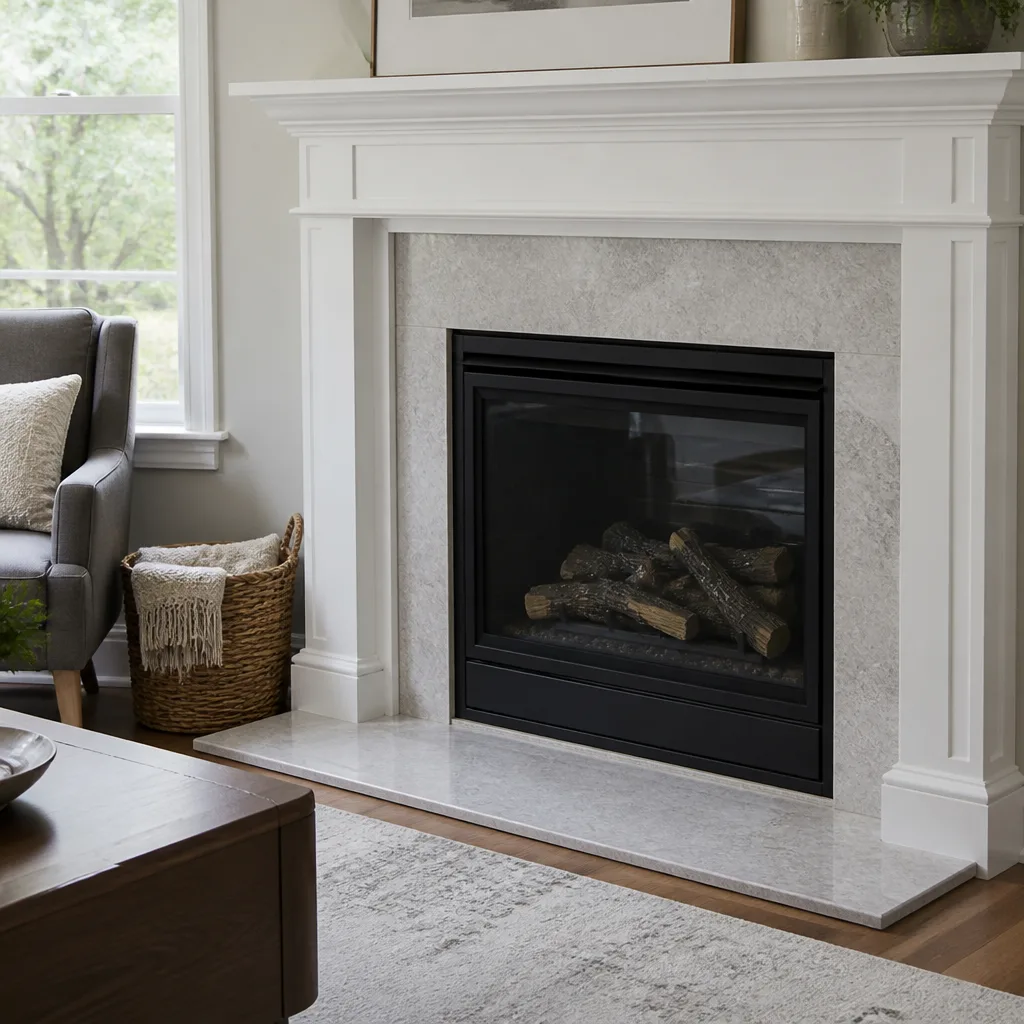 Gas fireplace service
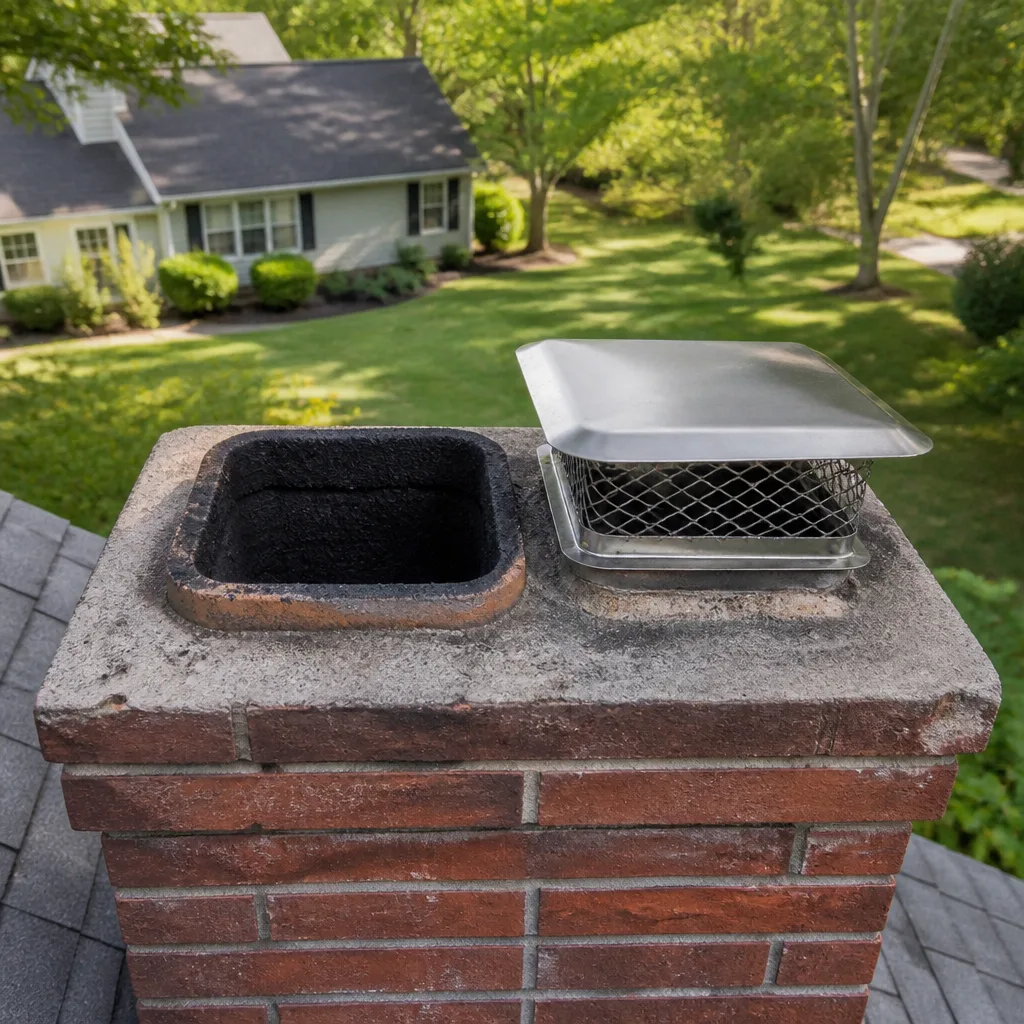
Level 1 sweep and inspection to the NFPA 211 annual standard - flue, crown, cap, and flashing checked and photographed
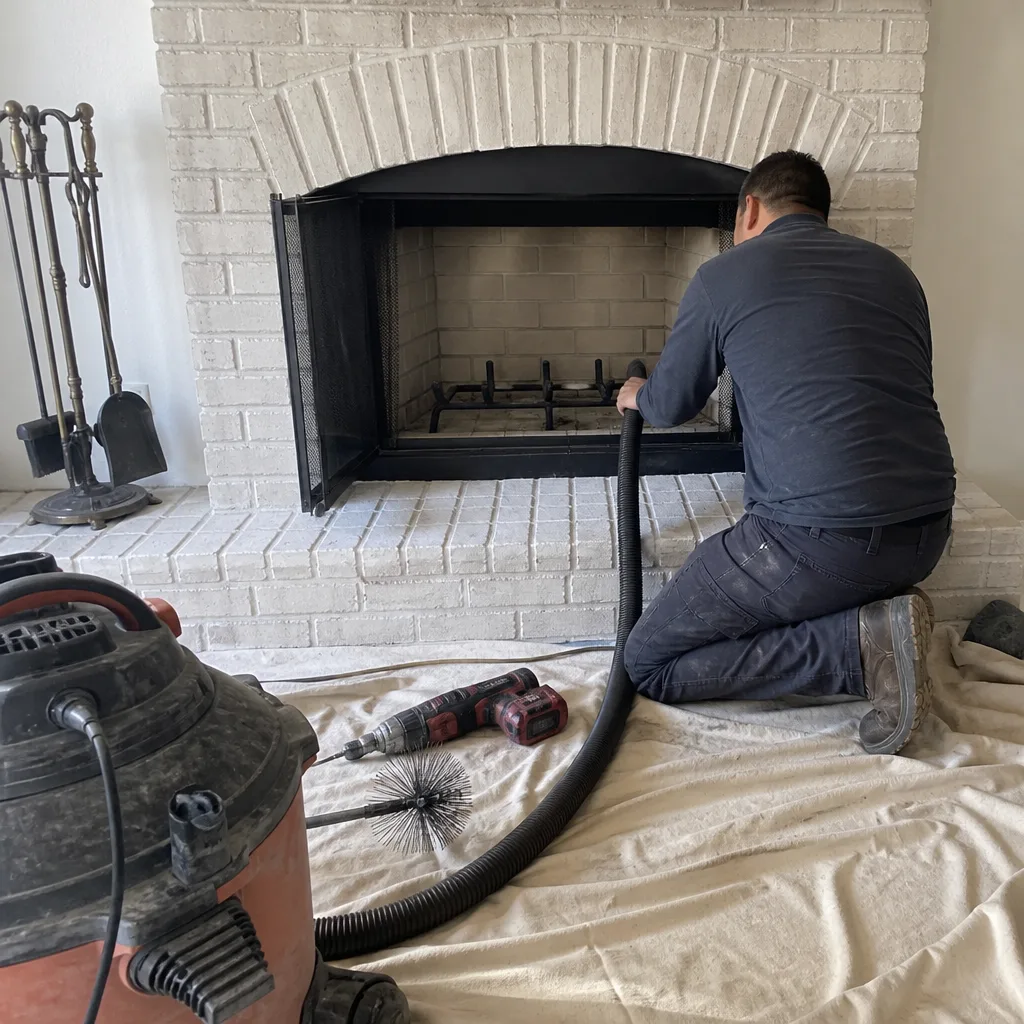
Chimney sweep logs do not sweep chimneys. They loosen some creosote - which then falls where a brush and vacuum still have to collect it.
HeatShield Chimney Cleaning in Good Hope, CA | Glendale Chimney Sweep
We clean, inspect, and repair HeatShield-lined chimneys throughout Good Hope, and we’re an independent service provider, not a HeatShield-authorized dealership. The thing that sets our HeatShield work here apart is this: we camera-inspect every flue before we touch it, and in the 92572 hillside neighborhoods, that inspection almost always starts with wildlife-exclusion caps and Santa Ana wind damage, not creosote depth. If you’re in Good Hope and your HeatShield liner isn’t drafting the way it should, call (833) 467-6493 for a free estimate.
Why Good Hope Residents Choose Us for HeatShield Service
We’ve applied HeatShield Cerfractory flue sealant across the San Gabriel Valley for years, and Good Hope brings its own set of variables to the table. The housing stock here runs from mid-century ranch homes with original masonry fireplaces to newer builds with prefabricated metal flues, and the condition of a HeatShield liner depends heavily on which one you have. Noel Tarkanian, our owner, grew up in Glendale’s Montrose neighborhood where his family’s 1950s craftsman had a fireplace that needed attention every winter, and he’s spent well over a decade diagnosing chimney problems throughout this region. What matters for HeatShield work is that we know what a failing cast liner looks like on camera, and we don’t recommend resurfacing until we’ve seen the substrate. For broader context on the neighborhoods we cover, see our Good Hope service area page.
We use HeatShield’s own Cerfractory materials and proprietary mixing components because the product’s performance depends entirely on correct substrate prep and curing. A generic refractory cement applied over a poorly prepared flue will spall within a season or two, and we won’t do that. We also carry the inspection equipment to document what’s actually happening inside your flue before and after the work. You’ll see the photos.
Styles & brands we work with
Common HeatShield Chimney Cleaning Problems We Solve in Good Hope
- Cast liners applied over clay tile without a prior camera scan. We see this often in Good Hope’s older ranch homes where someone resurfaced a flue years ago without checking for offset joints or gaps in the original clay tile. The HeatShield coat looks fine from above, but the camera reveals voids behind the ceramic surface that trap creosote and moisture. We map those voids and tell you honestly whether the liner can be salvaged or whether a stainless reline is the right call.
- Top-plate and crown-end erosion from Santa Ana winds. The hillside neighborhoods of 92572 take wind-driven embers and ash directly. When a HeatShield flue is left uncapped or poorly capped, the ceramic surface at the termination gets sandblasted and eroded season after season. We repoint the crown, install a compliant cap, and resurface the damaged termination with HeatShield’s custom mortar.
- Moisture-driven delamination where the crown or flashing failed. Good Hope’s wet winters send rain down the outside of a chimney if the masonry crown is cracked or the flashing has pulled away. That water wicks down the outside of the cast liner and causes the ceramic to separate from the substrate. We fix the crown and flashing first, because resurfacing a liner that’s still getting wet is wasted work.
- Poor bonding from soot or pest debris left on the substrate. Squirrels and birds in the 92572 hills build nests that pack into the flue and smoke chamber. If a HeatShield liner is applied over a surface that still has soot or nesting material, the ceramic won’t bond and the surface spalls after the first heating season. We clear the flue completely before any resurfacing.
- Draft problems that feel like liner failure but aren’t. Sometimes a Good Hope homeowner calls us thinking the HeatShield liner has failed, but the camera shows an intact surface and the real issue is a cold flue, negative air pressure in a tightly sealed home, or a partially blocked termination. We don’t sell work that isn’t needed. The inspection tells us what’s actually wrong.
HeatShield Service in Good Hope: What Local Conditions Mean for Your Equipment
Here’s the local factor that shapes HeatShield cleaning and inspection work in Good Hope more than anything else: the Santa Ana winds that funnel through the 92572 hillsides don’t just carry embers and ash. They carry squirrel and bird nesting debris into any flue that isn’t capped to wildlife-exclusion standards, and they do it year after year. In a neighboring valley city with lower wind exposure, or for HeatShield in Sun City, an evaluation might start with creosote measurement. In Good Hope, our inspections routinely begin with cap and screen compliance, because if the termination isn’t sealed to fire code and wildlife standards, everything below it, including a HeatShield liner, is at risk. We find nests packed against crowns, wind-blown ash coating smoke chambers, and ember intrusion that has pitted the top few inches of ceramic liners. A cast liner is only as good as the cap and crown that protect it. That’s the starting point here, not an afterthought.
We worked on a hillside street in the 92572 area last year that captures this exactly, and we’ve since completed similar HeatShield in Romoland projects. A mid-century ranch home had its original clay tile liner cracked in three places, a squirrel nest packed against the crown, and wind-blown ash filling the smoke chamber. We cleared the debris, ran a Level 2 camera inspection, repointed the spalled crown, and applied a HeatShield cast liner before fitting a wildlife-exclusion cap that meets fire code. The homeowner’s first fire of the season drafted clean for the first time in years. The liner was only part of the fix. Without the cap and crown work, it would have failed again within two seasons.
We’re proud to provide full-service HeatShield work across Good Hope. For a look at the broader brand coverage we offer, visit our HeatShield sales & service page.
HeatShield Models & Products We Service in Good Hope
We work on the full HeatShield product range as it’s applied in residential chimneys, including the Cerfractory Flue Sealant cast-in-place system, the Resurfacing System designed for clay tile liners, and HeatShield’s custom-formulated mortar for oversized or irregular flues. We also service and replace the top-plate and crown termination components that go with cast liner installations.
On parts, our stance is straightforward: we use HeatShield’s own materials for any resurfacing or patching work. We don’t substitute generic refractory cement, because the product’s chemistry and curing profile are specific, and a substitute won’t hold the way the manufacturer’s system does. We keep common HeatShield application components stocked locally so Good Hope turnaround is measured in days, not weeks. Where a flue is cracked beyond what a cast liner can bridge, we’ll say so plainly and recommend a stainless reline or rebuild instead. Selling a HeatShield coat onto a failing substrate isn’t something we do.
See the difference
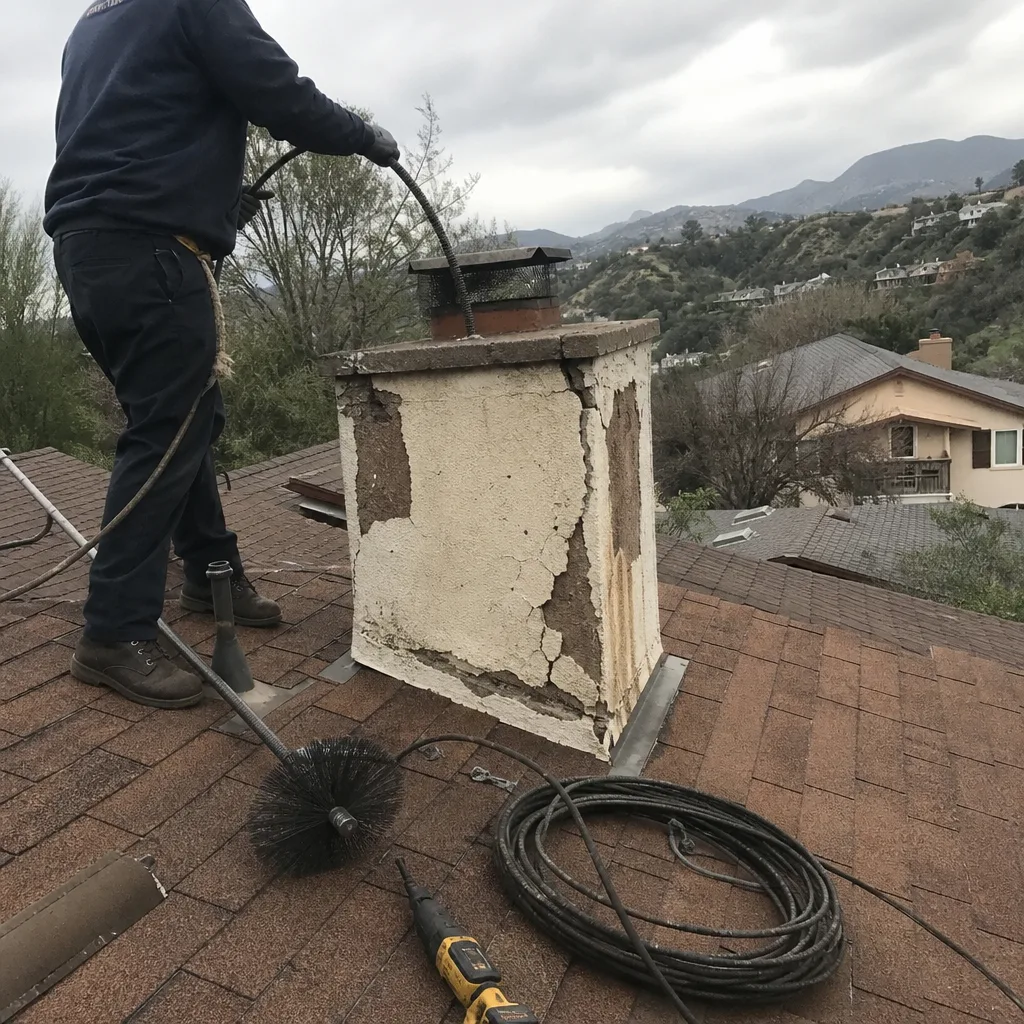 Before
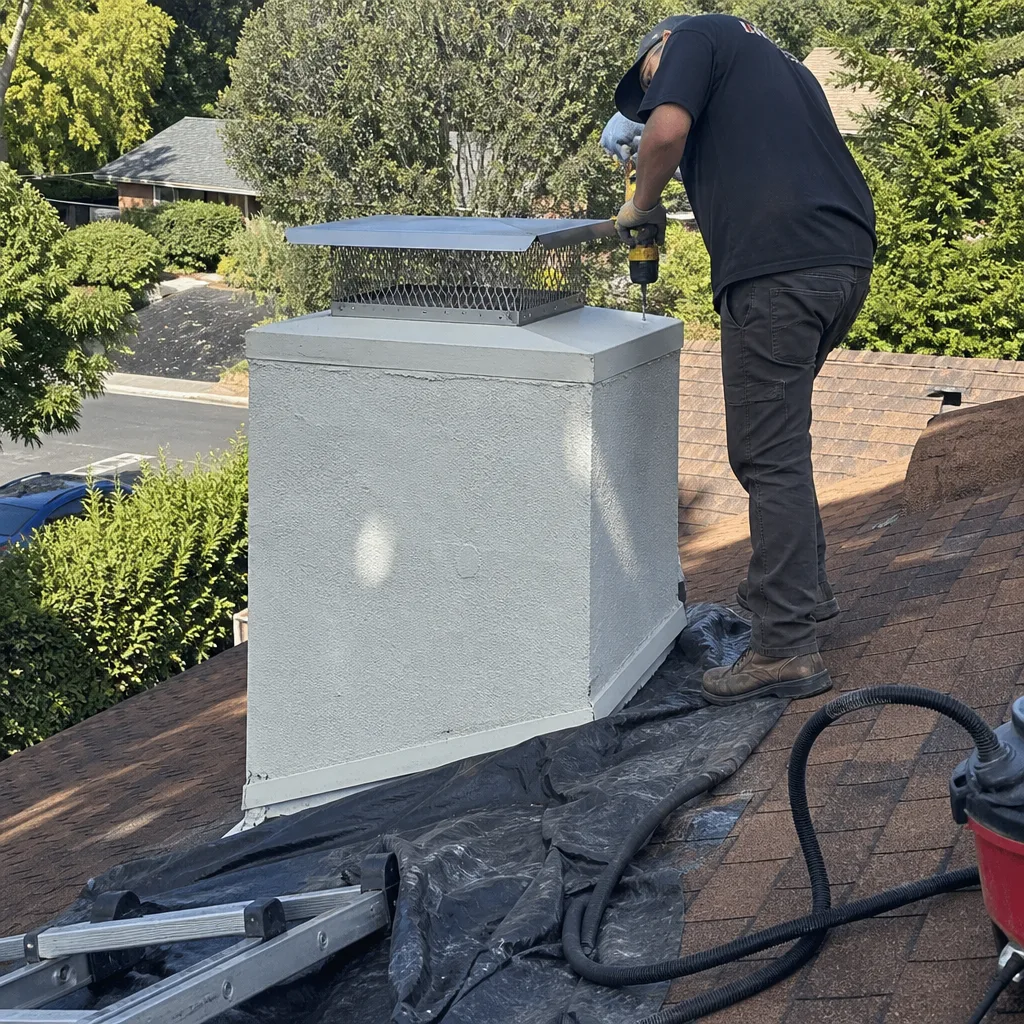 After
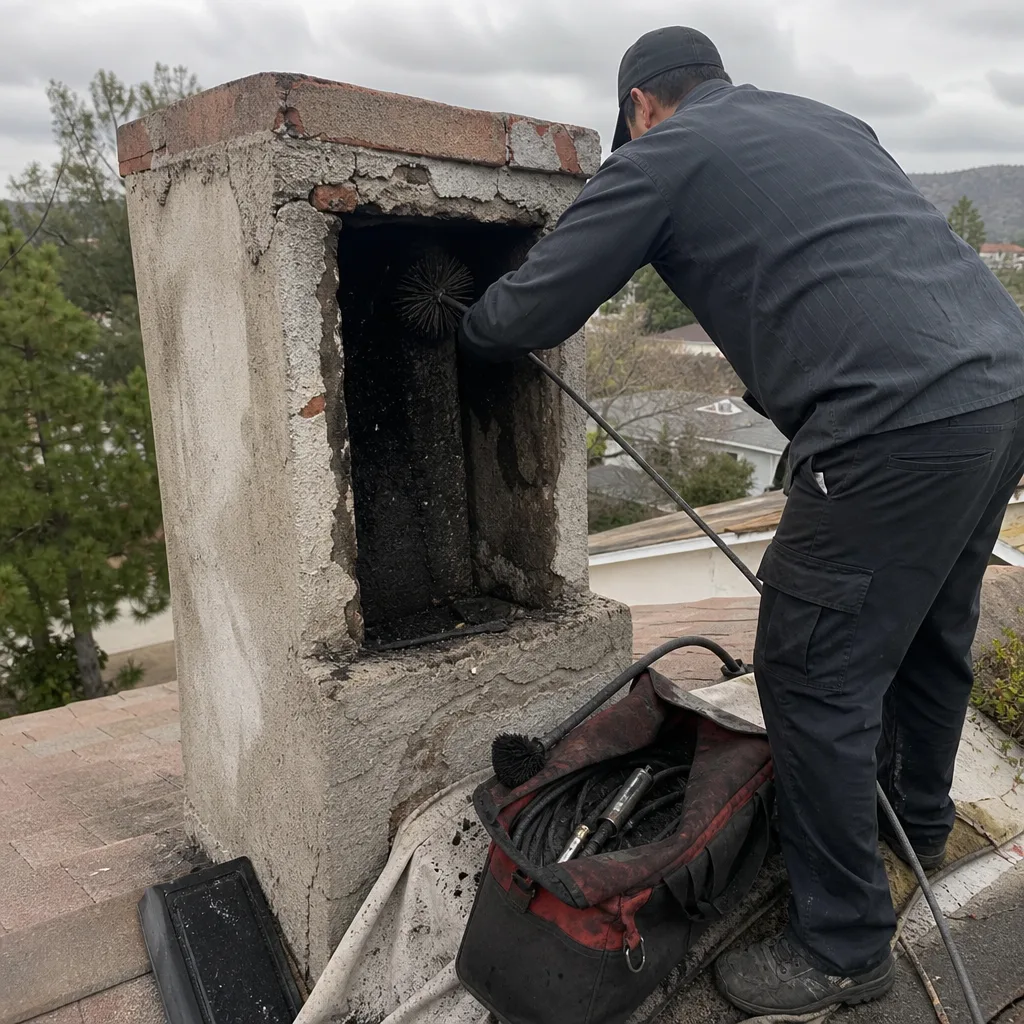 Before
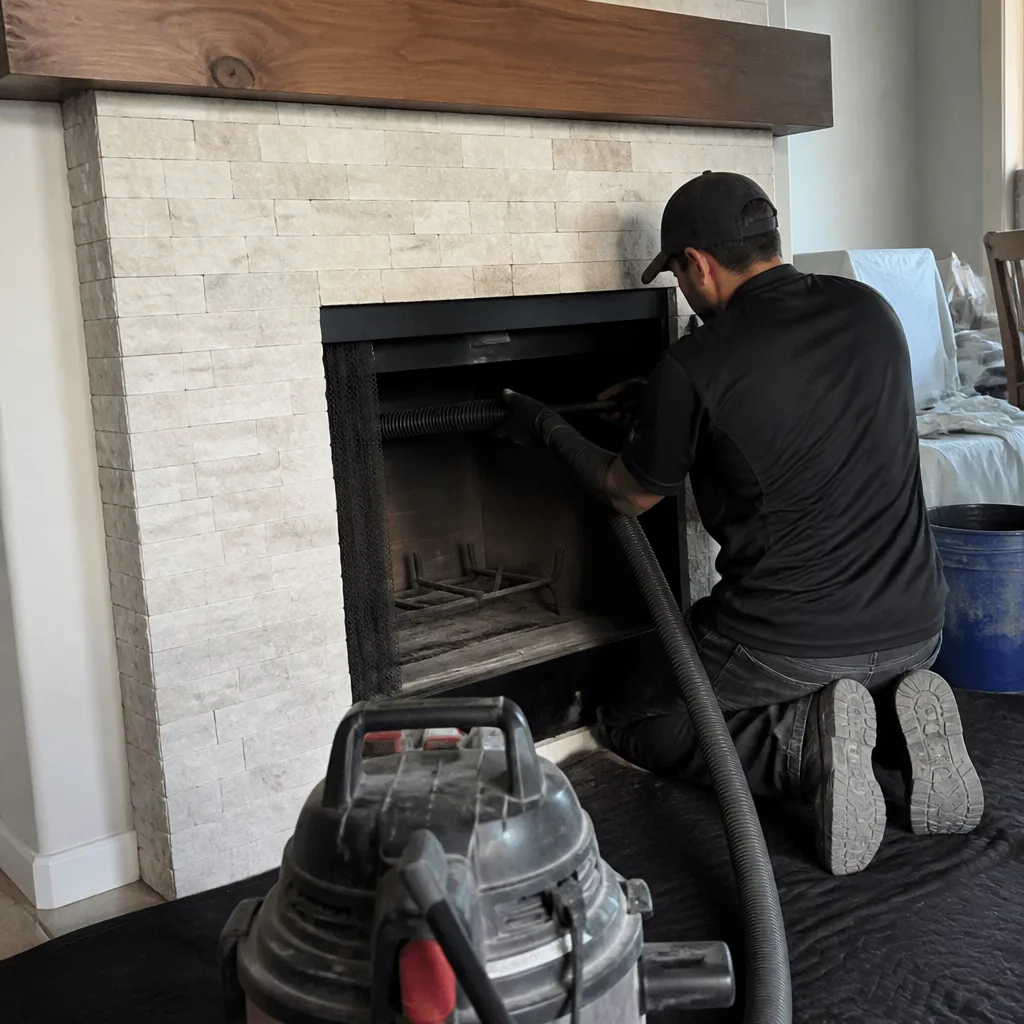 After
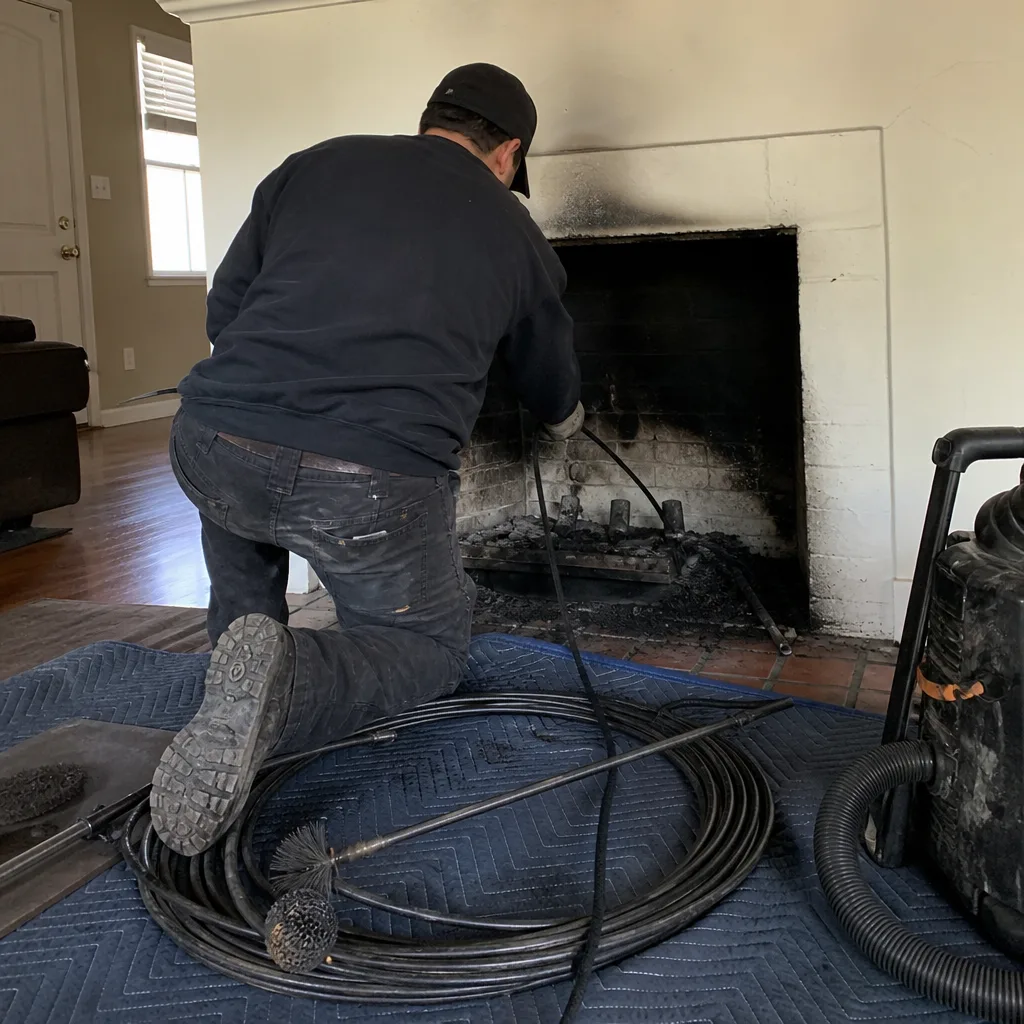 Before
 After
HeatShield Service Pricing in Good Hope
HeatShield work in Good Hope is priced per job, not per square foot, because every flue presents different conditions, just as our HeatShield service in Mead Valley is tailored to each home. A simple HeatShield chimney cleaning with a Level 2 inspection generally starts around $275 to $450. HeatShield resurfacing, where the liner is a candidate for cast-in-place ceramic, typically runs $3,500 to $8,000 depending on flue height, access, and how much prep the substrate needs. Crown repair is usually quoted separately, and if the inspection shows a stainless reline would serve you better, we’ll price that honestly instead of pushing a resurfacing job that won’t last.
What drives the cost here: hillside access for ladders and equipment, the age of the original liner, whether wildlife debris has to be cleared before any work, and whether the crown and cap need to be fixed first. A free estimate includes the camera inspection so you’re not deciding blind. Call (833) 467-6493 and we’ll walk you through what the flue actually looks like.
Serving Good Hope, CA — Our Local Coverage Area
We’re based in the Good Hope area and know this community well. Use the map below to see our service coverage — if you’re nearby, we can almost certainly help.
FAQs – HeatShield Chimney Cleaning in Good Hope
Yes, when the original clay tile liner is sound enough to serve as a substrate. The HeatShield Cerfractory system is designed to be cast over existing clay tile, bridging minor cracks and gaps and creating a continuous ceramic surface. The key is the prep work. If the clay tile is severely offset, collapsed, or missing in sections, a cast liner won’t fix that, and a stainless reline is the right call. We camera-inspect before quoting so you know which category your flue falls into. Call (833) 467-6493 for a free estimate with the inspection included.
That smell almost always means creosote, soot, or moisture is trapped somewhere in the system, often in the smoke chamber or behind a delaminated section of a cast liner. In Good Hope, we also find that wind-driven ash from summer wildfires and Santa Ana events settles into the flue and gets damp during the winter months, which releases that acrid smell. A Level 2 inspection with a camera will show us exactly where the odor source is. Often it’s a crown issue or a cap problem, not the liner itself.
Every year, regardless of how often you burn. Good Hope’s seasonal use pattern means most fireplaces sit idle for months at a time, and that’s when wildlife moves in and wind deposits ash and debris. An annual inspection catches cap damage, crown spalling, and any delamination of the HeatShield surface before small problems become structural. If you burn wood regularly, sweeping should happen at least once per season alongside the inspection.
You need a cap that meets both fire code and wildlife-exclusion standards, and in Good Hope’s hillside neighborhoods, that’s not a standard big-box cap. Santa Ana winds drive embers horizontally into terminations, and squirrels and birds actively work at any gap they can find. We fit caps with proper mesh sizing and secure mounting so they hold up to wind and animal pressure. The cap protects the top of the HeatShield liner, which is the most vulnerable point in the system.
Sometimes, but only if the leak is coming through the flue itself. If water is entering through a cracked masonry crown or failed flashing, resurfacing the liner won’t stop the leak, and we’ll tell you that before quoting any HeatShield work. The camera inspection shows whether moisture is moving through the flue or around it. Once we know the source, we fix the crown and flashing first, then address the liner if it’s been compromised. Call (833) 467-6493 and we’ll diagnose the actual leak path.
Service Areas Near Good Hope
Good Hope sits within the broader Inland Empire service corridor we cover, and we regularly work in neighboring communities including Lake Elsinore, Perris, Mead Valley, and the unincorporated areas of Riverside County. For homeowners in those areas, see HeatShield service in Meadowbrook and HeatShield service in Lakeland Village.
Book Your HeatShield Service in Good Hope Today
A clean chimney isn’t a luxury – it’s just basic fire safety. If you’re in Good Hope and want a HeatShield flue inspected, cleaned, or resurfaced by people who document everything with a camera, call (833) 467-6493 for a free estimate. We’ll show you what’s in your flue before we sell you anything.
Written by Noel Tarkanian, Owner at Glendale Chimney Sweep, serving Good Hope and the surrounding communities.