Last updated October 30, 2026
 Sweep & inspection
 Caps & crowns
 Flue relining
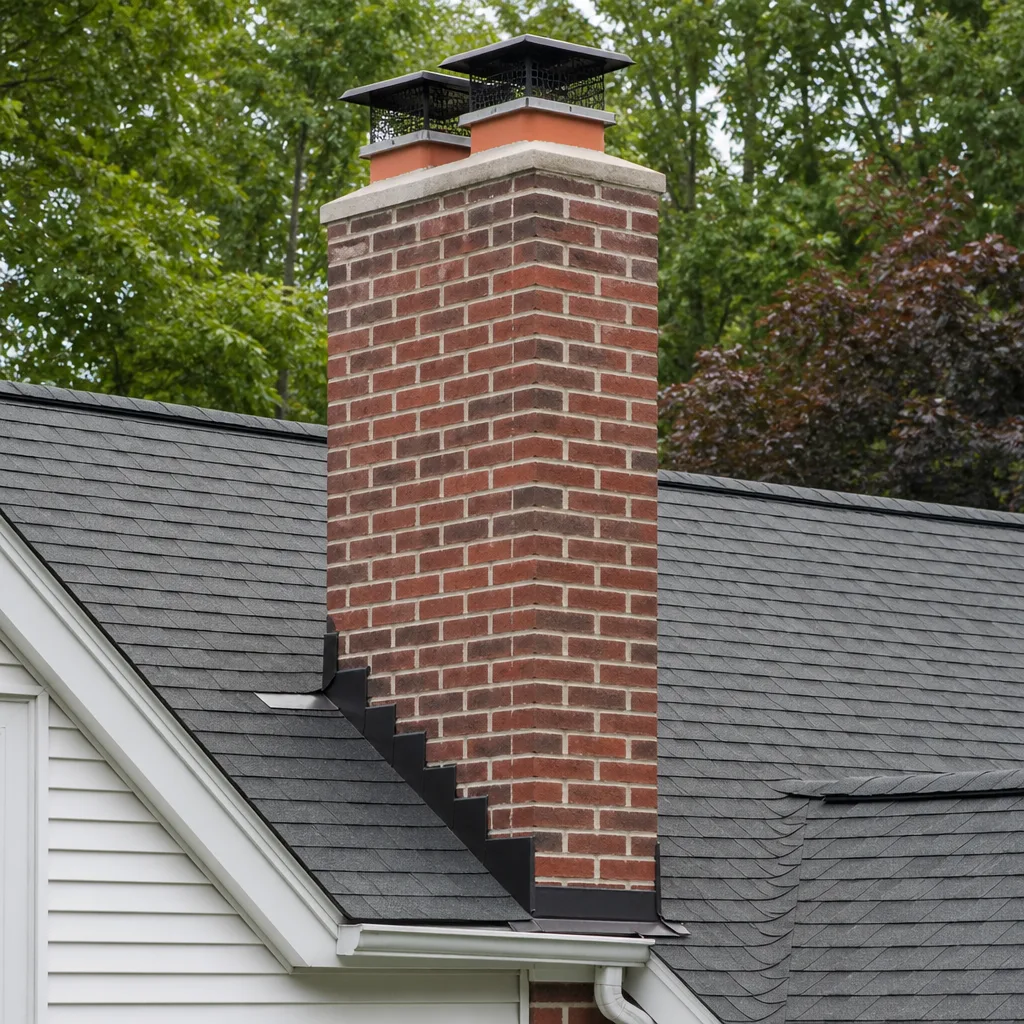 Masonry repair
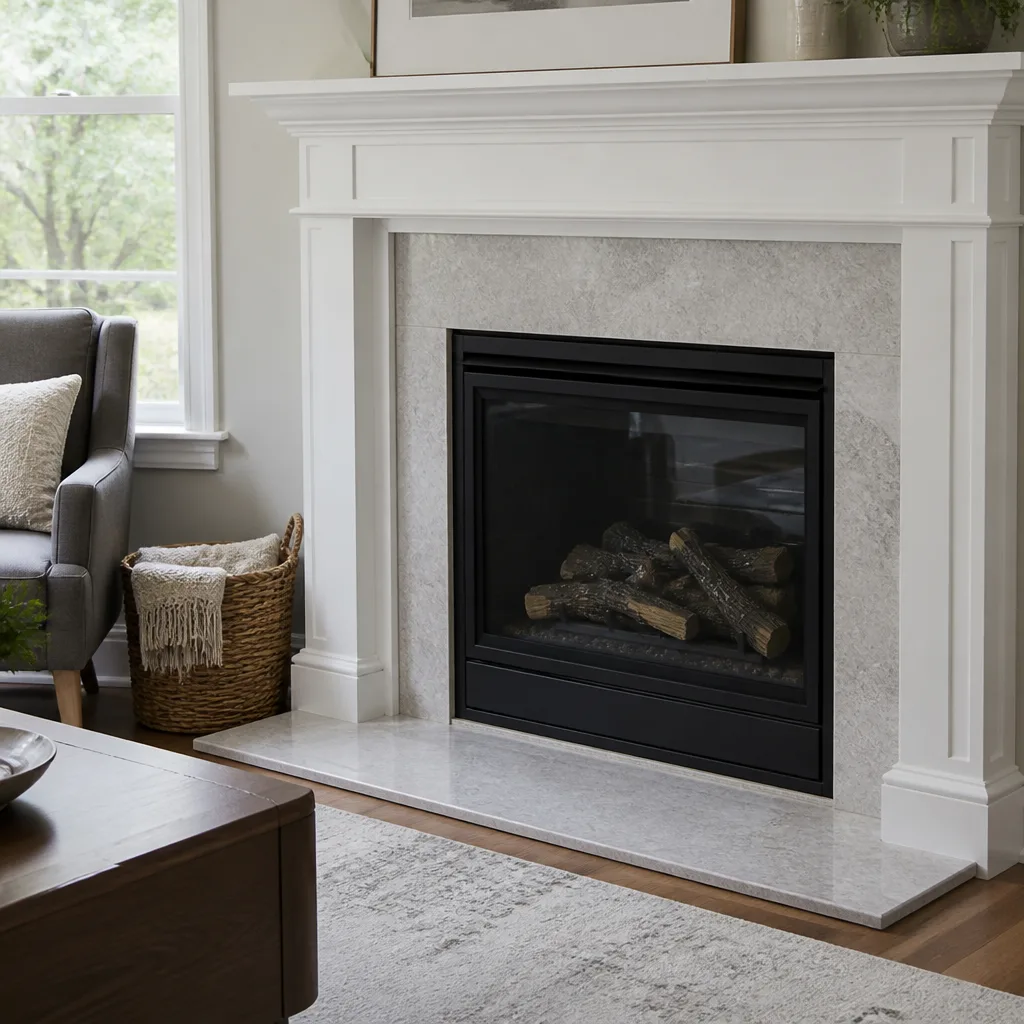 Gas fireplace service
Level 1 sweep and inspection to the NFPA 211 annual standard - flue, crown, cap, and flashing checked and photographed
Chimney sweep logs do not sweep chimneys. They loosen some creosote - which then falls where a brush and vacuum still have to collect it.
Chimney Cleaning Cost Breakdown: The Glendale Homeowner’s Reference for 2026
Walk Glendale’s service boards in any given week and you’ll see chimney sweep specials ranging from $89 to $189. Call three companies for a full cleaning and you’ll get quotes from $250 to $650. The spread isn’t random, and it isn’t because some companies gouge. The $99 special covers roughly 40% of what a complete service actually involves. The rest is billing for work nobody explained, or worse, work that never got done. This guide breaks down exactly what sits inside each price tier in the current Glendale market, which add-ons are legitimate for our local housing stock, and how to read a quote so you’re comparing the same job, not the same headline number.
Styles & brands we work with
Quick Answer
A complete chimney cleaning in Glendale costs between $250 and $450 for a standard open fireplace with one flue in 2026, including a Level 1 inspection. The $99 specials you see advertised typically cover only brushing the flue itself, leaving the smoke chamber, firebox, and damper untouched. Homes built before 1980 with original clay liners should expect to add $150 to $250 for a video inspection, which is the only way to actually see liner damage.
Table of Contents
- What a Complete Cleaning Actually Includes
- Chimney Cleaning Price Tiers in Glendale: What’s Actually Inside Each Quote
- Component-Level Cost Table: The 2026 Glendale Market
- Legitimate Add-Ons vs. Oversold Upsells in Glendale Homes
- Why Liner Evaluation Costs More and Why Pre-1980 Glendale Homes Need It
- How to Compare Quotes Apples-to-Apples: Scope of Work, Not Headline Price
- The Deferred Maintenance Math: What Skipping Three Years Actually Costs
- Who Should and Shouldn’t Buy a Cheap Sweep
- Common Mistakes to Avoid
- When to Call a Professional
- Frequently Asked Questions
- The Bottom Line
What a Complete Cleaning Actually Includes
If you’ve never watched a chimney cleaning from start to finish, the pricing structure will seem arbitrary. It isn’t. The chimney is a system with six discrete surfaces and components that require attention, and each takes time, tooling, and sometimes a second person. Here’s what a complete job covers, top to bottom.
The Six Standard Components of a Full Cleaning
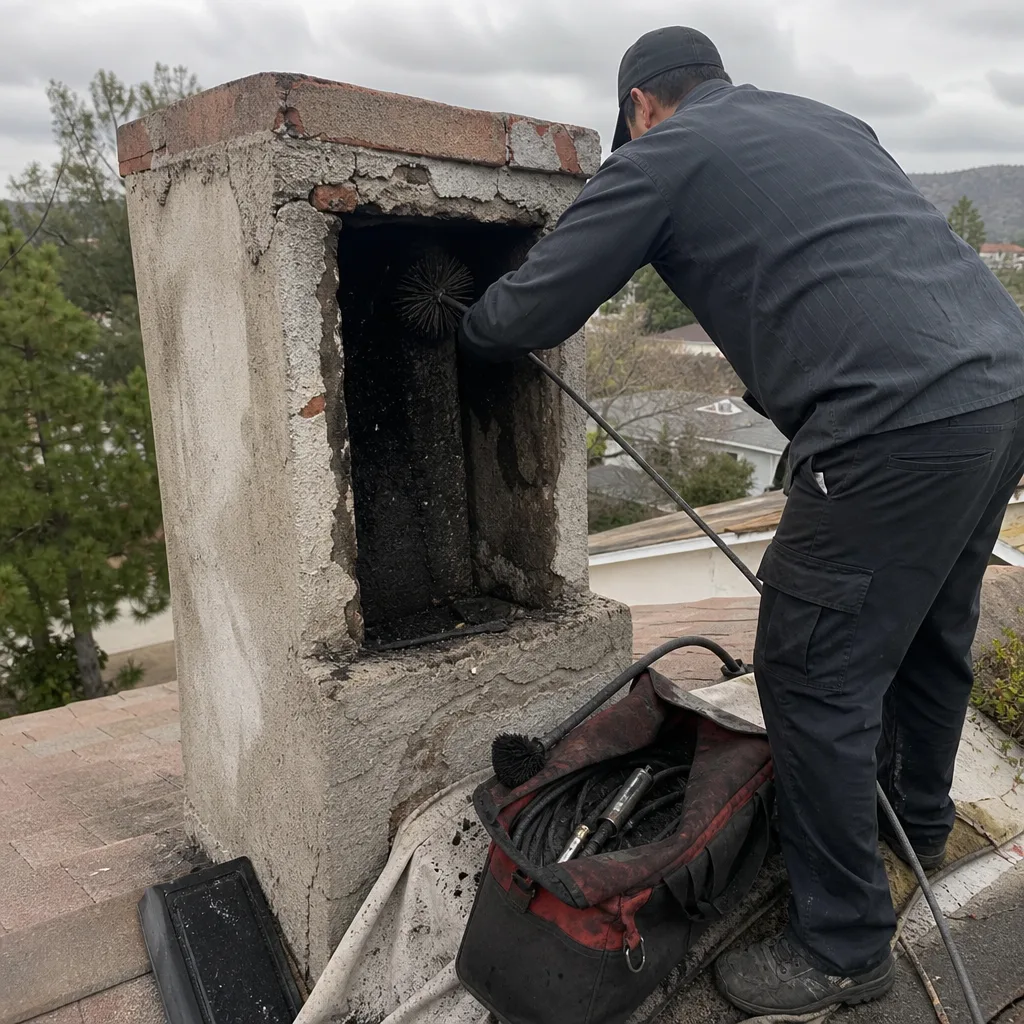
- Flue brushing: Wire or poly brush runs the full length of the flue to dislodge creosote and soot buildup. On a typical Glendale single-story ranch with a 20-foot flue, a thorough brushing takes 30 to 45 minutes. A masonry fireplace with a second story and an offset flue takes longer.
- Smoke chamber brushing: The sloped chamber above the damper where flue gases bottleneck and creosote accumulates heavily. Requires a second, smaller brush configuration and often a boroscope to verify clearance. Many discount sweeps skip this entirely because it’s awkward to access.
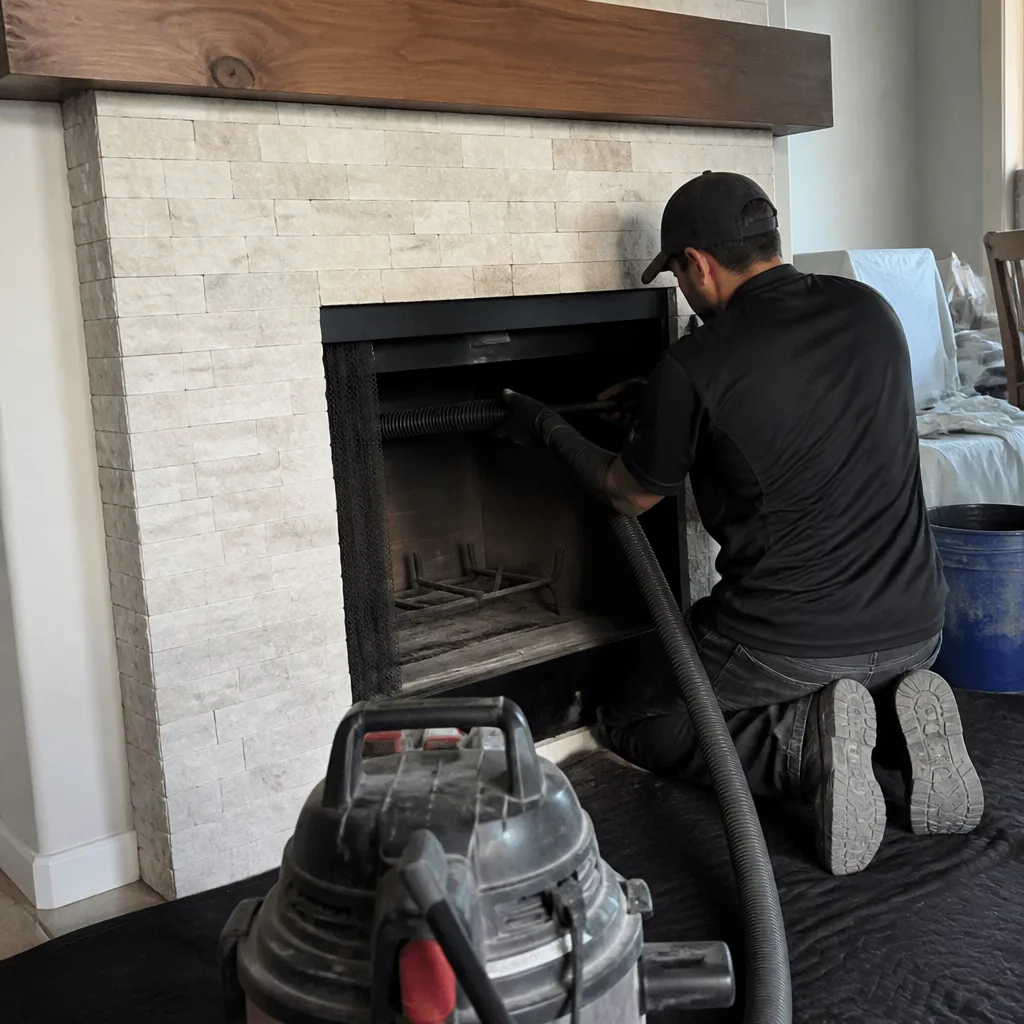
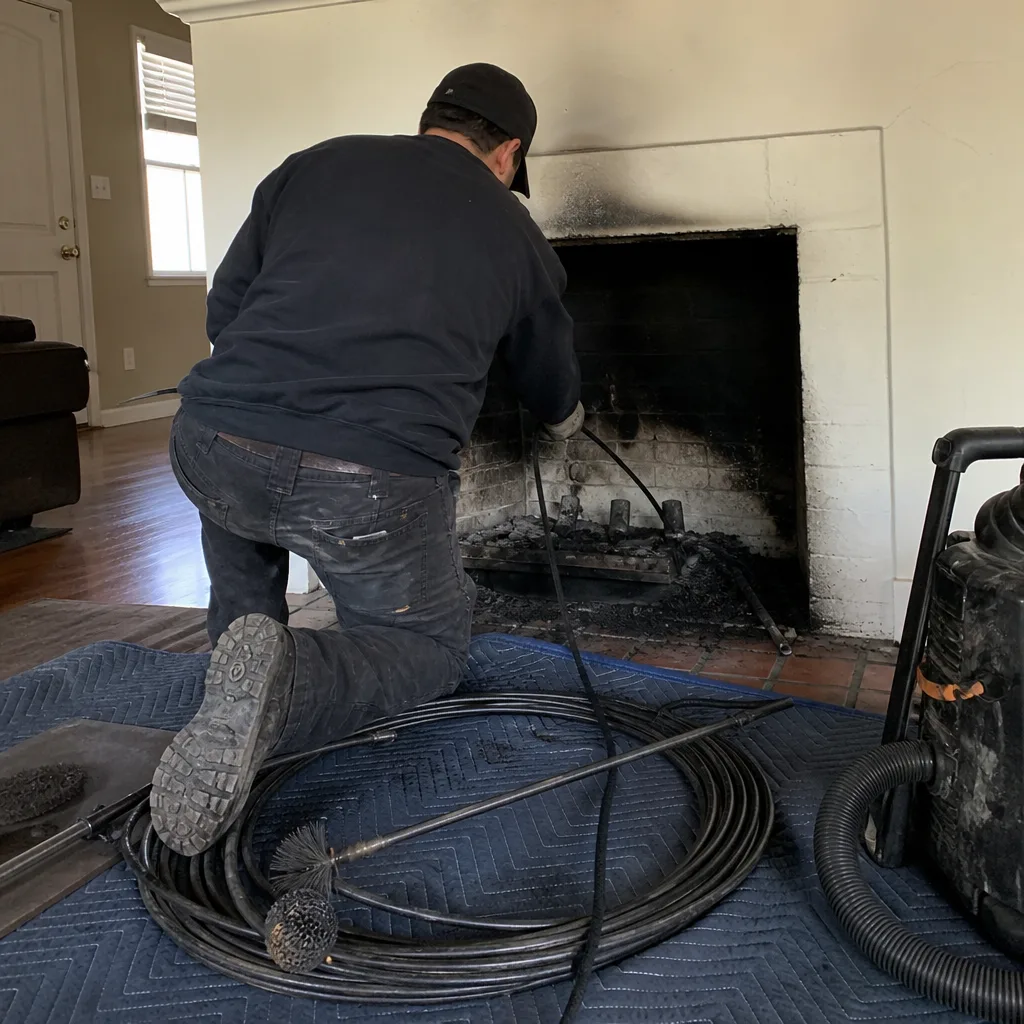
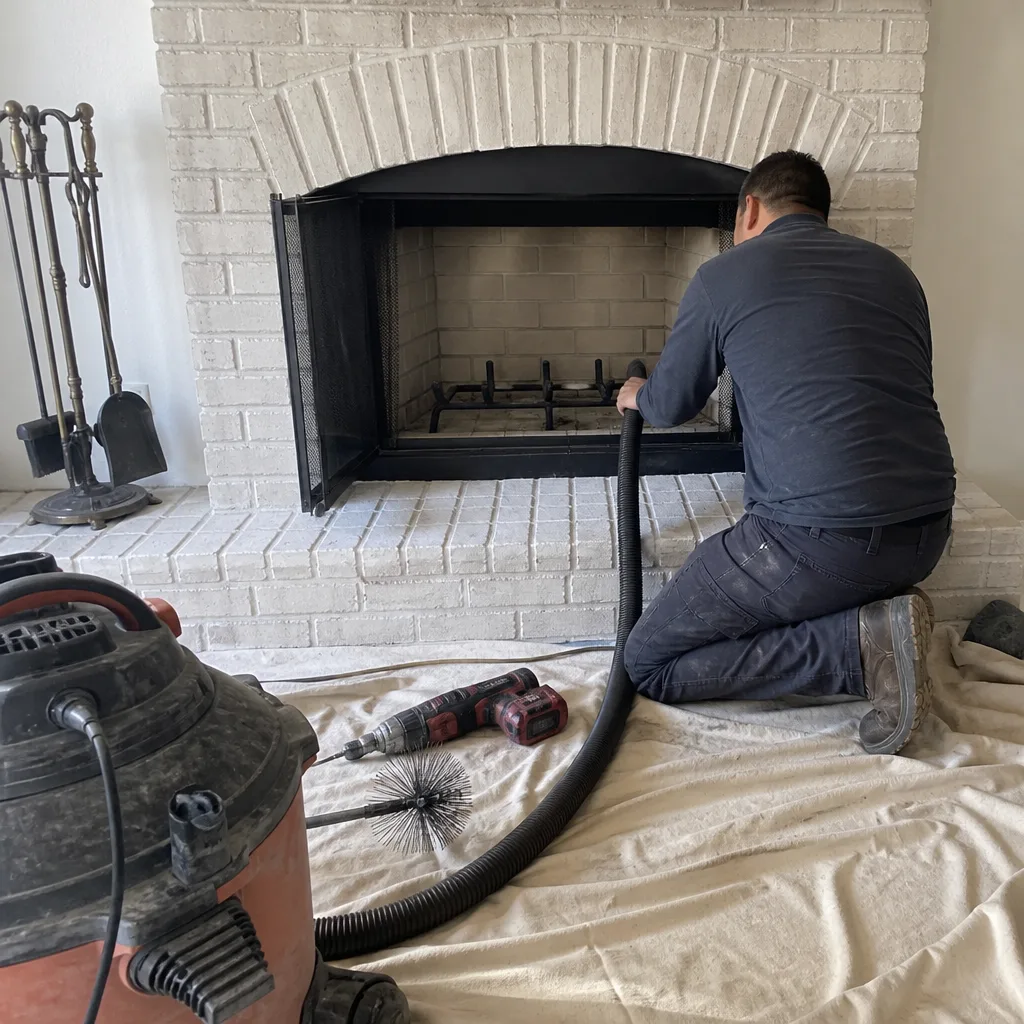
- Firebox cleaning: Hand-scraping and vacuuming ash, soot, and debris from the firebox floor and walls. Sounds trivial, but it’s the part you see every day. A proper firebox clean adds 20 minutes.
- Damper inspection and operation: The damper gets checked for seating, rust, and full range of motion. Stuck or warped dampers are flagged, not just noted. This matters because a damper that won’t close leaks conditioned air year-round.
- Cap and spark arrestor inspection: From the roof, the cap gets checked for rust-through, bird entry, and spark-arrestor mesh blockage. A blocked arrestor is a drafting failure waiting to happen.
- Level 1 visual assessment: The sweep looks for obvious structural concerns: spalling brick, cracked crown, deteriorating mortar joints, visible flue damage. This is the part where a trained eye catches things a homeowner won’t notice until water starts coming down the chimney.
When all six are done properly, a single flue takes 90 minutes to two hours with one technician, including setup and teardown. A $99 job takes about 25 minutes. That’s the difference, and it’s not profit margin: it’s time, which is the only real cost in a service business.
Chimney Cleaning Price Tiers in Glendale: What’s Actually Inside Each Quote
Chimney cleaning quotes in Glendale currently fall into four recognizable bands. Here’s what each one buys in the local market as of 2026.
Tier 1: The $89 – $149 “Flue-Only” Special
This is the price you see on postcards and Facebook ads. It covers brushing the flue with a poly or wire brush and running a shop vac in the firebox. That’s it. No smoke chamber work, no cap inspection from the roof unless the tech is already up there, no damper check, no firebox detail. For an infrequently used fireplace with a straight flue and low creosote accumulation, this can be adequate. The problem is that no company can tell you whether your fireplace fits that description until they’re already inside it.
Tier 2: The $250 – $350 Full Cleaning with Level 1 Inspection
This is the legitimate complete service for a standard masonry fireplace in decent condition. All six components get attention, the cap gets inspected from the roof, and you receive a written report with photos documenting what was done and what was found. Most chimney sweep services in Glendale that operate in this range are doing honest work. The variation within the band comes down to how thorough the technician is and whether photos are included as standard or only when problems are found.
Tier 3: The $400 – $550 Full Cleaning with Video Inspection
At this tier, a video camera is run the full length of the flue after brushing, and the footage is reviewed with you. You’re not being sold a $200 camera rental; you’re paying for the time to push a camera through every inch of the flue and for someone qualified to interpret what the footage shows. In pre-1980 Glendale homes with original clay liners, this is the single most important line item because it’s the only way to see liner cracks, gaps, and spalling before they become a chimney fire or a carbon monoxide event.
Tier 4: The $550 – $650 Deep Clean with Corrective Work Recommendations
This is a full cleaning plus video inspection on a chimney that hasn’t been touched in five or more years, where creosote buildup is heavy enough to require chemical treatment or extended mechanical brushing. The price includes multiple passes on the flue, extended time on the smoke chamber, and a detailed written recommendation for any corrective work, usually with brand-specific material specs. At this tier, the deliverable isn’t just a clean chimney; it’s a documented condition assessment that tells you what needs attention now, what can wait, and what’s cosmetic.
Component-Level Cost Table: The 2026 Glendale Market
If you want to understand any chimney cleaning quote, break it into its components and price them separately. Here’s what each element currently runs in Glendale when billed as its own line item.
- Flue brushing only: $80 – $120. The cheapest standalone component. One flue, one brush pass, basic vacuuming.
- Smoke chamber brushing: $50 – $90. The most commonly skipped component. Requires a second brush and awkward access.
- Firebox cleaning: $30 – $60. Hand-scraping and vacuuming. Cheap, but it’s part of what you’re actually paying for in a “full cleaning.”
- Damper inspection and lubrication: $15 – $30. Quick, but a trained eye here catches draft problems early.
- Cap and arrestor inspection: Included if the tech is already on the roof; $75 – $125 standalone if a no-roof-access company sends someone up separately.
- Level 1 visual assessment and report: $50 – $100. The written documentation. This is what you’ll want for insurance claims and resale disclosure.
- Video flue scan (Level 2 component): $150 – $250. Camera inspection of the flue interior after brushing. Non-negotiable for pre-1980 chimneys with clay liners.
A legitimate full cleaning is the sum of the first six items, and it lands between $250 and $450 depending on the chimney. When a quote comes in at $150, one of two things is happening: either the company loses money (they don’t), or components are being omitted. The math tells you which.
Legitimate Add-Ons vs. Oversold Upsells in Glendale Homes
Every chimney cleaning comes with recommendations. Some are legitimate and specific to Glendale’s housing stock. Some are padding. Here’s how to tell the difference.
Legitimate Add-Ons for Glendale Chamneys
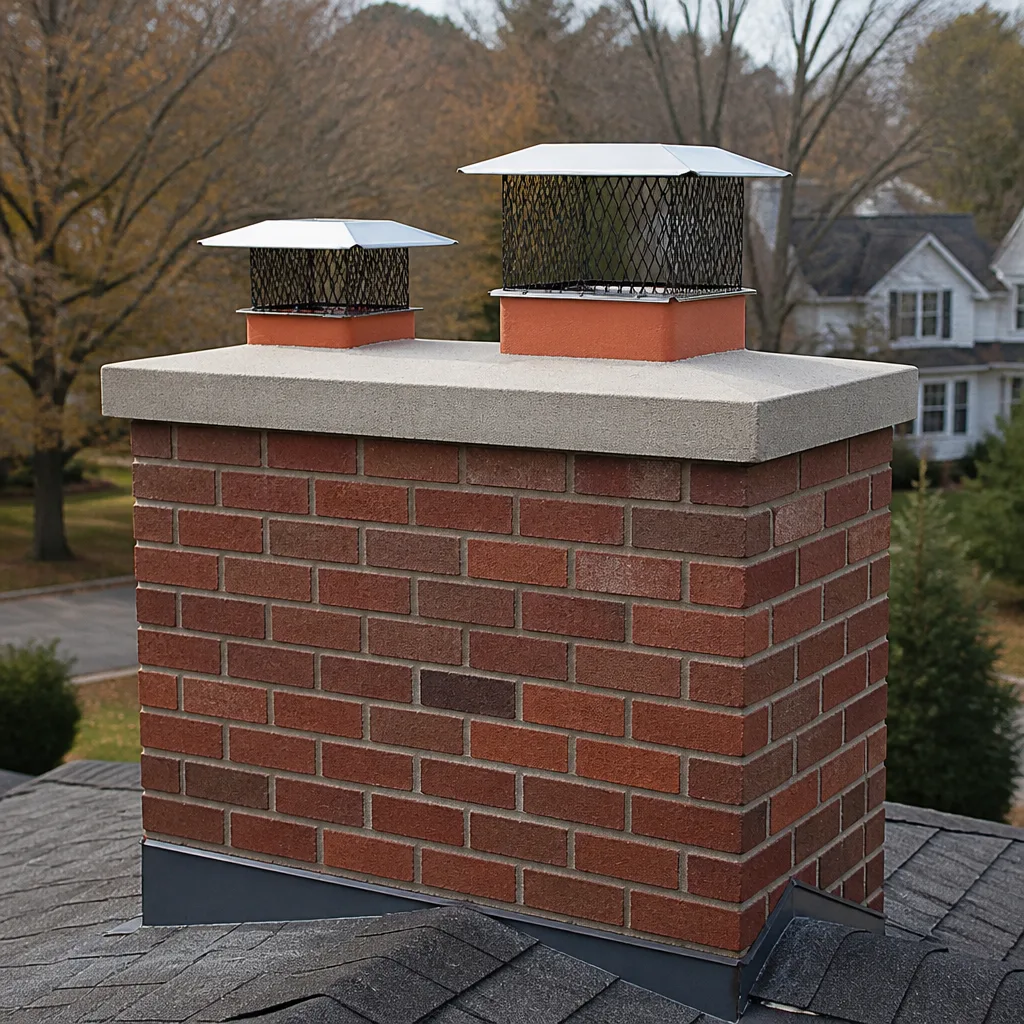
- Cap replacement: $150 – $400 installed. Glendale’s hot, dry summers cook galvanized steel caps, and rust-through is common on 15-year-old caps. A missing or failed cap lets rain into the flue, and rain plus creosote equals acid that attacks mortar. Chimney repair in Glendale frequently starts with a cap nobody noticed was failing.
- HeatShield flue resurfacing: $2,500 – $5,000 depending on flue height and access. This is the alternative to a full relining for cracked or spalled clay liners. A cerfractory sealant is applied to restore a continuous, insulated surface inside the existing flue. Not every chimney qualifies, but when it does, it’s dramatically less invasive than a tear-out reline.
- Crown sealing: $150 – $350. Minor crown cracks get a sealing compound to prevent water entry. Genuinely necessary when cracking is in its early stages. Not necessary if the crown is structurally compromised; then it’s a rebuild.
Oversold Upsells
- “Level 2 inspection” on a chimney with no signs of damage and no history of fire or earthquake: A full Level 2 inspection includes attic and crawlspace access. It’s required after a chimney fire, an earthquake, or a change in fuel type. It’s not automatically required as a routine add-on. If your firebox looks normal and the flue passes a video scan, a Level 2 is usually unnecessary.
- “Chemical creosote removal treatment” as a standard upsell: Glaze creosote (the shiny, tar-like third stage) does require chemical treatment. But most Glendale fireplaces burning seasoned oak never develop glaze creosote. If the sweep recommends chemical treatment without seeing glaze buildup, ask to see the footage.
- Fireplace damper replacement sold as a package: A damper that won’t operate or seat properly may need replacement, but it’s a specific repair with a specific price. It shouldn’t be a surprise line item on a cleaning invoice. If it’s recommended, ask why it wasn’t visible in the initial quote.
The tell on a legitimate recommendation is evidence. A photo, a video frame, a measurement. And the tell on padding is urgency without explanation. Any recommendation that can be defended with a picture or a number is worth consideration. Anything that can’t, isn’t.
Why Liner Evaluation Costs More and Why Pre-1980 Glendale Homes Need It
A significant portion of Glendale’s single-family housing stock was built between 1930 and 1975. During that period, standard practice was to build masonry chimneys with terra cotta clay tile liners, which were the available standard at the time. Clay liners have a design life, and when it ends, they don’t fail quietly. They crack under repeated thermal stress, the cracks widen through freeze-thaw cycles, and eventually flue gases find their way into the chimney structure itself.
The problem is that you can’t see liner damage from the firebox. You can’t see it from the roof without a bright light and a long look. And you definitely can’t assess its severity by running a brush up the flue. The only way to document clay liner cracks, gaps, and spalling is a video scan, and that’s why it commands a separate pricing line.
In the Glendale market, a video scan adds $150 to $250 to a cleaning invoice. It’s the line item most homeowners ask to skip, and it’s the last one they should. Here’s the specific risk profile that makes it non-negotiable in older Glendale construction:
- Clay liners in 70-year-old chimneys are at end of life: The original terra cotta tiles in a 1950s Glendale bungalow are 75 years old. If they’ve never been inspected, the probability of at least one crack is high.
- Unlined chimneys are common: Some mid-century Glendale homes were built with unlined chimneys, which were permitted under the codes of the era. An unlined chimney has no protective barrier between flue gases and the masonry structure. That’s a fire risk and a carbon monoxide risk.
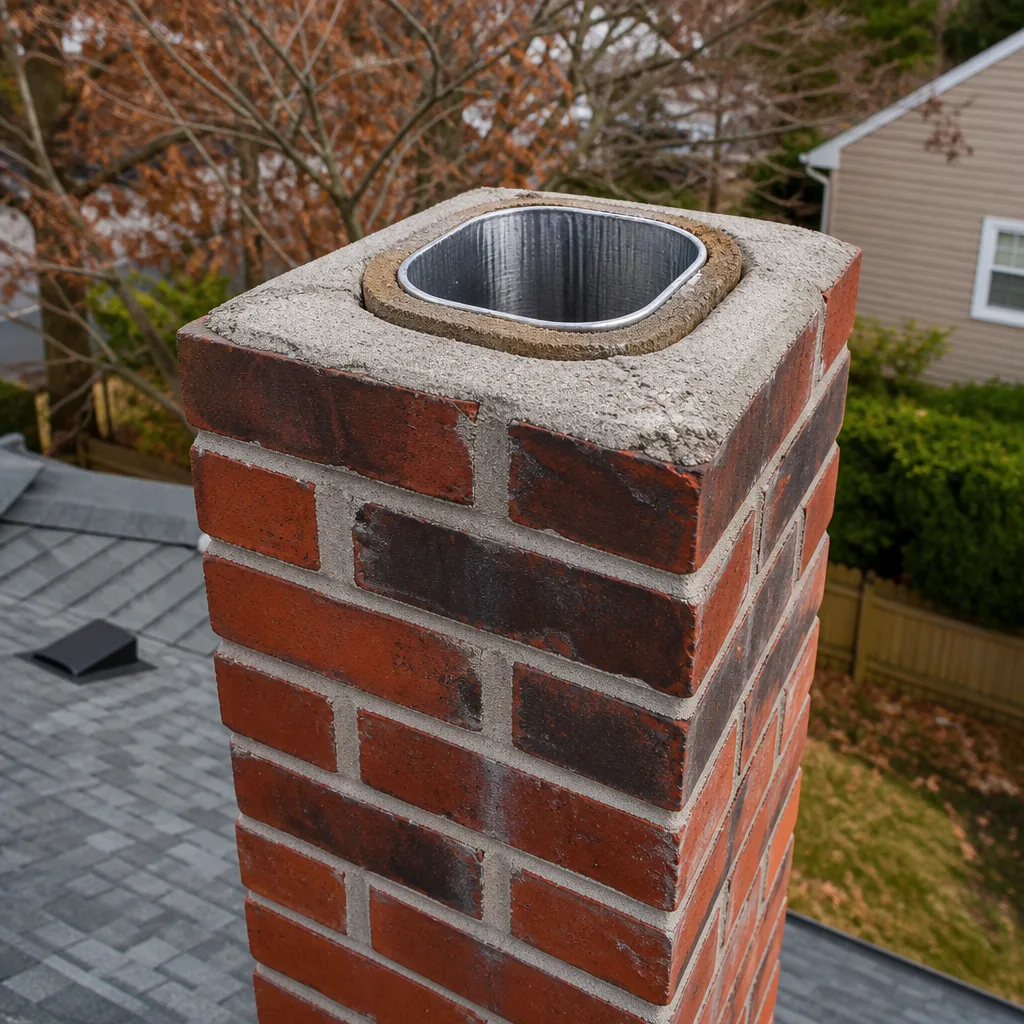
- Repair before failure is dramatically cheaper: A HeatShield resurfacing application addresses cracked clay liners for a fraction of what a full reline costs. A DuraFlex flexible liner system handles offset or compromised flues that rigid liners can’t navigate. Both are less expensive than rebuilding a fire-damaged chimney, which starts around $8,000 and goes up from there.
We see Glendale chimneys built in the 1950s with original clay liners every month. The homes aren’t unusual; they’re typical. If you own a home built before 1980 and you’ve never had a video scan of your flue, you don’t have a “clean chimney” question. You have an unknown condition question. The only way to answer it is to look.
How to Compare Quotes Apples-to-Apples: Scope of Work, Not Headline Price
You’ve called three companies. One quoted $129. One quoted $325. One quoted $475. The $129 quote looks like the winner until you realize you have no idea what’s in it. Here’s the comparison method that cuts through it.
Step 1: Ask every company the same six questions. Don’t let the quote dictate the scope; dictate the scope and make them price against it. The six questions are:
- Does the cleaning include brushing the smoke chamber, or just the flue?
- Does the tech inspect the chimney cap from the roof?
- Is the firebox hand-cleaned, or just vacuumed?
- Do I get a written report with photos documenting what was done?
- If liner damage is suspected, is a video scan included or quoted separately?
- What’s your policy if you find something that needs immediate attention during the cleaning?
Step 2: Build a comparison table. Put the six scope elements as rows and the companies as columns. Mark each cell yes, no, or quoted separately. Here’s what a typical Glendale comparison looks like when homeowners do this:
- Company A at $129: Flue brush only. No roof access. No smoke chamber. No report. No video option.
- Company B at $325: Full six-component scope. Roof access. Written report with photos. Video scan quoted at $195.
- Company C at $475: Full scope plus video scan included. Report with photo and video documentation. Specific brand names listed for any recommended repairs.
Step 3: Price the gaps. Take Company B’s $325 and add the $195 video scan. You’re at $520, which is more than Company C’s $475 for the same complete service. That’s the number to compare: end-to-end cost for the same scope. Headline price is not your comparison metric. Total cost for total scope is.
One note on our own house here: when we quote a cleaning, the scope is itemized on paper before we start. You see every component, what’s included, and what’s flagged as conditional. If liner concerns come up during cleaning, we provide the video footage and review it with you before we ever talk about repair options. That’s the documentation standard in this market for professional-grade work.
The Deferred Maintenance Math: What Skipping Three Years Actually Costs
The argument for skipping a chimney cleaning is usually “we barely use the fireplace.” Let’s run the numbers on that assumption for a typical Glendale homeowner burning one cord of seasoned oak per season.
The cleaning cost: $350 for a complete cleaning with inspection. Recommended annually if you burn regularly, every two years if you burn occasionally.
The three-year deferral scenario: You skip three cleanings and save $1,050. Here’s what happens in a chimney that isn’t inspected during that period:
- Creosote accumulation: Each cord of oak produces roughly 20 to 30 pounds of creosote particles that deposit on flue walls. Three cords without a cleaning leaves 60 to 90 pounds of combustible material in the flue. One hot fire is all it takes to ignite it.
- Water entry through a failed cap: A cap that rusts through in year one goes unnoticed for two more years. Rainwater mixes with creosote inside the flue, creating an acidic slurry that eats at mortar joints and clay liner surfaces. By year three, the liner has spalled, and the repair is now a HeatShield resurfacing or a full reline at $2,500 to $6,000.
- Damper failure: A damper that seized in year two goes unnoticed. By year three, it’s rusted through and requires replacement at $400 to $800. More importantly, it’s been leaking conditioned air for two full HVAC seasons, silently adding $200 to $400 per year to heating and cooling bills.
The actual cost of skipping three cleanings: $0 savings. The math works out to a repair bill of $3,000 to $7,000 against $1,050 in skipped cleanings. Never mind the chimney fire scenario, which is statistically rare but catastrophic when it happens. The silent failures alone make the deferral math fail. A $350 inspection catches a $700 cap failure, a $600 damper seizure, and a $2,500 liner problem before any of them compound.
The deferred maintenance story in Glendale is consistent. The homes that need the most repair work are rarely the ones with recent cleaning records. They’re the ones where maintenance was deferred, and the inspection never happened.
Who Should and Shouldn’t Buy a Cheap Sweep
Not every homeowner needs a $450 complete service every year. And not every $99 special is a scam. The question is whether your chimney profile matches the scope of the cheap service.
A flue-only sweep is genuinely adequate if:
- Your fireplace is used fewer than ten times per season.
- You had a complete cleaning with video inspection within the previous 24 months.
- You burn only seasoned hardwood with moisture content under 20%.
- Your cap, damper, and firebox were all documented as in good condition at the last inspection.
- Your home was built after 1990 with a modern stainless steel liner system.
A flue-only sweep is not adequate if:
- Your home was built before 1980 and you’ve never had a video scan of the flue.
- You burn more than a cord of wood per season.
- You’ve noticed a change in drafting, smoke spill-back, or unusual odors.
- Your last cleaning was more than three years ago.
- You’ve experienced an earthquake (Glendale is in a seismically active zone, and any significant seismic event can shift flue tiles and open gaps).
The cheap sweep is a maintenance interval, not a replacements for assessment. It works as a between-inspections brush-down for a chimney whose condition is already documented. It doesn’t work as the first service on a chimney whose condition is unknown.
Common Mistakes to Avoid
- Comparing quotes on price alone without itemization: The $129 quote and the $325 quote aren’t for the same job. If you can’t get a line-item scope, don’t hire the contractor.
- Skipping the video scan on a pre-1980 home: Clay liners don’t announce their failure. The first sign is often a chimney fire or a CO detector going off. Neither is a good discovery scenario.
- Accepting a repair recommendation without evidence: Any legitimate contractor can show you a photo or video of the problem. If the recommendation is delivered verbally with no visual proof, get a second opinion.
- Deferring based on low fireplace usage: Creosote doesn’t care how often you use the fireplace. It accumulates whenever you burn, and it corrodes whenever water gets in. Infrequent use is not a reason to skip inspection.
- Hiring a handyman service that lacks brand-specific material access: Chimney repair increasingly involves specialized systems like HeatShield cerfractory sealant and DuraFlex flexible liners. A generalist without access to these materials will recommend a rebuild because that’s what they know how to sell.
- Not documenting the cleaning for insurance and resale: If you ever file a homeowner’s insurance claim for chimney-related damage, the first question is whether you maintained the system. A dated cleaning report with photos is your proof of diligence.
- Ignoring the dryer vent: Chimney sweeps aren’t just for fireplaces. Dryer vent cleaning addresses a documented house-fire risk in the laundry room. It’s the other vented combustion appliance in most Glendale homes, and it’s frequently overlooked until the dryer stops drying.
When to Call a Professional
Some circumstances don’t wait for the next scheduled cleaning. If you notice smoke spilling back into the room during operation, call before you burn again; that’s a drafting failure, and the causes range from a blocked flue to a cracked liner. If you smell a persistent campfire odor in the house when the fireplace isn’t in use, moisture has likely entered the flue and mixed with creosote. If your CO detector fires with the fireplace or furnace in operation, stop using the fireplace and get a professional assessment before another burn. If you’re in the market for a new home in Glendale and the chimney hasn’t been inspected during escrow, order the video scan yourself. The $250 you spend is the cheapest insurance available against a $6,000 surprise six months after close. Glendale Chimney Sweep offers free estimates in Glendale, call (833) 467-6493 to schedule an assessment.
Frequently Asked Questions
A complete chimney cleaning with Level 1 inspection in Glendale costs $250 to $450 for a standard single-flue fireplace, with an additional $150 to $250 if a video flue scan is included. The $99 specials on local service boards typically cover flue brushing only, leaving the smoke chamber, firebox, and damper unaddressed. Call (833) 467-6493 for an exact quote based on your chimney’s specifics and our current schedule.
A wood-burning fireplace that sees regular use should be swept annually, and the National Fire Protection Association standard is to clean when creosote accumulation reaches 1/8 inch, which for most Glendale burners translates to once per season. Gas fireplaces should be inspected annually but swept less often, typically every two to three years depending on usage. A video scan should accompany at least the first cleaning on any home built before 1980.
A Level 1 inspection is a visual check of the accessible parts of the chimney: firebox, damper, cap, crown, and the flue interior visible from above and below. A Level 2 inspection adds video scanning of the full flue interior, attic and crawlspace access points, and is required after a chimney fire, an earthquake, or when the home changes hands. Most routine cleanings include Level 1. In Glendale, where seismic events are part of the landscape, any significant earthquake should prompt a Level 2.
If the recommendation comes with video footage showing cracks, gaps, or spalling in your clay liner, it’s not an upsell; it’s a documented structural finding. If the recommendation is delivered without video evidence, get a second opinion from a chimney repair specialist who can document the condition. For many Glendale homes, HeatShield resurfacing can restore a deteriorating clay liner without a full relining tear-out, and that option is only available through contractors authorized to work with the HeatShield system.
A full cleaning includes flue brushing, smoke chamber brushing, firebox hand-cleaning, damper inspection, cap and arrestor inspection from the roof, and a written report. The $99 special is a flue brushing with a vacuum pass through the firebox. If the company’s quote doesn’t list these components as included, they’re being omitted.
Dryer vent cleaning is a separate service from chimney sweeping, and it’s one that Glendale homeowners need on a regular schedule. Lint accumulation in dryer vents is a recognized house-fire hazard, and reduced airflow means longer dry times and higher energy use. Plan on cleaning your dryer vent every 12 to 24 months depending on laundry volume. Call (833) 467-6493 to schedule both services in one visit.
The Bottom Line
A chimney cleaning in Glendale is a $250 to $450 service when it’s done completely, and a $99 to $149 partial service when it’s not. The difference is documented scope, and the only way to compare quotes is to itemize that scope before hiring. Pre-1980 homes should budget for a video scan that costs $150 to $250 and answers the liner question no Level 1 inspection can. Deferring maintenance doesn’t save money; it converts a predictable $350 maintenance item into a $3,000 to $7,000 structural repair. The team that can show you the problem, name the materials they’ll use to fix it, and document every step is the team worth hiring. The rest is just a low price on incomplete work.
Written by the team at Glendale Chimney Sweep, serving Glendale since 2011.
See the difference
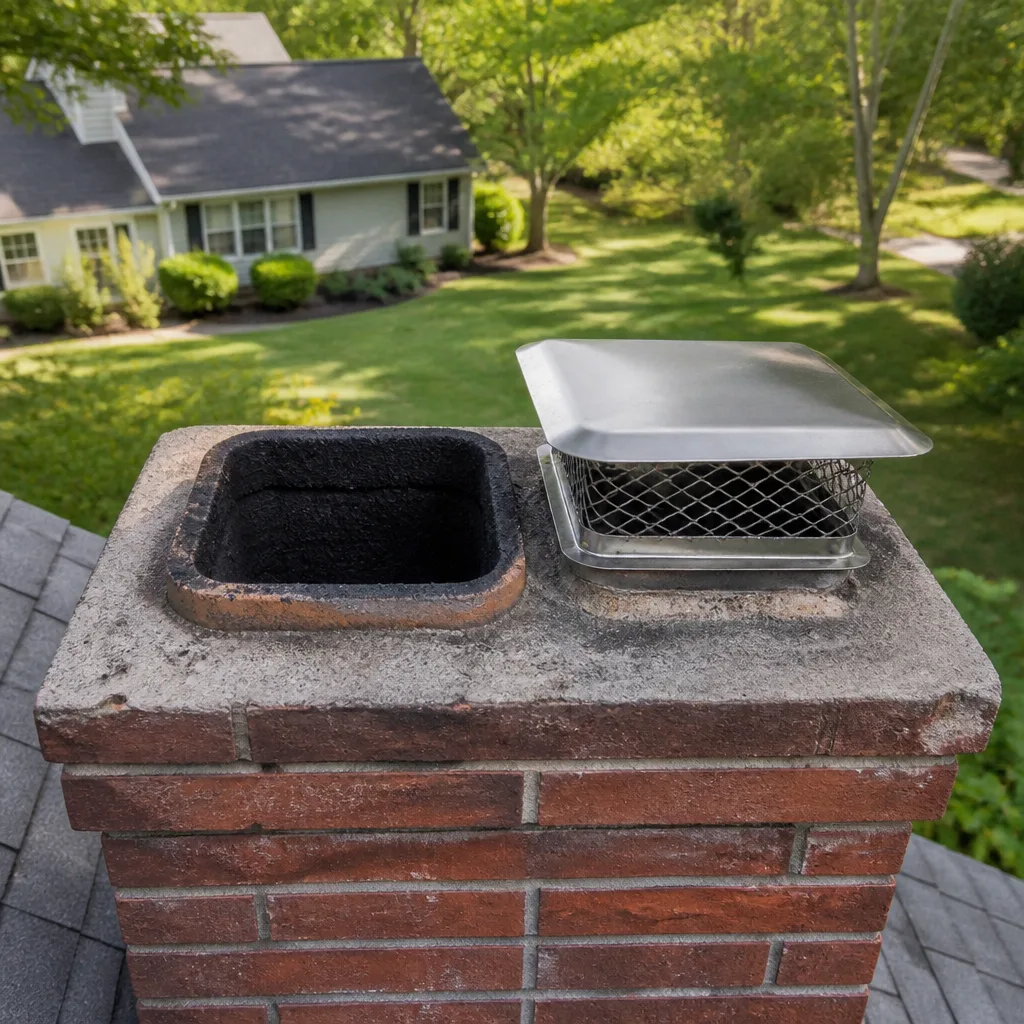
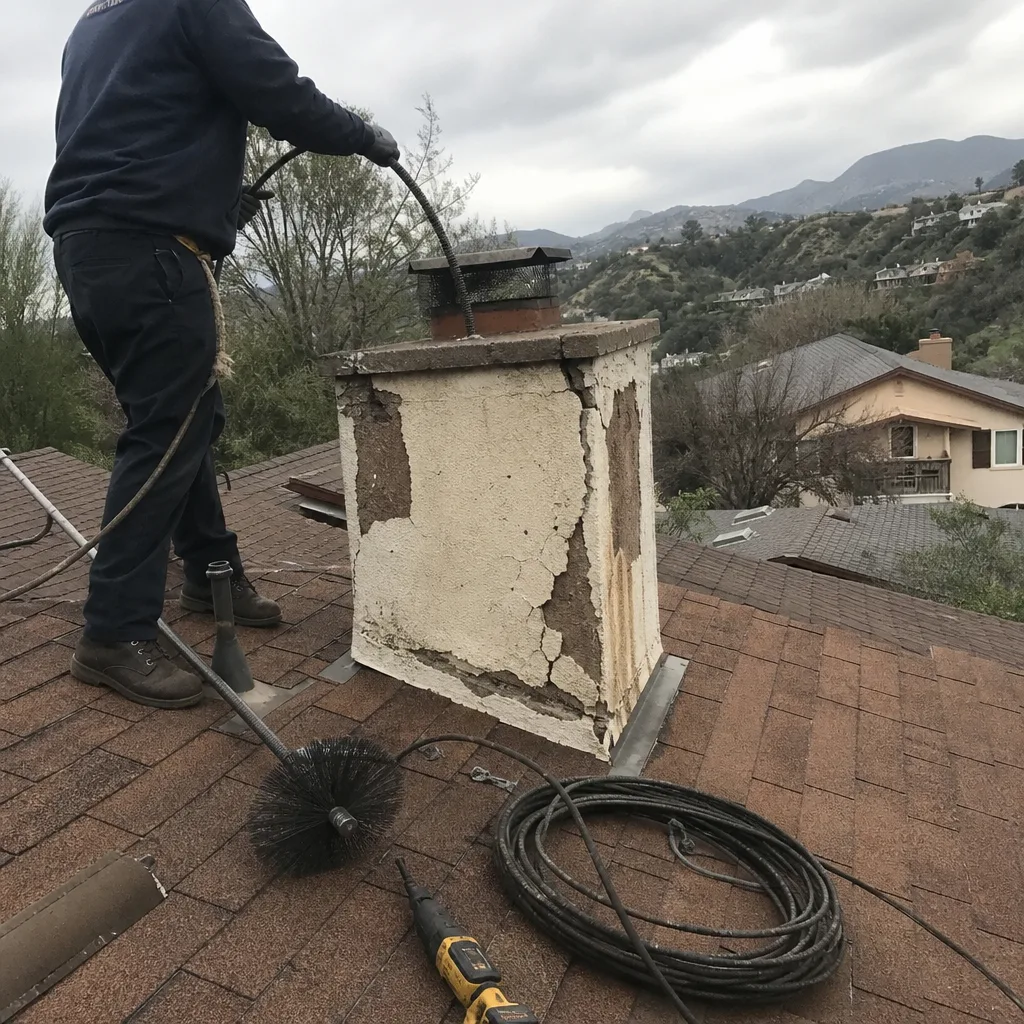 Before
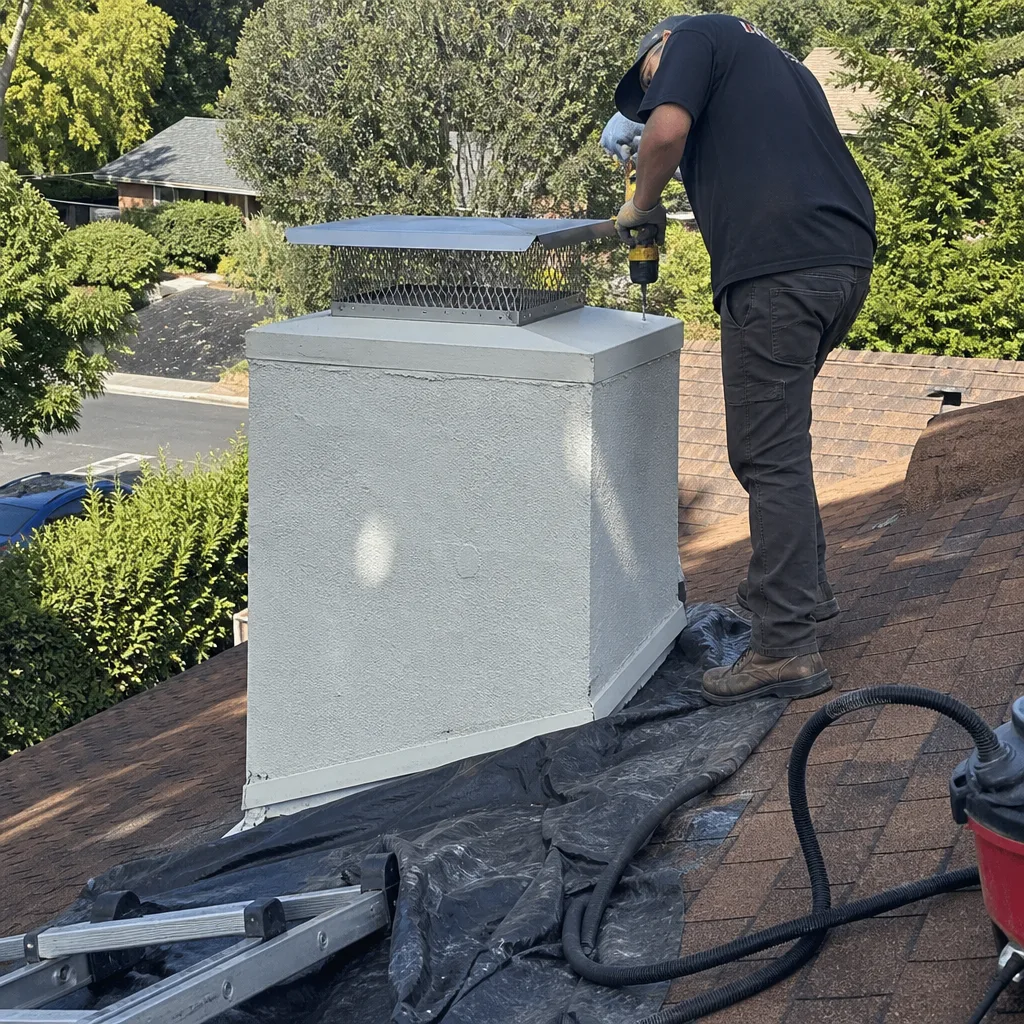 After
 Before
 After
 Before
 After