Last updated October 30, 2026
 Sweep & inspection
 Caps & crowns
 Flue relining
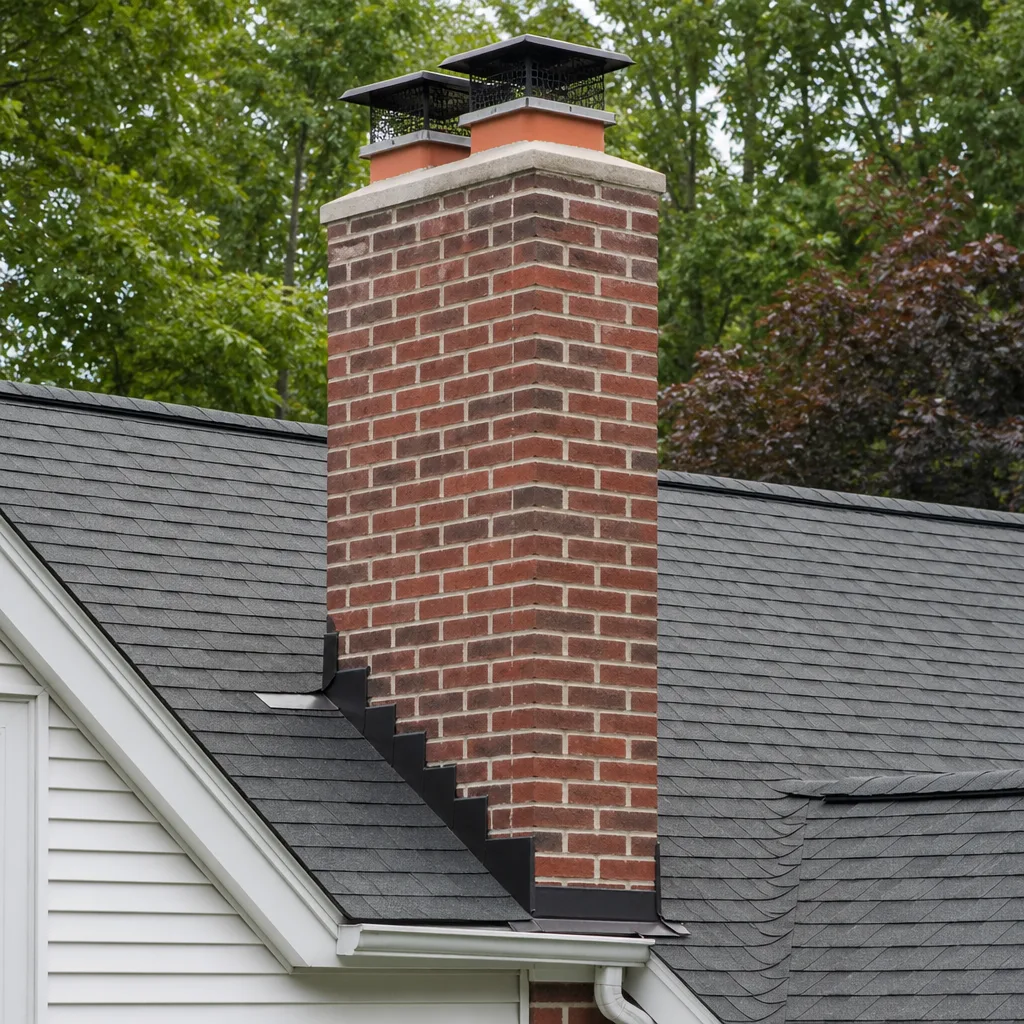 Masonry repair
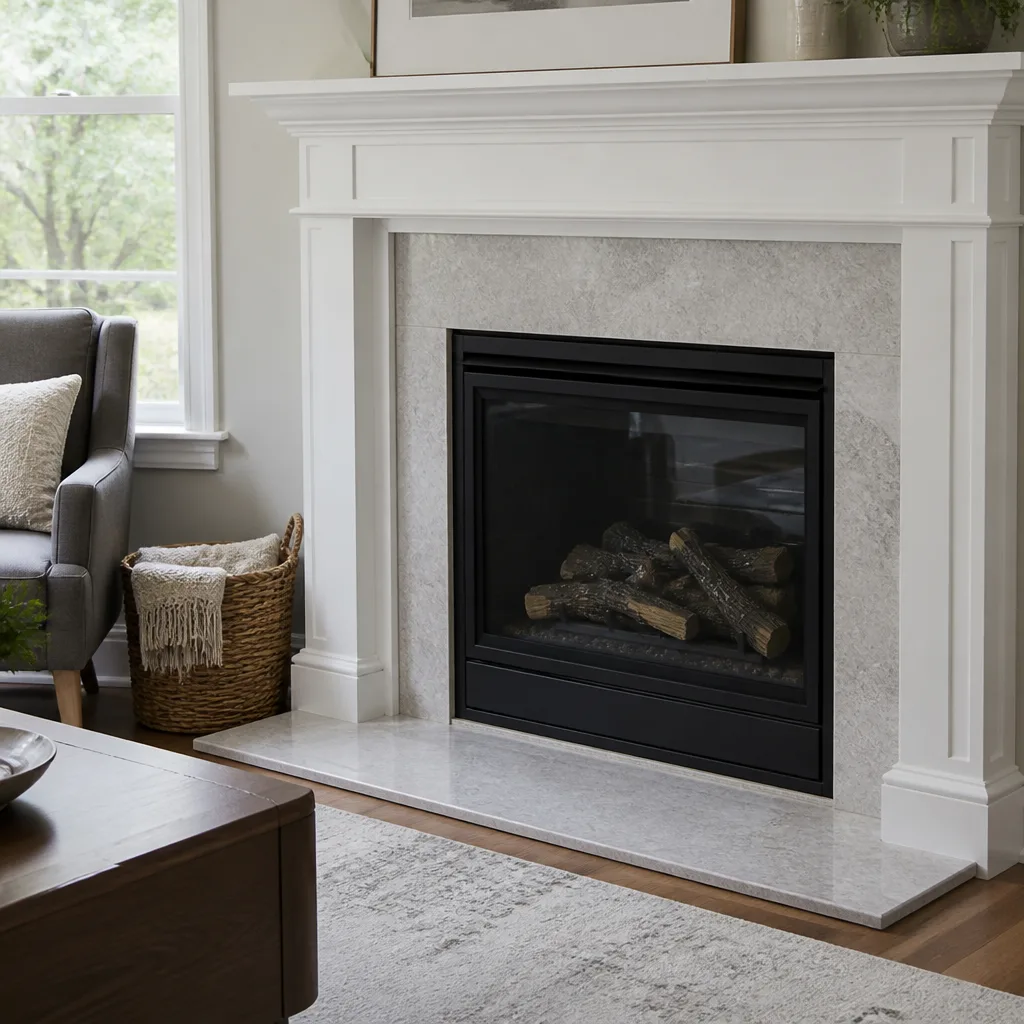 Gas fireplace service
Level 1 sweep and inspection to the NFPA 211 annual standard - flue, crown, cap, and flashing checked and photographed
Chimney sweep logs do not sweep chimneys. They loosen some creosote - which then falls where a brush and vacuum still have to collect it.
Seasonal Chimney Cleaning Care for Glendale: Year-Round Homeowner’s Guide
The season that does the most damage to Glendale chimneys is not winter. It’s September through November, when Santa Ana winds drive embers, fine ash, and airborne debris into uncapped or degraded flues during peak fire weather. This guide breaks down the Glendale-specific maintenance calendar that most generic chimney advice gets completely backwards, and shows you what to check each month to protect your flue, your liner, and your home. For Chimney Cleaning Cost Breakdown: The Glendale Homeowner’s Reference for 2026, see our dedicated pricing guide.
Quick Answer
Glendale’s Mediterranean climate means chimney maintenance should revolve around fire season, not the first frost. The most important inspection of the year happens in October or November, after Santa Ana winds have scoured your flue, not before you light the first winter fire. If you only schedule one chimney service per year in Glendale, book it for late fall.
Styles & brands we work with
Table of Contents
- Why Glendale’s Climate Breaks the Standard Chimney Calendar
- The Glendale Month-by-Month Chimney Maintenance Calendar
- Why Post-Fire-Season Inspections Matter More Than Pre-Season
- Winter Rain, Mortar Damage, and the Highest-Risk Window of the Year
- Spring Cleaning: Starlings, Swifts, and Glendale’s Clay Tile Caps
- What Off-Season Cap and Cover Maintenance Actually Extends
- When a Chimney Needs More Than a Sweep: Liners and Resurfacing
- Dryer Vents Belong in the Same Seasonal Routine
Why Glendale’s Climate Breaks the Standard Chimney Calendar
Walk into any hardware store in the Midwest and you’ll see the familiar fall display: chimney brushes, creosote remover, inspection mirrors. The entire industry assumes you’re preparing for a heating season. Glendale homeowners live with a different set of threats, and the standard “sweep in September” advice does not map onto our conditions.
Here’s what we actually deal with in Glendale. Our dry season runs roughly April through November. During those months, your chimney is not accumulating the sticky creosote that heavy wood burning produces. It’s accumulating dust, dry leaves, pine needles from the Verdugo Mountains, and the fine ash that drifts into foothill neighborhoods during wildfire season. That material is flammable. When the first winter fire hits, it can ignite quickly.
Then there’s the Santa Ana pattern. From late September through November, northeast winds funnel through the passes and hit Glendale foothill communities hard. Those winds push debris horizontally into chimney openings in ways that a gentle Midwestern snowfall never does. We find more blocked flues, more missing caps, and more wind-damaged mortar joints in October and November than in any other months.
The takeaway is that Glendale has two distinct chimney seasons, not one heating season. There’s the fire-season prep window in late summer and early fall, and there’s the post-fire-season damage window in late fall and early winter. Most homeowners only think about the first one. The second one is where the real risks live. For a full overview of what a professional sweep covers in the Glendale area, see our Chimney Sweep in Glendale service page.
The Glendale Month-by-Month Chimney Maintenance Calendar
Here is the calendar we recommend to Glendale homeowners, month by month, based on what we encounter in flues across the city. Adjust within a week or two based on your elevation and proximity to the foothills.
January – February: Peak Use, Peak Creosote
This is the one period when Glendale chimneys behave like conventional chimneys. If you burn wood regularly, creosote accumulates now. A thin layer is normal. A quarter-inch or more means a sweep is overdue. During these months, listen for a crackling sound in the flue, watch for smoke backing into the room, and check the damper for sticky buildup.
March: Schedule a Mid-Season Check If You Burn Weekly
If you light fires three or more times per week all winter, don’t wait until fall. March is the correct time for a mid-season sweep. Creosote that accumulated in January and February sits in your flue through the dry season, hardening into a glaze that is harder to remove later. This is also the month we recommend inspecting the firebox and damper before shutting the system down for spring.
April – May: Spring Nesting Begins
Starlings and swifts arrive in Glendale in early spring and look for cavities. An uncapped clay tile flue is an ideal nesting site. Check the cap in April. If the mesh screen has holes larger than three-quarters of an inch, birds will get through. We cover what to look for in the spring cleaning section below.
June – August: Dry Season Inspection and Repairs
Summer is the smart time for structural repairs in Glendale. Masonry work cures best in warm, dry conditions, which means mortar repairs, crown sealing, and liner work done in June or July will set properly. You also avoid the fall rush. Most chimney contractors in Southern California get slammed starting in September. Booking in summer means shorter lead times and working with crews who aren’t overbooked.
September: Pre-Fire-Season Sweep
Late August or September is the right time for the seasonal sweep. This removes dry-season debris before you light the first fire, and it gives us a clean baseline for the season. If your cap is damaged or missing, September is the latest you should replace it before Santa Ana winds peak.
October – November: Post-Fire-Season Inspection
This is the appointment that Glendale homeowners skip, and it is the one that catches the most damage. We cover what to look for in our Chimney Cleaning Emergency Preparedness Guide for Glendale Homes. After the Santa Ana season has blown through, have the chimney inspected for wind-blown debris, cracked caps, loosened mortar, and any ember or ash intrusion from nearby fires. The inspection matters more this year than in most, given how dry the local chaparral has been around the foothills.
December: First-Heavy-Use Safety Check
Before the holiday burning season, check the damper operation and look for any signs of water staining around the firebox, which may indicate a leak that started with the first winter rains. If you did not do the October inspection, December is your last safe window before peak use.
This calendar is specific to Glendale’s conditions and differs from what a homeowner in a colder climate should follow. Our Glendale Chimney Sweep home page has a fuller breakdown of how our work follows this local rhythm.
Why Post-Fire-Season Inspections Matter More Than Pre-Season
Here’s the problem with conventional chimney advice. It tells you to get a sweep and inspection before burn season begins. That’s sensible. But it assumes the biggest threat to your flue is creosote from your own fires. In Glendale, the biggest threat is what the wind puts into your chimney when you are not burning anything at all.
Santa Ana winds in October and November move dry air from the high desert toward the coast at sustained speeds that can exceed 40 mph, with gusts much higher. Those winds carry fine particulate: ash from wildfires, sand from the Antelope Valley, leaf litter from sycamores and oaks in the foothills. An unprotected or poorly capped flue becomes a collection point for all of it.
The debris that accumulates is not just a nuisance. It is fuel. When you light your first fire in late November or December, that dry material can ignite and create a chimney fire in a flue that was clean in September. We have seen this pattern in Glendale homes across Rossmoyne, Chevy Chase Canyon, and the Verdugo Woodlands: a fall sweep, then a December chimney fire caused entirely by wind-blown accumulation after the sweep.
A post-fire-season inspection in late October or November catches this before you strike the first match. The inspection itself is quick: we scope the flue, remove any debris, check the cap integrity, and verify nothing has shifted since the fall prep. For homes near the wildland-urban interface, this inspection should be non-negotiable, every single year.
If you have any doubts about what a flue should look like after wind season, see Chimney Repair in Glendale for what we check during a structural assessment.
Winter Rain, Mortar Damage, and the Highest-Risk Window of the Year
Glendale receives most of its annual rainfall between December and March. That water does not sit harmless on your chimney. It gets into the masonry, into the crown, into the throat of the flue. And when it finds existing mortar damage, it accelerates it.
Here is how the failure cycle works. During the dry season, mortar joints slowly erode from UV exposure and thermal expansion. The damage looks cosmetic at first: hairline cracks on the crown, small gaps between bricks. Then the winter rains arrive. Water penetrates the cracks. It soaks into the masonry. When the temperature drops overnight, that water freezes and expands inside the brick, a process called spalling. The outer face of the brick pops off. The structural integrity of the chimney drops, and the next fire you burn now vents through a compromised structure.
The highest-risk window is the period between the first significant rain and the first heavy fire use. That sequence, rain then fire, is what turns a small crack into a structural hazard. The heat from a fire expands the water-saturated masonry much faster than the masonry can handle, and the resulting stress fractures can be significant.
What this means practically: the first weeks of December are the most dangerous time of year for a Glendale chimney with existing mortar or crown damage. If you notice any of these signs during the rainy season, call before you light another fire:
- Water streaks or staining on the interior firebox walls after rain
- Brick fragments or mortar grit on the ground around the chimney base
- A white, powdery residue (efflorescence) appearing on the exterior masonry
- Damp smells from the fireplace when it’s not in use
None of these are things to fix yourself. The repair requires proper mortar matching and professional crown sealing. What we can tell you is that a rainy December in Glendale reveals chimney damage faster than any other time of year, and the repair is far cheaper in February than it is after a season of freeze-thaw cycles.
Spring Cleaning: Starlings, Swifts, and Glendale’s Clay Tile Caps
Glendale’s older housing stock includes thousands of homes with original clay tile chimney caps. Those caps, if uncracked, do a fine job of shedding water. But the open flue beneath them is an open invitation to birds.
European starlings and chimney swifts are the two main culprits in the Glendale area. Starlings build dense nests of twigs, grass, and debris, often inside the flue itself. Swifts build smaller nests that attach to the interior flue wall. Both create two problems. The nest material is flammable, and a nest blocking even part of the flue changes the draft characteristics of the chimney, which can push carbon monoxide back into the home when you light a fire.
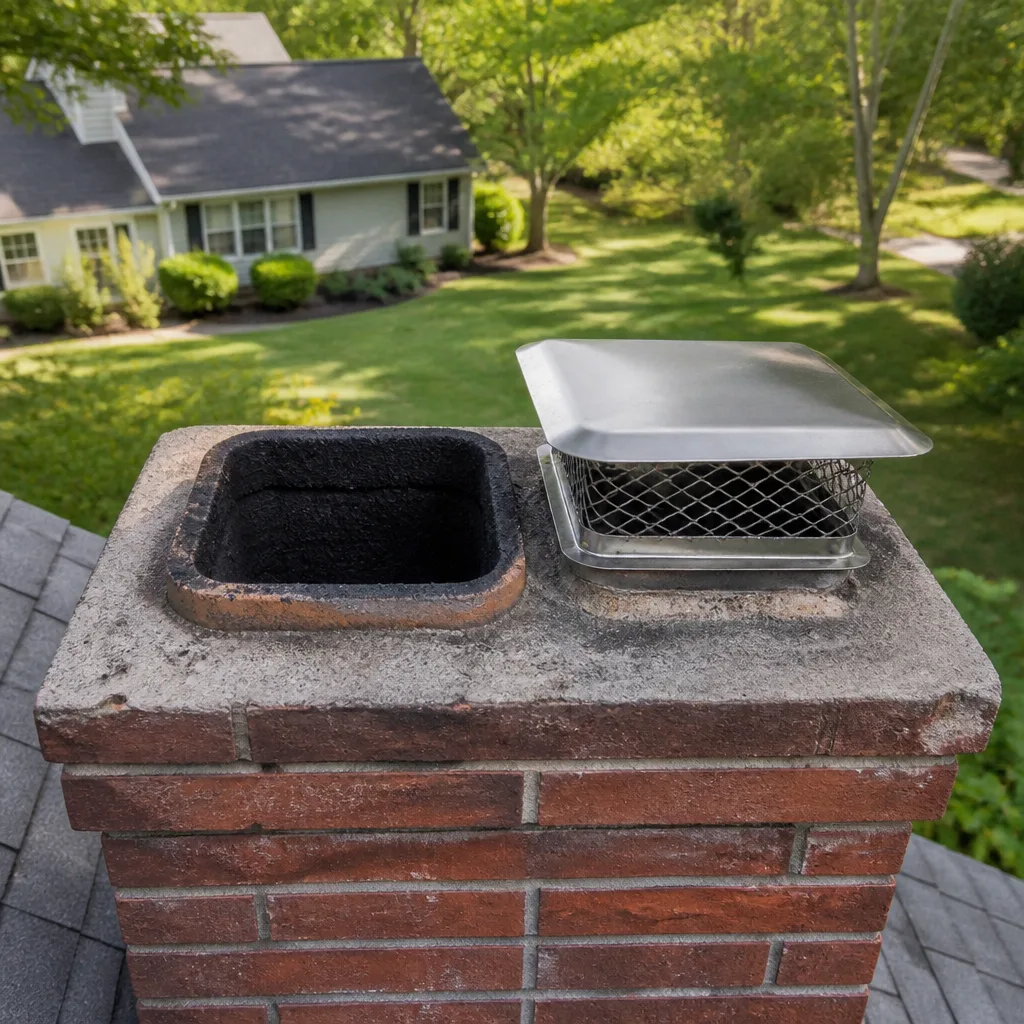
Spring is the time to address this. By late April, nesting activity is in full swing. The smartest approach is prevention: verify that your cap has an intact mesh screen with openings no larger than three-quarters of an inch. That size keeps birds out while still allowing proper draft. If your cap has no screen at all, or the screen is damaged, the fix is simple and should be done before nesting season peaks.
If it’s too late and you already have an active nest, leave it alone until the young have fledged. Disturbing an active nest of a native species can violate both federal and state wildlife laws. Wait until the birds leave, then have the nest removed and the flue swept before you burn anything.
This is also the correct time to check the mortar joints between clay tile sections. The tiles themselves crack from thermal stress over time, and water that gets into those cracks during the rainy season will continue to degrade the liner all summer. For older Glendale homes, the spring inspection is where we catch cracked tiles before they turn into a required liner replacement.
What Off-Season Cap and Cover Maintenance Actually Extends
It’s common to hear that a chimney cap adds a few years to your liner’s life. But what does that actually mean in practical, measurable terms for a Glendale home? Here is the honest answer.
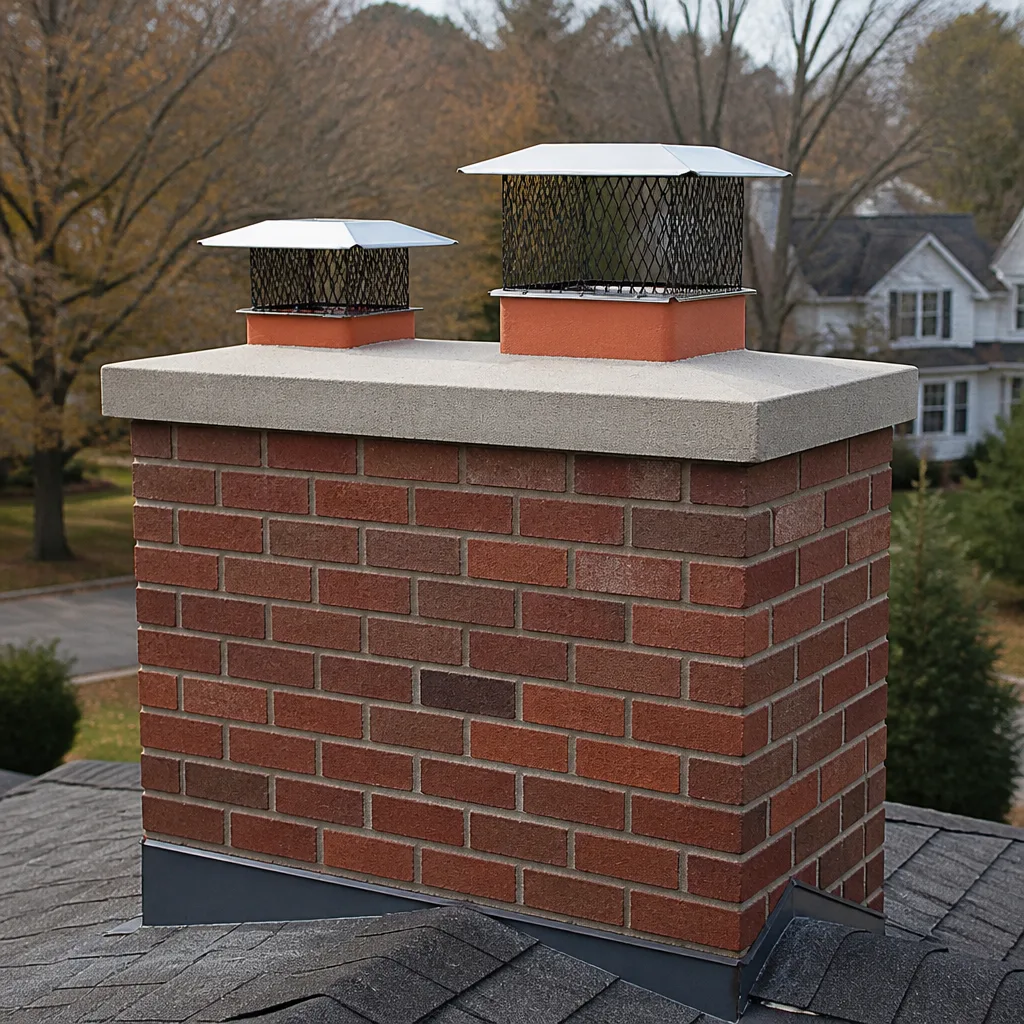
A properly installed stainless cap with intact screening prevents three categories of damage: water intrusion from vertical rain, debris accumulation from wind and leaf fall, and animal entry. Each category maps to a specific component and a specific lifespan.
For the clay tile liner in a typical Glendale home, water is the primary aging agent. Rainwater entering the flue dissolves the natural salts in the clay and weakens the tile structure over successive wet-dry cycles. A cap eliminates about 90 percent of that water directly. For a liner that might otherwise last 30 to 40 years, a cap can realistically add a decade or more, especially in homes where the flue is used seasonally rather than in heavy winter rotation.
For the masonry crown, the cap reduces the frequency of water-saturated freeze-thaw events. Glendale rarely freezes, but we do get nights in the 30s in December and January in the foothills. Fewer saturated cycles means fewer stress fractures, which means fewer expensive crown rebuilds over the life of the home.
For the damper and the firebox, the cap keeps out fine particulate that otherwise settles on the damper plate and abrades the metal surfaces every time the damper operates. That abrasive dust is a bigger issue in Glendale than in wetter climates, because our air is dry and particulate-heavy for most of the year.
What the cap does not do is eliminate the need for periodic sweeping. Caps reduce debris, they do not eliminate creosote, which is a byproduct of your own fires and has nothing to do with what falls into the flue from above.
When a Chimney Needs More Than a Sweep: Liners and Resurfacing
Some Glendale chimneys come through a standard sweep with a deeper problem: the liner itself is failing. This is where an inspection report becomes a real decision point, and where we recommend homeowners understand their material options before anyone quotes them a number.
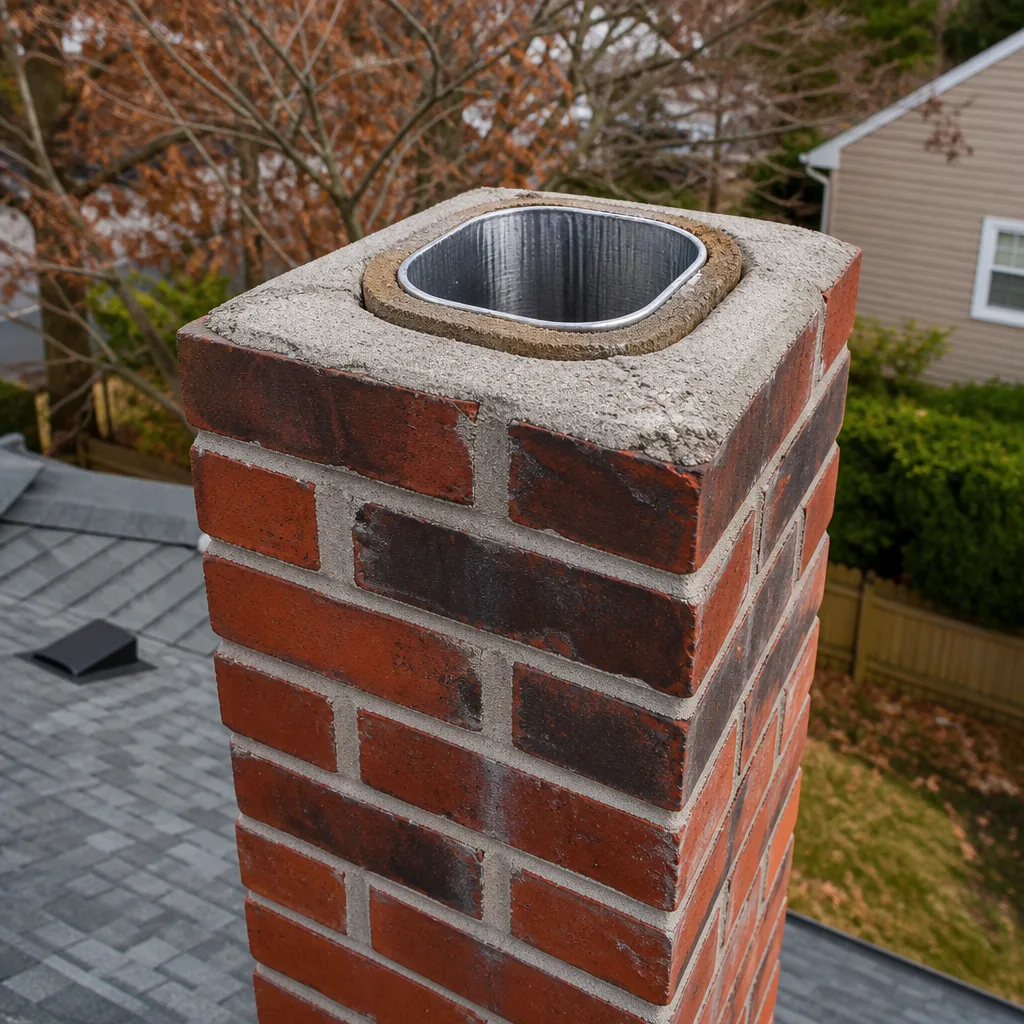
A standard clay tile liner cracks from heat stress over time. Those cracks allow gases and moisture to reach the masonry structure behind the liner. In serious cases, the flue is no longer safe to burn, and the chimney needs one of two interventions: a full reline or a resurfacing.
Full relining means pulling the old liner and installing new. For many Glendale homes, especially older ones with offset flues, flexible stainless systems like DuraFlex are the right call. A flexible liner can follow the bends and offsets in a flue that a rigid system cannot, which means the installation is far less invasive. We stock and install DuraFlex precisely because so many of the chimneys we service in Glendale’s older neighborhoods have non-standard flue paths.
Resurfacing is the alternative. HeatShield is a cerfractory material that gets applied to the interior flue walls, effectively sealing cracks and restoring a continuous surface without removing the existing clay tiles. It is a specialized process, and not every chimney sweep in Glendale is certified to do it. We are. For a deteriorating flue that is still structurally sound, HeatShield can restore safe operation at a fraction of the cost of a full reline, and it preserves the original masonry structure.
The decision between the two comes down to the condition of the existing liner and the flue’s geometry. A professional inspection that includes a camera scope will tell you which approach makes sense for your home. What you should not accept is a verbal “your liner is shot” without imagery. Any shop, including ours, should be able to show you the cracks on camera before quoting liner work. We name the brands we use, DuraFlex and HeatShield among them, because we stand behind the materials and want our customers to research them independently.
Dryer Vents Belong in the Same Seasonal Routine
The chimney is not the only vented exhaust system in a Glendale home with a fire risk. The clothes dryer vent is a direct combustion exhaust, and it accumulates lint the same way a chimney accumulates creosote. The difference is that dryer vents go uncleaned for years in most homes, because nobody thinks about them until the dryer starts taking two cycles to dry a load.
Here is the Glendale-specific angle. Our dry climate produces extremely dry lint, which is more flammable than the damp, heavier lint you get in humid coastal areas. A dryer vent in a Glendale home can accumulate a significant fuel load in a single year of regular use, especially with longer vent runs common in split-level and hillside homes.
Add to this the fact that many Glendale homes route dryer exhaust through roofs rather than side walls, which creates longer runs, more bends, and more places for lint to collect. The longer the run, the more frequently it needs cleaning.
The seasonal routine we recommend is simple: clean the dryer vent every 12 months, and time it with your spring chimney check if you want to bundle both appointments. Signs that the vent is already restricted include longer drying times, a burning smell during operation, and a lint trap that is not catching as much as it used to. For specifics on what the service includes, our Dryer Vent Cleaning in Glendale page covers the full scope.
Common Mistakes to Avoid
- Cleaning only in the fall, and never after fire season. The Santa Ana winds deposit flammable material after your September sweep. A second inspection in late fall is not redundant in Glendale; it’s the difference between a clean flue and a surprising chimney fire.
- Using a flex brush on a tile liner that’s already cracked. If your liner has spalling or stress cracks, mechanical sweeping can worsen the damage. A camera inspection before the sweep identifies whether gentler methods are required.
- Ignoring the cap because the flue “looks fine.” The cap is the first line of defense against water, wind-blown debris, and nesting birds. If it’s missing from a Glendale home, the flue below is compromised whether you can see it or not.
- Burning pine and eucalyptus from local landscaping as primary firewood. Both are common in Glendale yards and both produce heavy creosote when burned green or even partially seasoned. Use properly dried hardwood, and expect to sweep more often if you burn local softwoods.
- Waiting until the first rain to check for leaks. By the time water shows up inside the firebox, it has already been working through the masonry for weeks. Check crown and mortar joints in the dry season, when repairs can still be made before the wet cycle accelerates them.
- Treating a dryer vent as a separate problem from the chimney. Both are vented combustion exhausts, and both need seasonal attention in a dry climate. Bundling both into one routine means neither gets skipped.
- Assuming a high-efficiency gas insert means zero maintenance. Gas appliances do not produce creosote, but they do produce corrosive exhaust gases that degrade liners over time, and the venting still accumulates debris from the outside environment. An annual glance at the termination cap is worth the effort.
See the difference
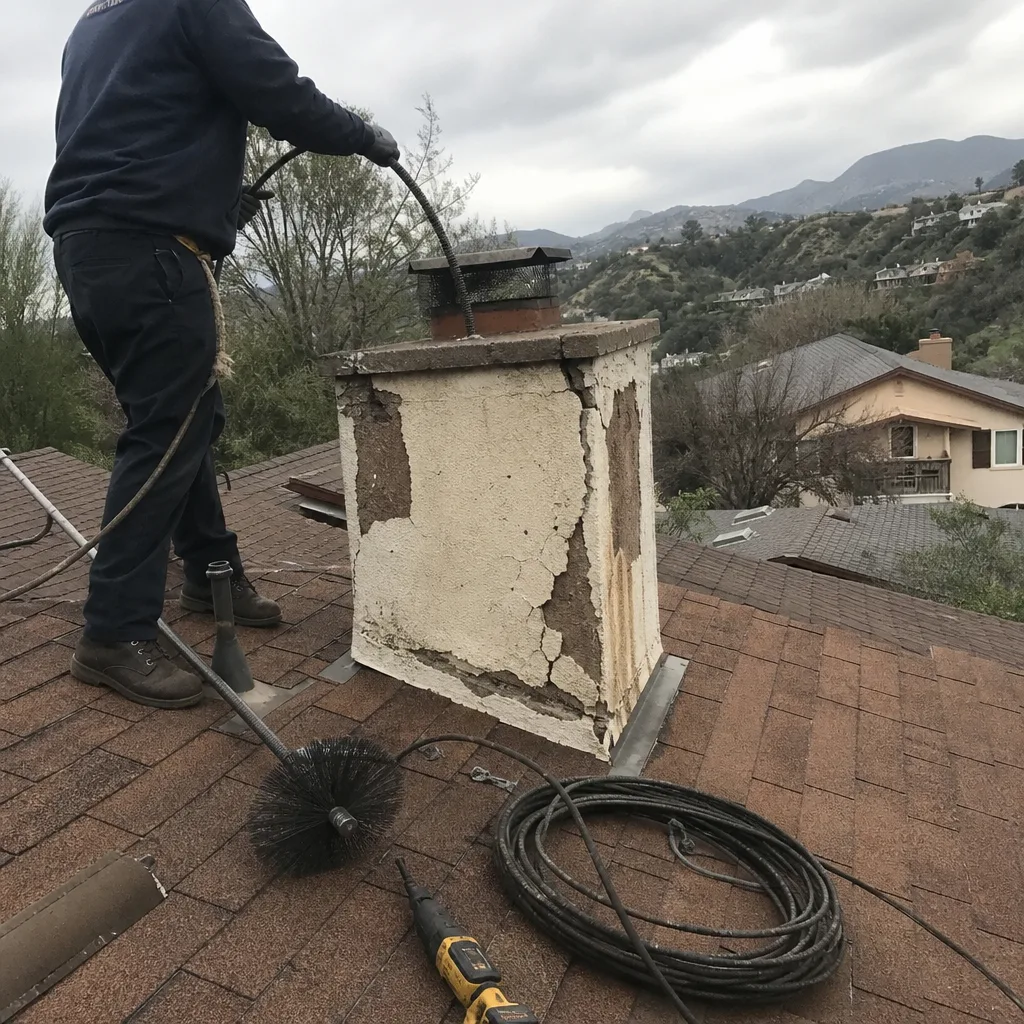 Before
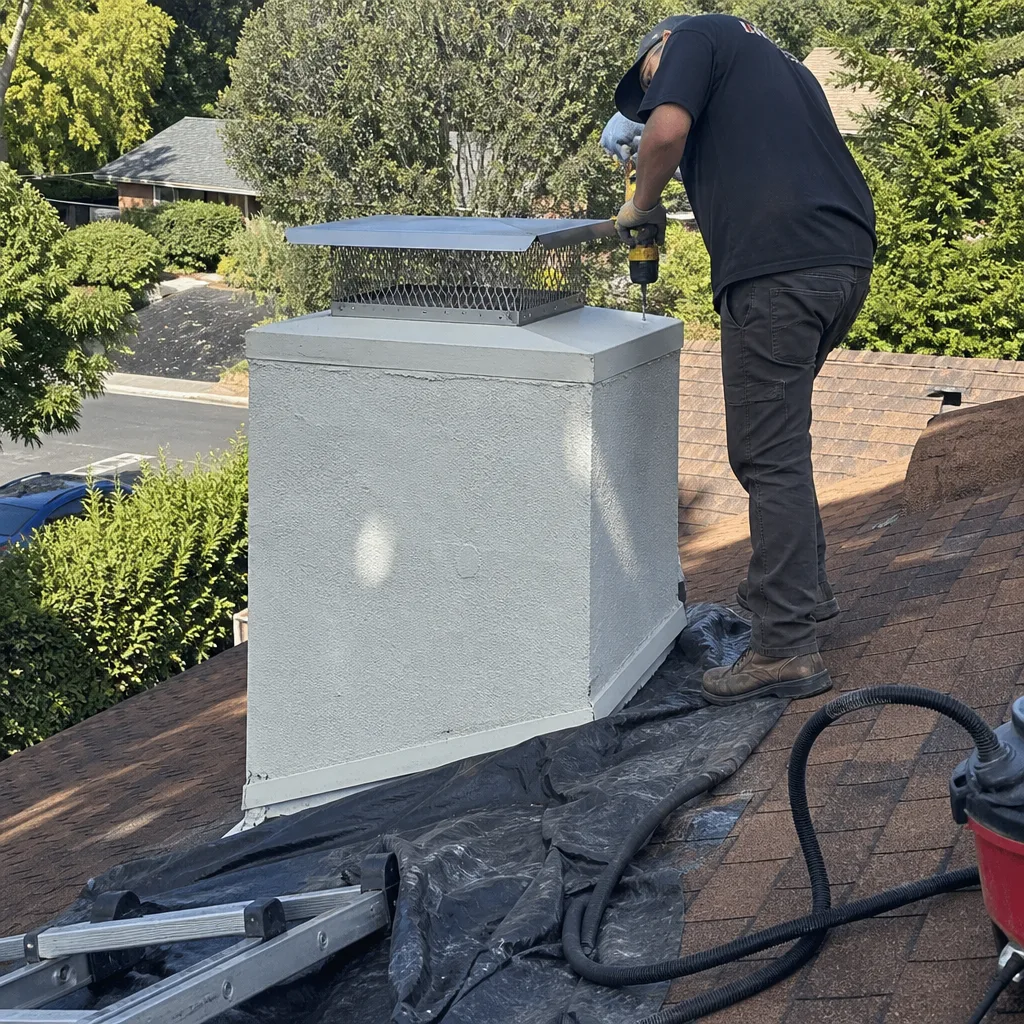 After
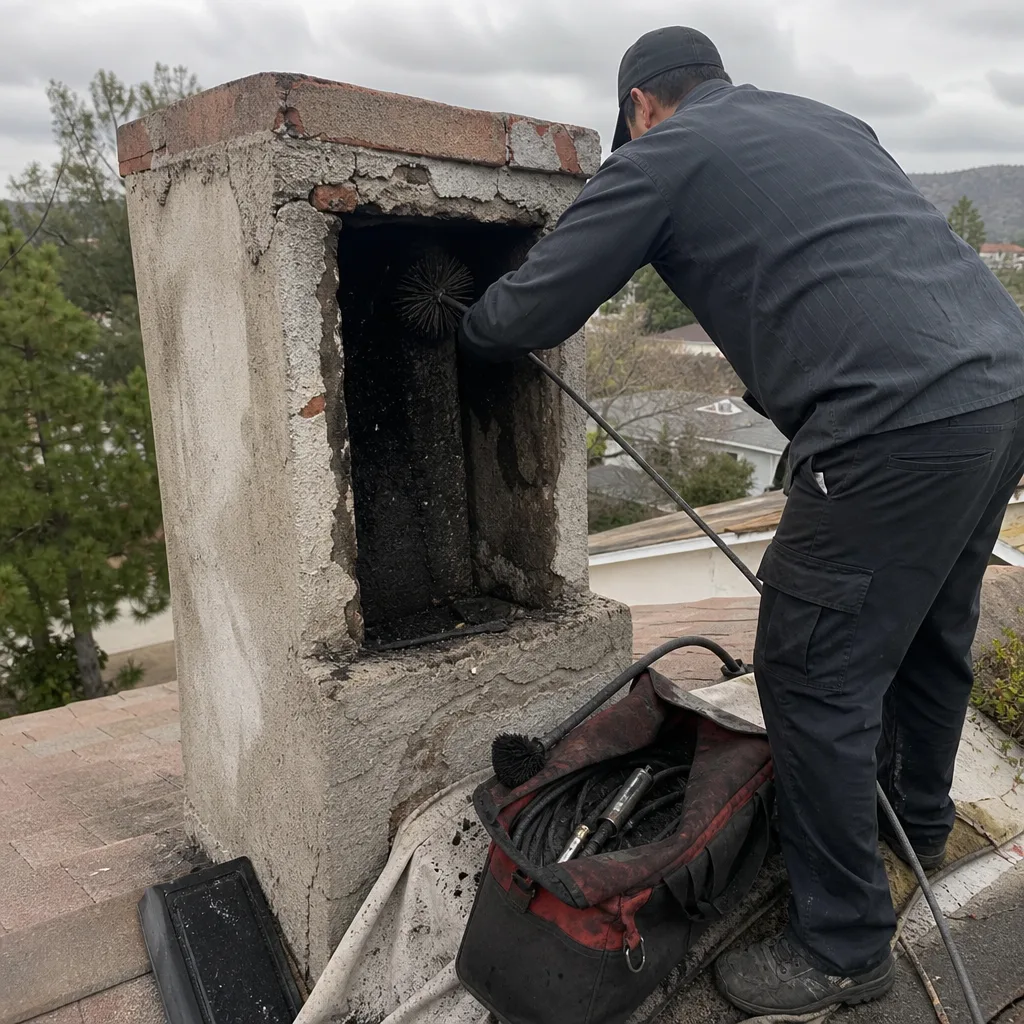 Before
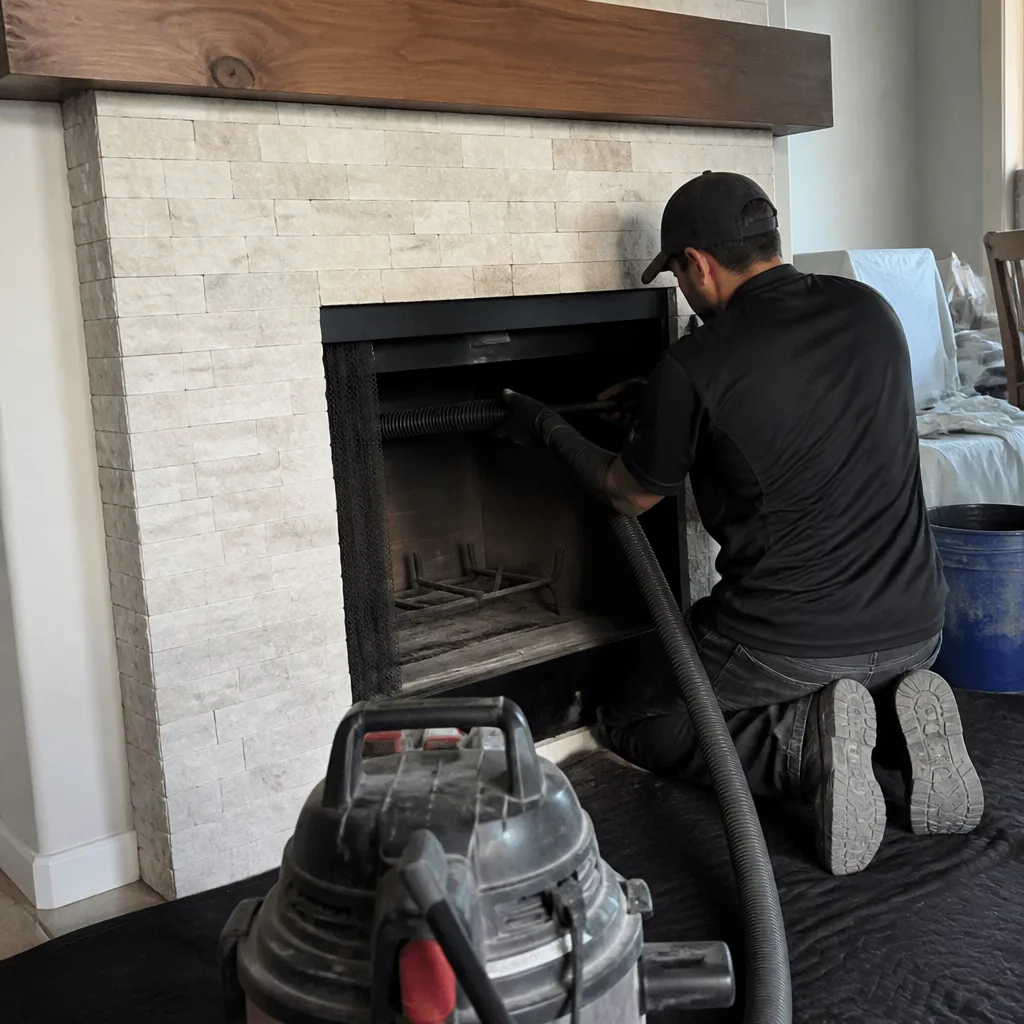 After
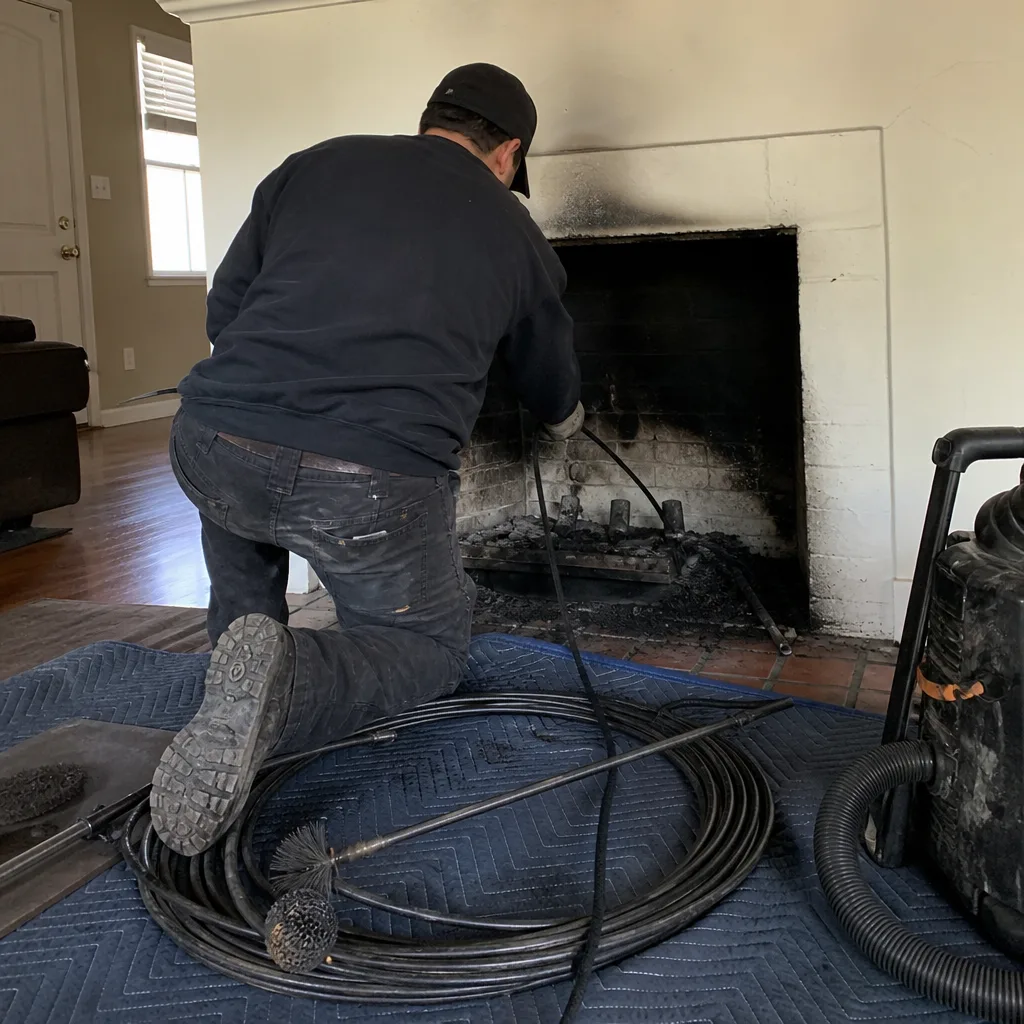 Before
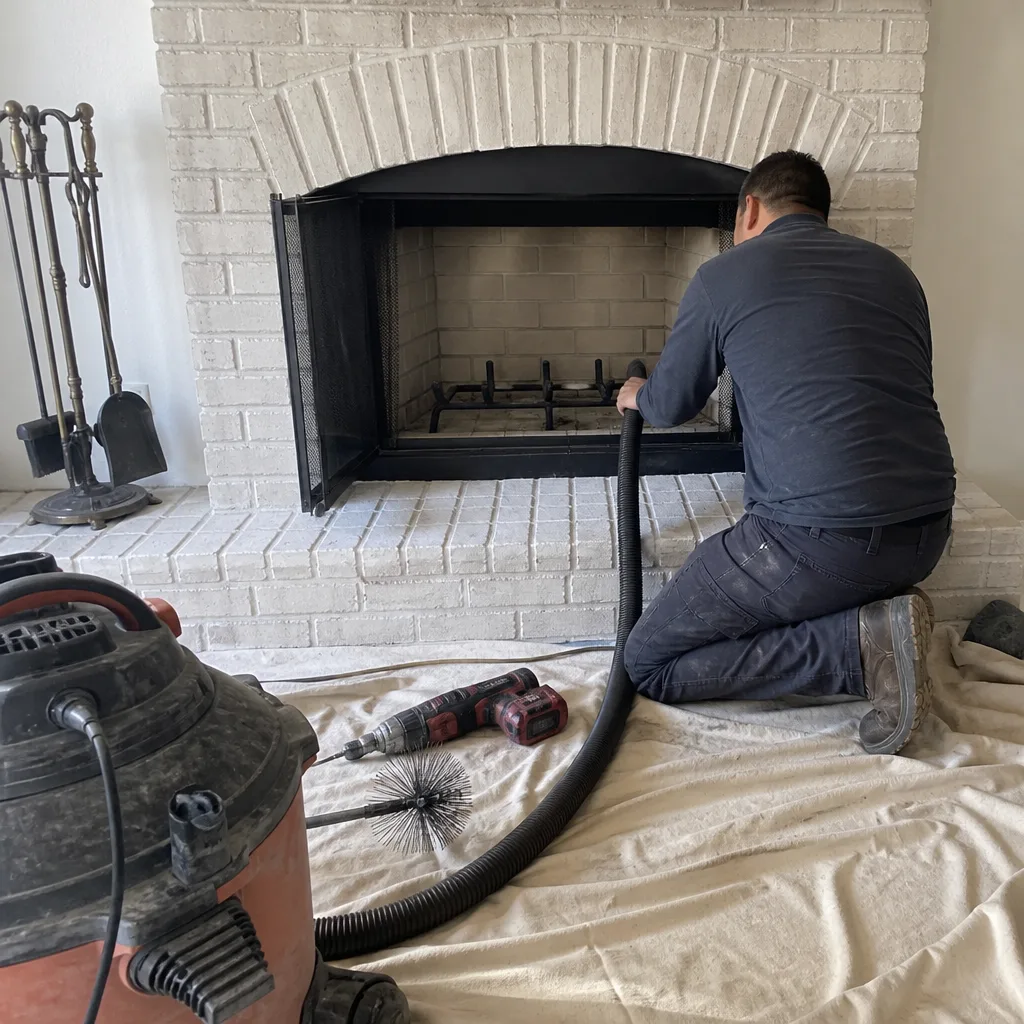 After
When to Call a Professional
Call a chimney professional if you see water staining inside the firebox after rain, if you find brick or mortar fragments on the ground around the chimney, if you smell smoke or gas when the fireplace is not in use, if your damper is stuck or difficult to operate, or if it has been more than two years since anyone actually saw the inside of your flue. A camera inspection is not expensive, and it answers questions that guessing cannot. Glendale Chimney Sweep offers free estimates in Glendale – call (833) 467-6493 to schedule an inspection or discuss what you’re seeing.
Frequently Asked Questions
For a home with a wood-burning fireplace, once per year is the minimum, with the sweep timed for late August or September so the flue is clean before fire season. Homes that burn more than three times a week all winter should add a second sweep in early spring to remove the heavier creosote accumulation. Gas-only chimneys should be inspected annually, though they may not need a full sweep every year.
The slow season for chimney work in Glendale is late spring through mid-summer, from April through July. Contractors have more scheduling flexibility then, and homeowners can often get repairs completed faster during this window. Fall is the busiest season, which means longer wait times and harder scheduling, not necessarily higher prices, but definitely less availability.
Yes, and the risk profile is different than in cold climates. The mild winters mean less creosote from heavy burning, but the dry, windy fall season creates a different hazard: accumulated wind-blown debris that ignites when fire use begins. Most Glendale chimney fires we see happen in December, not January, because of this fire-season accumulation pattern.
In the best case, you’ll burn with reduced draft and a higher chance of smoke entering the living space. The more likely outcome in Glendale is that you’ll eventually pay for the deferred maintenance in the form of a larger structural repair. Cracked liners, spalled masonry, and creosote removal on a neglected flue all cost far more than a regular sweep schedule, and some of that damage is accelerated by our dry-wet seasonal cycling.
Yes, because the chimney is still a vertical vent through the roof line, even if the fireplace is decorative or mostly unused. The structure is exposed to Glendale’s weather patterns, the flue can still accumulate wind-blown debris if the cap is compromised, and the masonry still undergoes thermal cycling. Structural maintenance is not optional just because the firebox is rarely lit.
The only reliable way to know is a camera inspection of the flue. If the clay tiles show minor cracks or surface spalling, HeatShield resurfacing may be the most cost-effective solution, restoring a continuous surface without removing the existing liner. If the liner is extensively damaged or the flue geometry is offset, a DuraFlex flexible stainless liner is typically the safer long-term choice. A professional scan will show the specific condition of your flue.
The Bottom Line
Glendale’s chimney maintenance calendar is not the one printed on the side of a sweep brush. Fire season prep in late summer, a post-fire-season inspection after the Santa Ana winds, and structural attention during the winter rain cycle are the three seasonal habits that keep a local chimney safe. Add spring nesting prevention and an annual dryer vent cleaning, and you have a year-round routine that matches the way this climate actually behaves. If you want a professional assessment of your specific chimney, Glendale Chimney Sweep offers free estimates in Glendale. Call (833) 467-6493 and we’ll take a look.
Written by the team at Glendale Chimney Sweep, serving Glendale since 2011.