
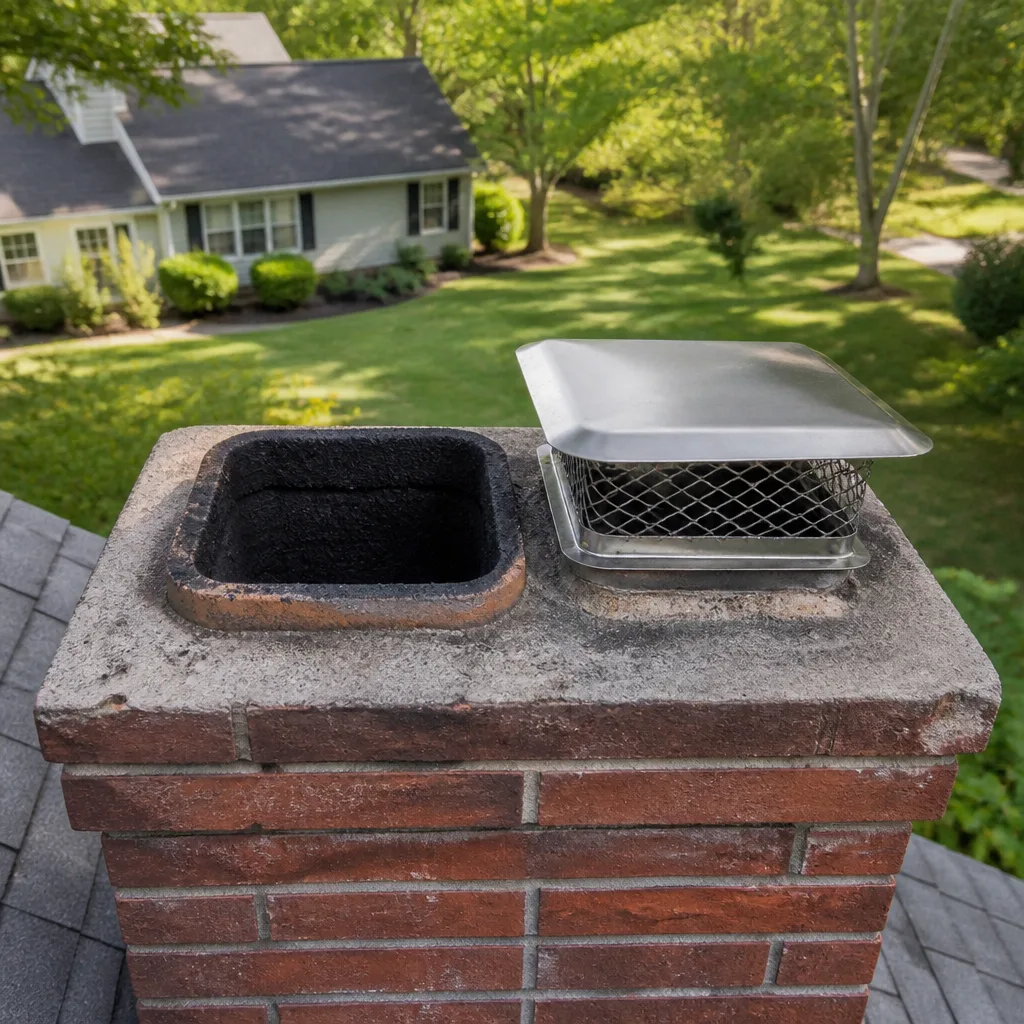
 Sweep & inspection
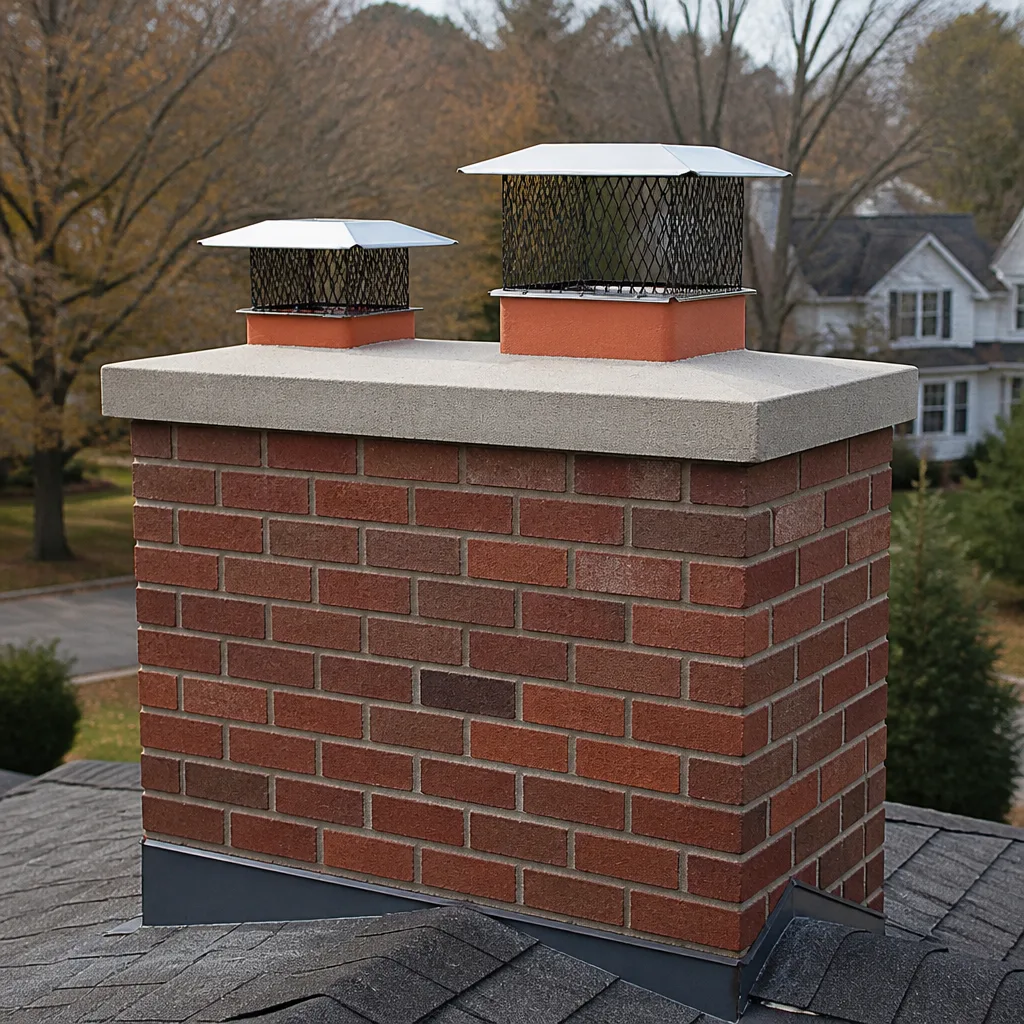 Caps & crowns
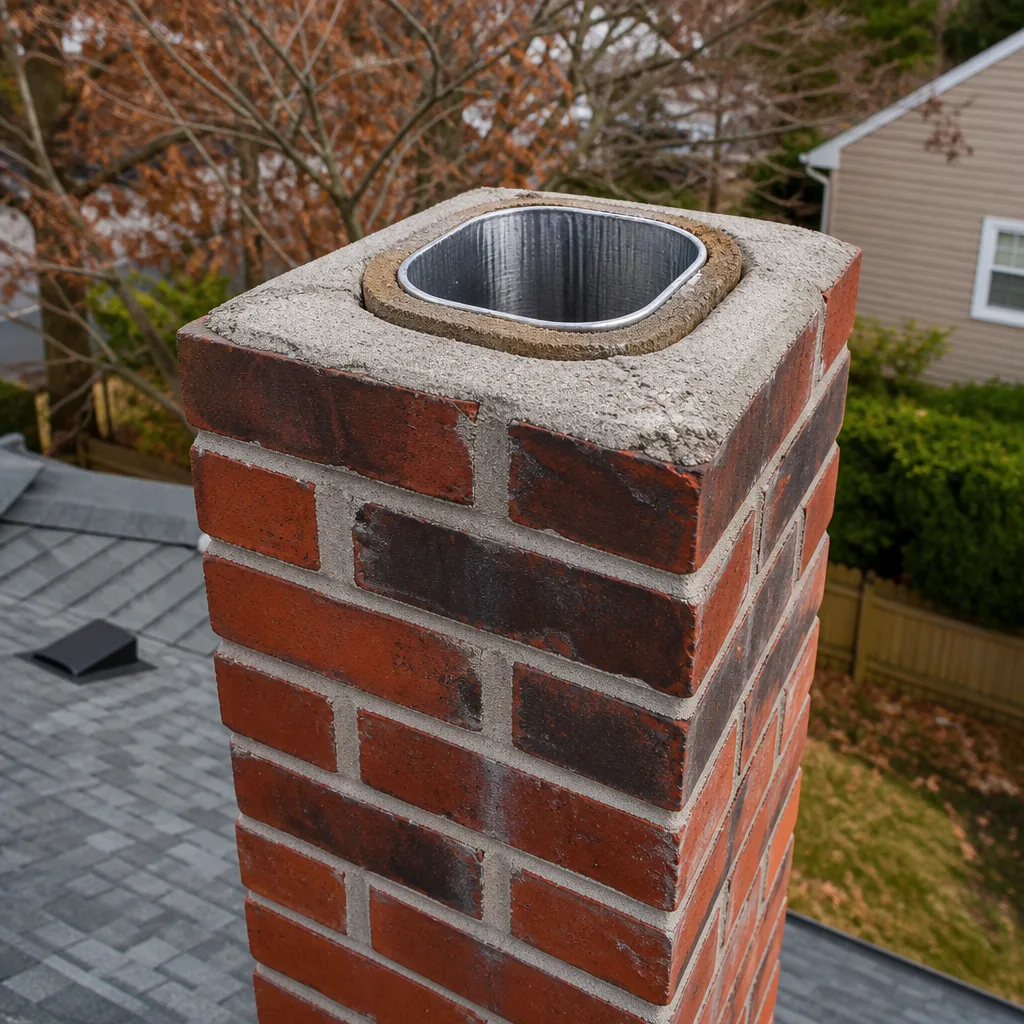 Flue relining
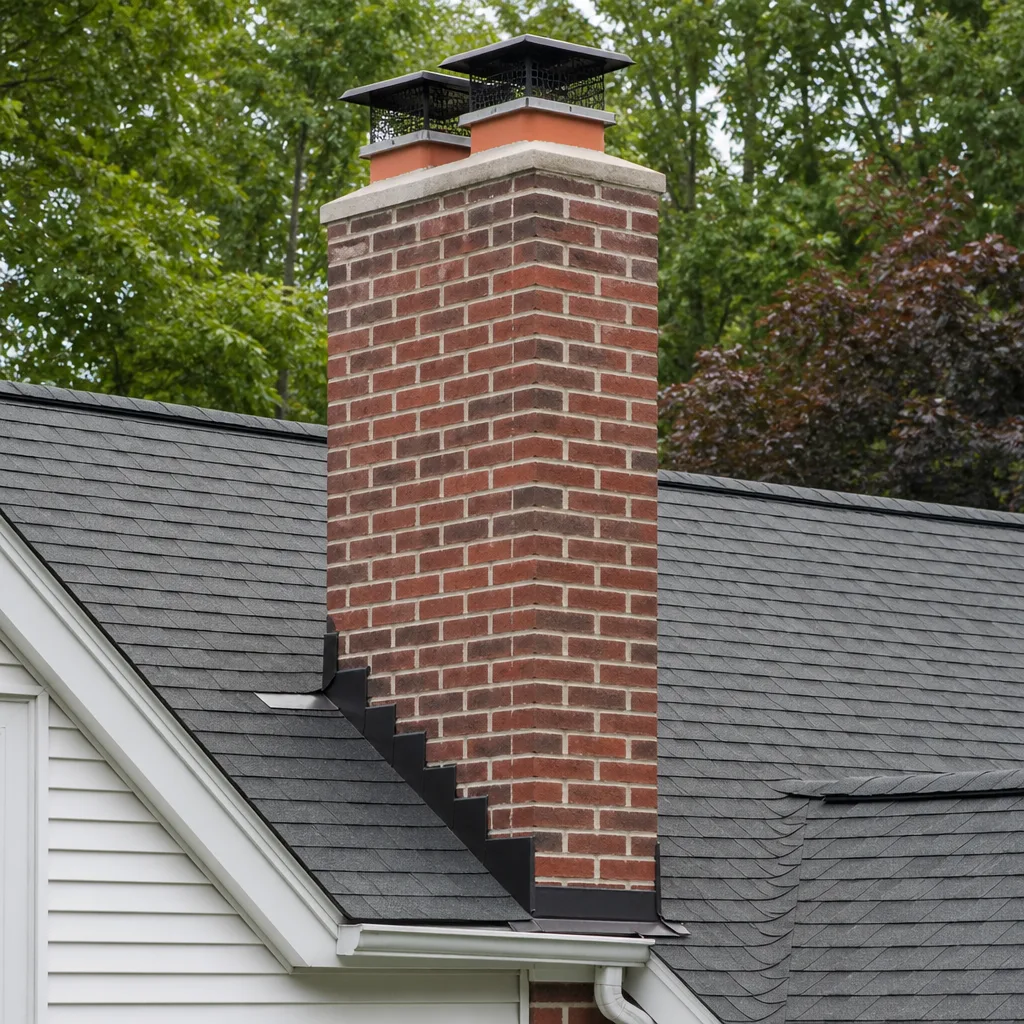 Masonry repair
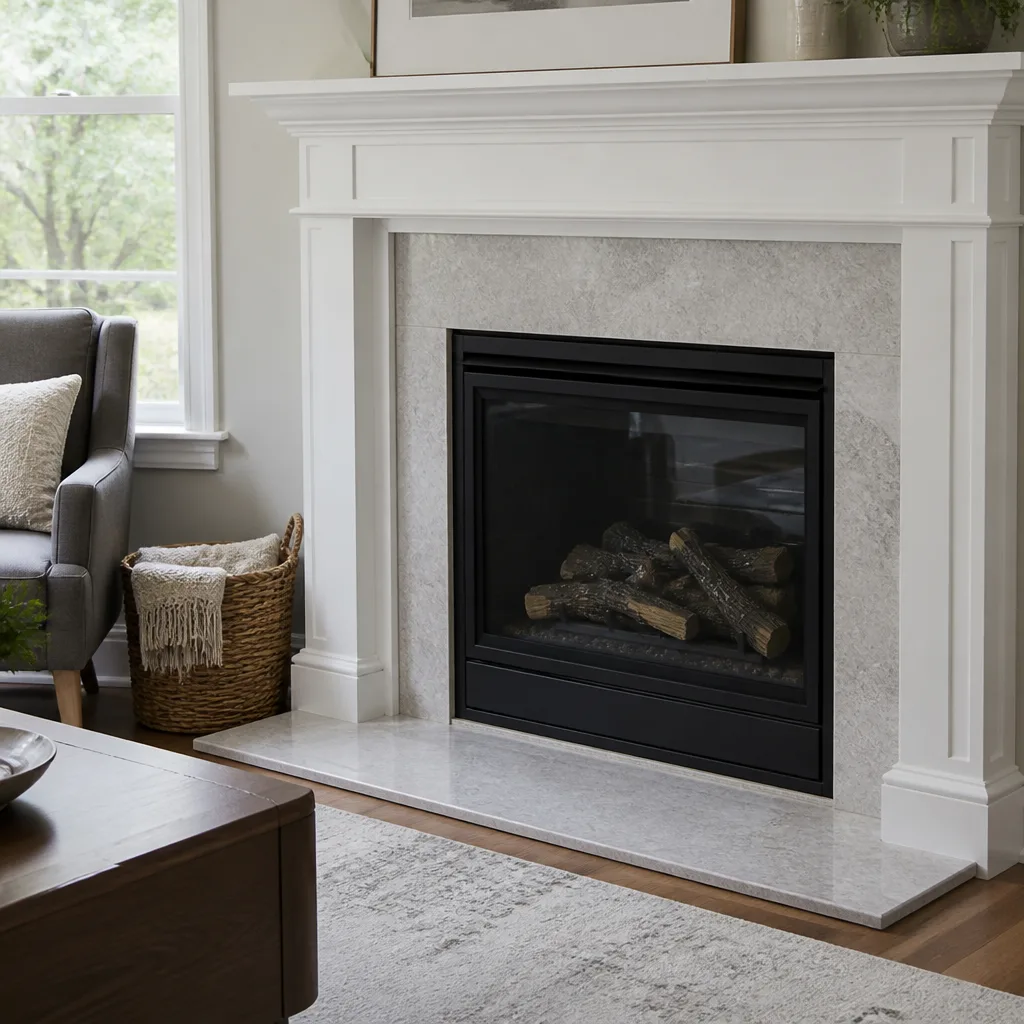 Gas fireplace service
Level 1 sweep and inspection to the NFPA 211 annual standard - flue, crown, cap, and flashing checked and photographed
Chimney sweep logs do not sweep chimneys. They loosen some creosote - which then falls where a brush and vacuum still have to collect it.
HeatShield Chimney Cleaning in Crest, CA | Glendale Chimney Sweep
HeatShield chimney cleaning in Crest means more than sweeping a flue. We’re an independent HeatShield service provider working across the 92021 foothills and offering HeatShield repair in Winter Gardens, and the one thing that sets our Crest work apart is that we treat every exterior metal chimney and wood stove connector as part of a wildfire-defense system. The mesh spark arrestor, the crown, the flue liner all get checked on every job because in this part of East County they’re fire-safety equipment first and draft components second. Call (833) 467-6493 for a free estimate.
What you get with us is decade-plus familiarity with HeatShield’s Cerfractory Flue Sealant and Resurfacing Compound applied to the specific chimneys Crest actually has: older masonry flues on ranch-era homes, exterior metal chimneys on freestanding stoves, and inserts that run hard from November through March. We stock genuine HeatShield components for faster turnaround. We’re not authorized or sponsored by HeatShield. Our recommendation rests on what the camera shows, not on a product quota. See our HeatShield sales & service page for the full range of what we handle.
Why Crest Residents Choose Us for HeatShield Service
Most chimney companies can sweep. Fewer can assess whether a HeatShield resurfacing job is actually going to bond to your flue substrate or fail within two seasons. That distinction matters in Crest, where mid-century homestead-era homes vent wood stoves through exterior metal chimneys that see heavy creosote, needle litter, and Santa Ana wind exposure. Noel Tarkanian, our owner, grew up in Glendale’s Montrose neighborhood in a 1950s craftsman with a fireplace that needed attention every winter. He’s been diagnosing chimneys across the San Diego area for over ten years, including Granite Hills HeatShield service, and he’s built the company around one idea: tell the homeowner exactly what the camera shows, then fix what needs fixing without upselling what doesn’t.
We work with six professional chimney-industry brands: DuraFlex, HeatShield, Gelco, Olympia Chimney, Famco, and Copperfield. That means when a HeatShield liner needs a compatible cap or top-plate component, we’re not improvising with whatever’s on the truck. We spec genuine HeatShield system materials where the bond matters, and quality aftermarket stainless where a cap, spark arrestor, or damper replacement is the right call.
Styles & brands we work with
Common HeatShield Chimney Cleaning Problems We Solve in Crest
- Blistered and delaminated cast liners. Resurfacing applied over a wet or soot-contaminated flue wall fails fast. In Crest’s foothill climate, where winter fires burn long and creosote loads build heavy on exterior metal chimneys, that failure shows up as a blistered, flaking liner surface within a season or two. We camera-scan before any resurfacing so the substrate is actually ready.
- Failed liner terminations at the crown end. Santa Ana winds tear off caps and damage spark arrestors on exterior chimneys. Once that top protection goes, rain and ember debris get into the top plate and start pulling moisture into the HeatShield surface. We check crown and arrestor condition on every Crest job, not just the flue itself.
- Older masonry flues with hidden offset or missing tile. A poured-in-place coating over an old flue that hasn’t been camera-scanned can hide spalled or offset tile behind the new surface. We see this on ranch-era masonry chimneys throughout Crest, and a Level 2 scan before any HeatShield application catches it before the coating goes in.
- Blinded spark arrestors on exterior metal chimneys. A clean flue vents through an arrestor that’s packed with creosote and pine needle litter. In Crest, where drought leaves the oaks and pines shedding constantly, we routinely pull aside an arrestor screen that’s half-blocked and document it before and after.
- Improvised top-sealing damper and cap assemblies. Corroded or improvised top hardware lets moisture into the HeatShield surface and undermines the whole liner. On older Crest homes where the cap was replaced ad hoc at some point, we’ll fit a stainless arrestor cap rated for wind exposure and document it for the homeowner’s fire-hardening file.
HeatShield Service in Crest: What Local Conditions Mean for Your Equipment
Crest’s mid-century homestead-era homes often heat primarily with freestanding wood stoves vented through exterior metal chimneys, and WUI fire-hardening rules here treat the mesh spark arrestor as a fire-safety device. So an obstructed or burned-through arrestor is a code issue before it’s ever a draft issue. That makes arrestor and cap condition a standing checklist item on every HeatShield job in 92021, not an afterthought. The elevation, roughly 1,500 feet in the Cuyamaca foothills, means colder winters and more wood-burning hours than coastal San Diego. More burn hours means heavier creosote accumulation. Heavier creosote means a liner that’s more likely to need resurfacing and an arrestor that’s more likely to be blinded. Foothill homes on large lots with pines and oaks dropping needle litter into exterior chimney caps see this cycle repeat every burning season. We plan HeatShield work around that reality. A flue that looks marginal in September can be a fire hazard by January if the arrestor is blocked and the creosote is glazing.
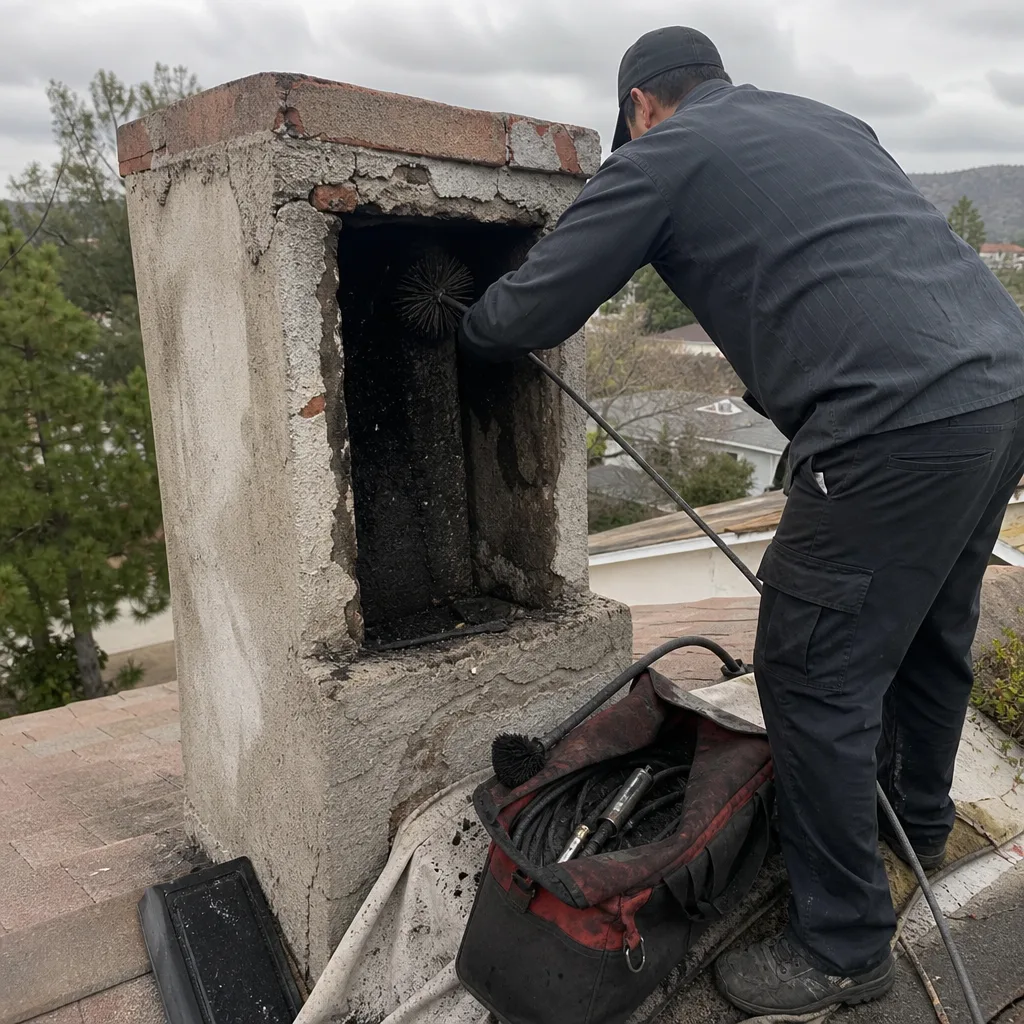
On a homestead-era property off a dirt lane in the Crest foothills, our crew pulled a heavily glazed exterior metal chimney apart at the top to find the mesh spark arrestor nearly blinded with creosote and needle litter from the surrounding pines and oaks. We swept the stovepipe and connector, cleared the arrestor screen, applied HeatShield Cerfractory to the deteriorated flue section, and fitted a stainless arrestor cap rated for the wind exposure. The homeowner’s first cold-weather test fire drafted cleanly, and the sweep record now documents arrestor and flue integrity for their wildfire-hardening file.
HeatShield Models & Products We Service in Crest
We work with the full HeatShield product line that applies to Crest’s chimney inventory. That includes HeatShield Cerfractory Flue Sealant for cast-in-place refractory liners, HeatShield Resurfacing Compound for restoring cracked or spalled clay flue tile, and HeatShield firebox and smoke chamber resurfacing systems. We also handle crown and top-plate restoration materials where moisture entry has compromised the chimney’s top end. When we do a resurfacing job, we use genuine HeatShield system components because the coating is only as durable as its bond to the substrate. Where a cap, spark arrestor, or damper is needed, we fit quality aftermarket stainless rated for exterior metal-chimney service. If a Level 2 camera scan shows spalled or offset tile beyond what resurfacing can bridge, we’ll tell you plainly that a full reline is the right call rather than coating a flue that won’t hold.
See the difference
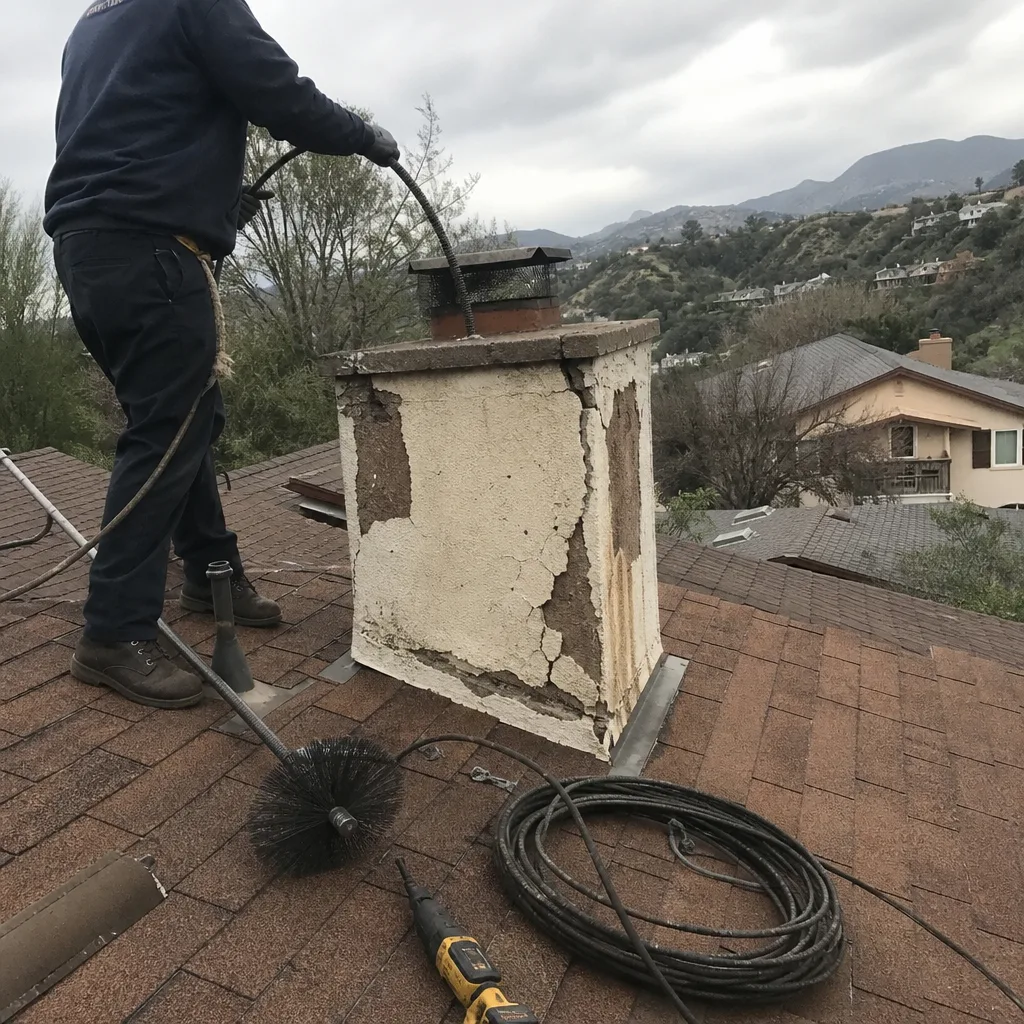 Before
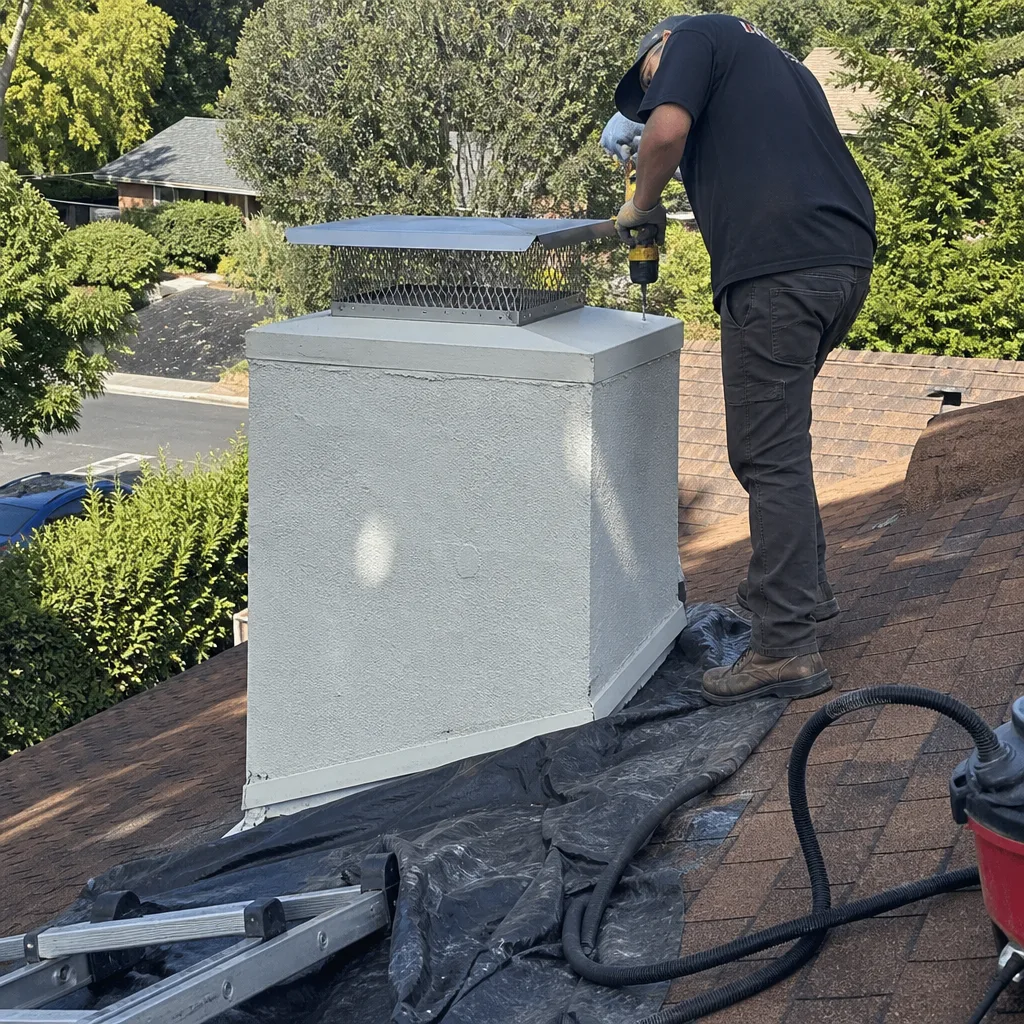 After
 Before
 After
 Before
 After
HeatShield Service Pricing in Crest
HeatShield chimney cleaning in Crest generally runs between $200 and $375 depending on flue length, creosote stage, and whether the stove connector or insert needs extra attention. A full HeatShield resurfacing job typically lands in the $2,500 to $5,000 range, and that’s driven by flue size, substrate condition, and whether the crown or top plate needs restoration work at the same time. Level 2 camera inspections run $150 to $350. What you get with a free estimate is a straight answer: what the camera shows, what needs doing now, and what can safely wait. Call (833) 467-6493 for an exact quote. We’ll schedule the sweep, scan the flue, and give you a written recommendation before any resurfacing work is booked.
Serving Crest, CA — Our Local Coverage Area
We’re based in the Crest area and know this community well, and we also provide El Cajon HeatShield service. Use the map below to see our full service coverage — if you’re nearby, we can almost certainly help.
FAQs – HeatShield Chimney Cleaning in Crest
Do wood stoves and inserts in Crest need a different HeatShield approach than a standard fireplace?
Yes. Freestanding wood stoves and fireplace inserts in Crest’s foothill homes run longer and hotter than an occasional open fireplace, and most vent through exterior metal chimneys that accumulate creosote faster. We camera-scan the connector and flue before any HeatShield application because the substrate on a heavily used stove chimney is more likely to be glazed or thermally stressed. Call (833) 467-6493 and we’ll assess your specific setup.
Why does my spark arrestor matter for a HeatShield job in a high-fire-hazard zone?
Because in Crest’s WUI-designated fire zone, the mesh spark arrestor is a fire-safety device, not a convenience. An obstructed or burned-through arrestor can let embers escape and can also admit rain and debris into the top plate, which undermines a HeatShield liner from above. We treat arrestor and cap condition as a code and safety item on every HeatShield job in 92021. Call (833) 467-6493 to have yours checked.
Can HeatShield fix an old masonry flue in a Crest ranch home without a full rebuild?
Often yes, if the underlying clay tile is cracked or spalled but still structurally intact. HeatShield Resurfacing Compound is designed to restore the flue surface without tearing out the masonry. The catch is that the substrate has to be clean, dry, and sound. We’ll camera-scan first, and if the tile is offset or missing beyond what resurfacing can bridge, we’ll tell you a full reline or rebuild is the honest call. Get a camera-backed answer at (833) 467-6493.
Does Crest’s colder foothill winter mean I should sweep more often?
Yes. Crest sits around 1,500 feet in the Cuyamaca foothills, which means colder winters and more wood-burning hours than coastal San Diego. More burn hours equals heavier creosote accumulation, especially on exterior metal chimneys. If you burn wood as a primary heat source through the foothill winter, an annual sweep is the minimum, and twice a year isn’t overkill if you notice a lazy draft or difficulty starting a clean fire. Call (833) 467-6493 to schedule yours.
Is HeatShield work affected by rain and drought cycles in East County?
Yes, directly. Drought cycles mean more dry pine and oak needle litter ending up in exterior chimney caps and arrestors. Rain cycles, when they come, drive moisture into any chimney with a compromised crown or top plate. For a HeatShield liner, both cycles matter: the first clogs the arrestor and increases creosote fire risk, the second attacks the bond that keeps the liner in place. Call (833) 467-6493 for a free estimate that covers both.
Service Areas Near Crest
We serve Crest and the surrounding East County foothills. If you’re in Rancho San Diego, we offer the same HeatShield service in Rancho San Diego with camera-backed documentation and a wildfire-safety checklist. Down toward the county’s southern edge, our HeatShield service in La Presa covers older masonry flues and wood stove connectors the same way. See our full Crest service area page for the neighborhoods we cover.
Book Your HeatShield Service in Crest Today
A clean chimney isn’t a luxury, it’s just basic fire safety. In Crest, where a wood stove is often the primary heat source, that’s not a slogan. It’s the difference between a burning season that runs safely and one that doesn’t. Call (833) 467-6493 for a free estimate. We’ll put the camera down the flue, show you what we see, and tell you straight what your HeatShield chimney actually needs.
Written by Noel Tarkanian, Owner at Glendale Chimney Sweep.