Last updated October 30, 2026
 Sweep & inspection
 Caps & crowns
 Flue relining
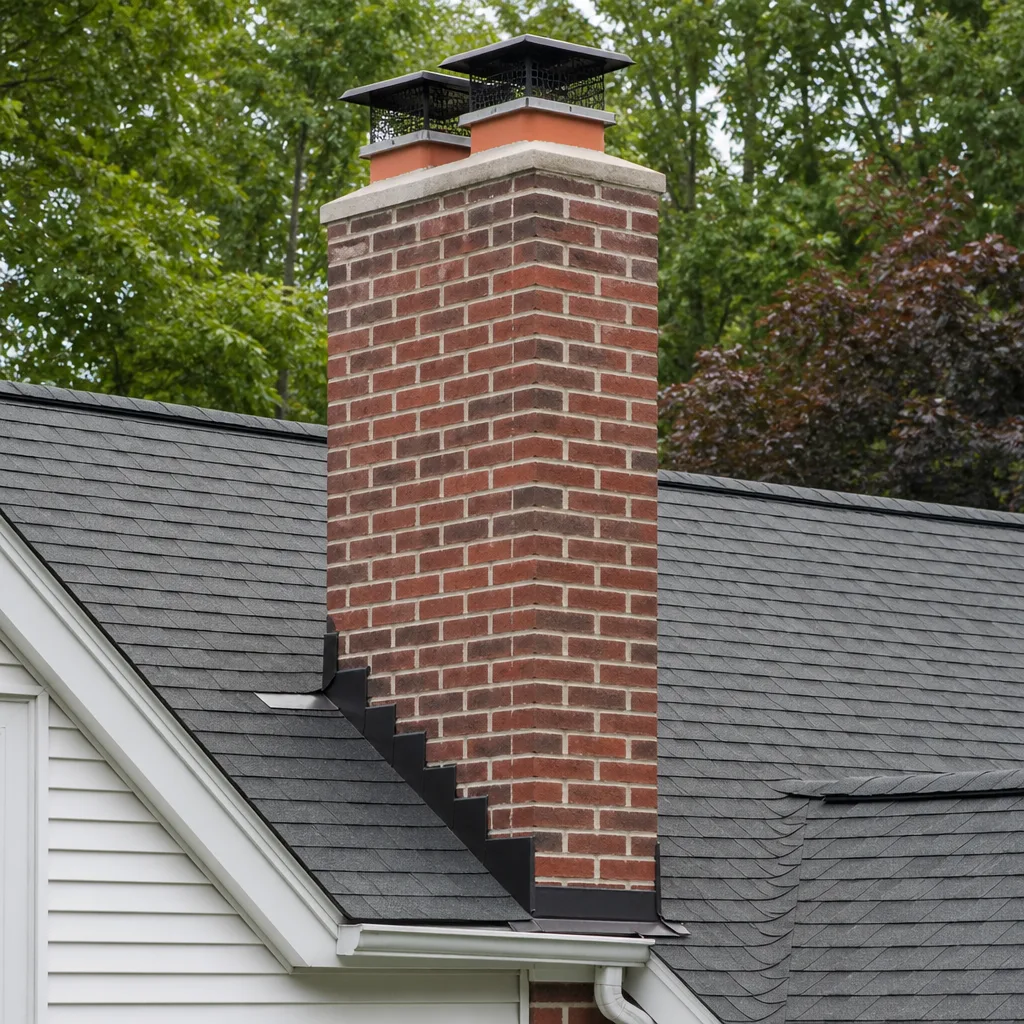 Masonry repair
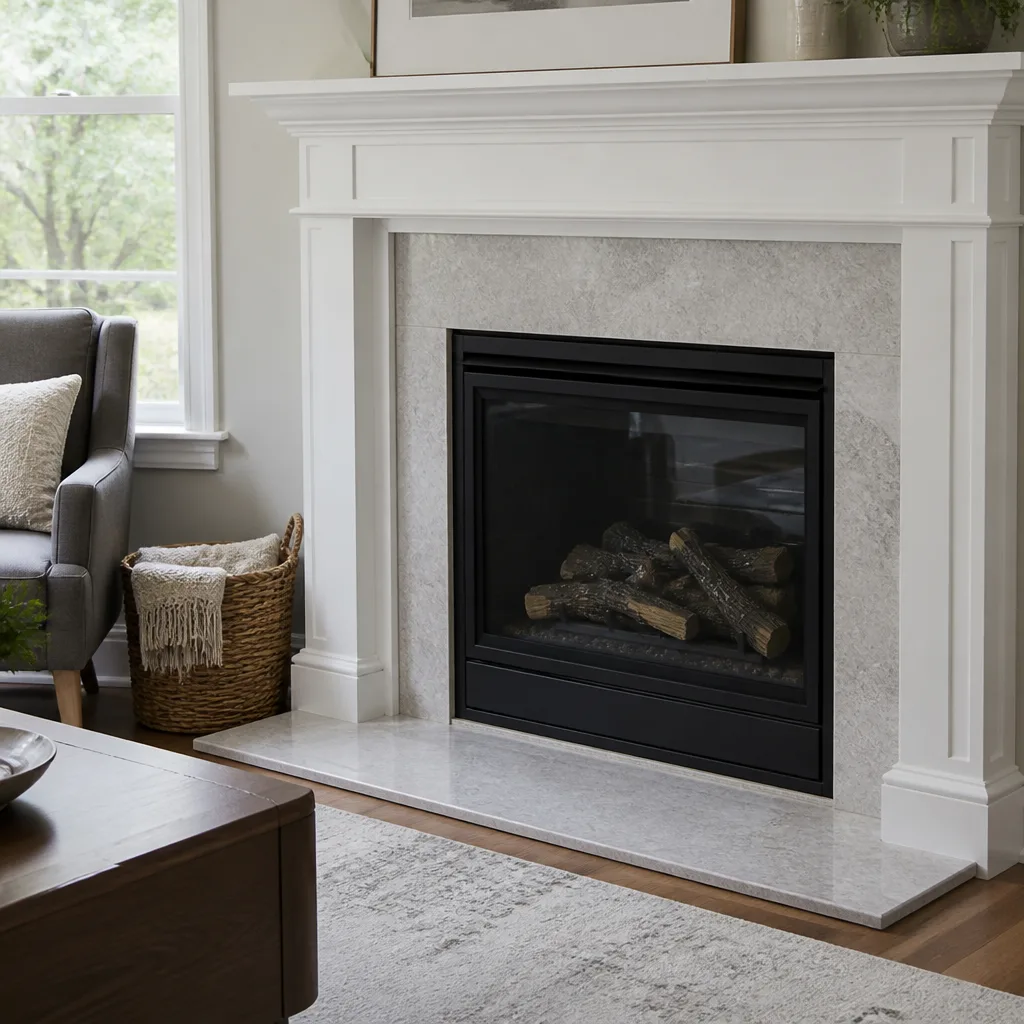 Gas fireplace service
Level 1 sweep and inspection to the NFPA 211 annual standard - flue, crown, cap, and flashing checked and photographed
Chimney sweep logs do not sweep chimneys. They loosen some creosote - which then falls where a brush and vacuum still have to collect it.
The Complete Chimney Sweep Guide for Glendale Homeowners
Most Glendale homeowners light their fireplace fewer than ten times a year, and that’s exactly why so many of them assume they can skip the sweep. That assumption is wrong in a very specific way. The Chimney Safety Institute of America (CSIA) has tracked for years that low-use fireplaces carry a disproportionate share of chimney fires and blockages, not because of heavy creosote, but because of what moves in when nobody’s looking. In Glendale, that means eucalyptus seed pods, palm fronds, bird nests, and the occasional squirrel or rat. This guide explains what actually happens during a chimney sweep in Glendale, what you should be able to verify about the work, and how to know whether your fireplace needs a standard cleaning or something more.
Quick Answer
A chimney sweep in Glendale typically costs between $150 and $300 for a standard Level 1 cleaning and inspection, takes 45 to 90 minutes, and should include a camera inspection of the flue interior. For low-use Glendale fireplaces, the biggest risks are debris blockages and animal intrusion rather than heavy creosote, which means even a fireplace lit only a few times a year needs an annual visual check. Schedule before burning season starts in late fall, because Santa Ana winds beginning in October can push smoke back down a blocked flue and into the house.
Styles & brands we work with
Table of Contents
- Why Low-Use Glendale Chimneys Are at Higher Risk Than You’d Think
- The Three-Level Inspection System and What It Means for Your Home
- What Actually Happens During a Chimney Sweep
- How Much Does a Chimney Sweep Cost in Glendale?
- Santa Ana Winds, Downdraft, and Cap Wear
- When a Standard Sweep Isn’t Enough
- How Often Should You Sweep a Chimney You Barely Use?
- What You Can Check Yourself (Without Climbing Anything)
Why Low-Use Glendale Chimneys Are at Higher Risk Than You’d Think
Heavy creosote buildup comes from burning wood frequently, especially unseasoned wood or soft woods that smolder instead of burning hot. Light a fire twice a year and you won’t build up much creosote. That part is true. But the chimney is still a vertical shaft open to the sky, and in Glendale it sits directly below mature eucalyptus trees, California fan palms, and pepper trees. Those trees shed constantly. Eucalyptus seed capsules are small and hard, and they drop in large quantities during the fall. Palm fronds break loose during wind events and can wedge themselves across a flue opening or directly onto the spark arrestor mesh. A single frond is enough to cut airflow by half or more.
Then there’s the animal question. A chimney that sits quiet for nine months out of the year is a standing invitation to nesting birds. House finches, English sparrows, and chimney swifts (in other regions, though swifts are rare in Southern California) will build nests in flues during spring. Squirrels and roof rats, both common in the Verdugo Hills neighborhoods and along the edges of Griffith Park, will explore chimneys as den sites. We’ve pulled nests, seed piles, and the occasional animal carcass out of chimneys in Glendale that hadn’t been used since the previous winter. None of those homeowners knew anything was wrong. The fireplace looked fine from the living room side.
Blockages do two things. First, they restrict airflow, which causes smoke to roll back into the house when you finally do light a fire. Second, if a nest or debris pile is close enough to the firebox, it can ignite. Bird nests and palm fronds are tinder. The CSIA identifies debris ignition as one of the leading causes of chimney fires in low-use fireplaces, precisely because the fuel source isn’t creosote, it’s whatever blew in or crawled in. The practical takeaway: if you live in Glendale and use your fireplace occasionally, your inspection priority is not creosote measurement, it’s blockage detection. A camera inspection matters more for you than for a heavy burner. You can read more about the specifics of our cleaning process on our Chimney Sweep in Glendale page.
The Three-Level Inspection System and What It Means for Your Home
The National Fire Protection Association standard NFPA 211 defines three levels of chimney inspection, and the distinction matters because a “chimney sweep” is not automatically a “chimney inspection.” Most Glendale homeowners need Level 1 most of the time. Here’s what each level means in plain language.
Level 1: Routine Visual and Mechanical Inspection
This is the standard inspection that accompanies a routine sweep. The technician examines all readily accessible portions of the chimney: the firebox, the damper, the visible flue interior, and the exterior cap and crown from ground level or roofline. The technician uses a camera to view the flue interior when accessible and confirms there are no obvious gaps, blockages, or signs of damage. Level 1 is appropriate when you have used the chimney consistently and nothing has changed about the venting system or fuel type. If your fireplace worked fine last season and you just need the annual cleaning, this is your level.
Level 2: Camera Inspection After a Change or Event
A Level 2 inspection includes everything in Level 1 plus a video camera scan of the full flue interior, roof, chimney crown, and accessible attic or crawlspace sections. NFPA 211 calls for Level 2 whenever there has been a change: you’re buying or selling the home, you’ve switched fuel type (like converting from wood to gas), there’s been a chimney fire, an earthquake, a major storm, or the chimney has not been inspected in more than two years. This covers a lot of first-time customers. If you bought a Glendale home that came with a fireplace and you’ve never had it looked at, the correct inspection level is Level 2, not Level 1.
Level 3: Invasive Inspection When Hidden Damage Is Suspected
Level 3 is rare and only appropriate when there is reason to suspect hidden structural damage, such as after a chimney fire, in a chimney that survived the 1994 Northridge quake with visible cracking, or when a Level 2 camera scan cannot determine the extent of a suspected problem. Level 3 may involve removing portions of the masonry or flue to expose hidden cavities. This is a structural process, not a cleaning process. If a company recommends Level 3, they should be able to show you camera footage or physical evidence of why.
For low-use Glendale chimneys, we recommend a Level 1 inspection every year if nothing has changed, and a Level 2 camera inspection if it has been more than two years since the last service or if the home was recently purchased. The camera doesn’t add much time and it eliminates guesswork. For more on how we handle inspections alongside repairs, see our Chimney Repair in Glendale page.
What Actually Happens During a Chimney Sweep
If you’ve never watched a professional sweep work, the process looks quieter than you might expect. It is not a person with a top hat and a giant brush anymore, though the basic mechanics haven’t changed. Here’s a step-by-step of what a legitimate service call involves.
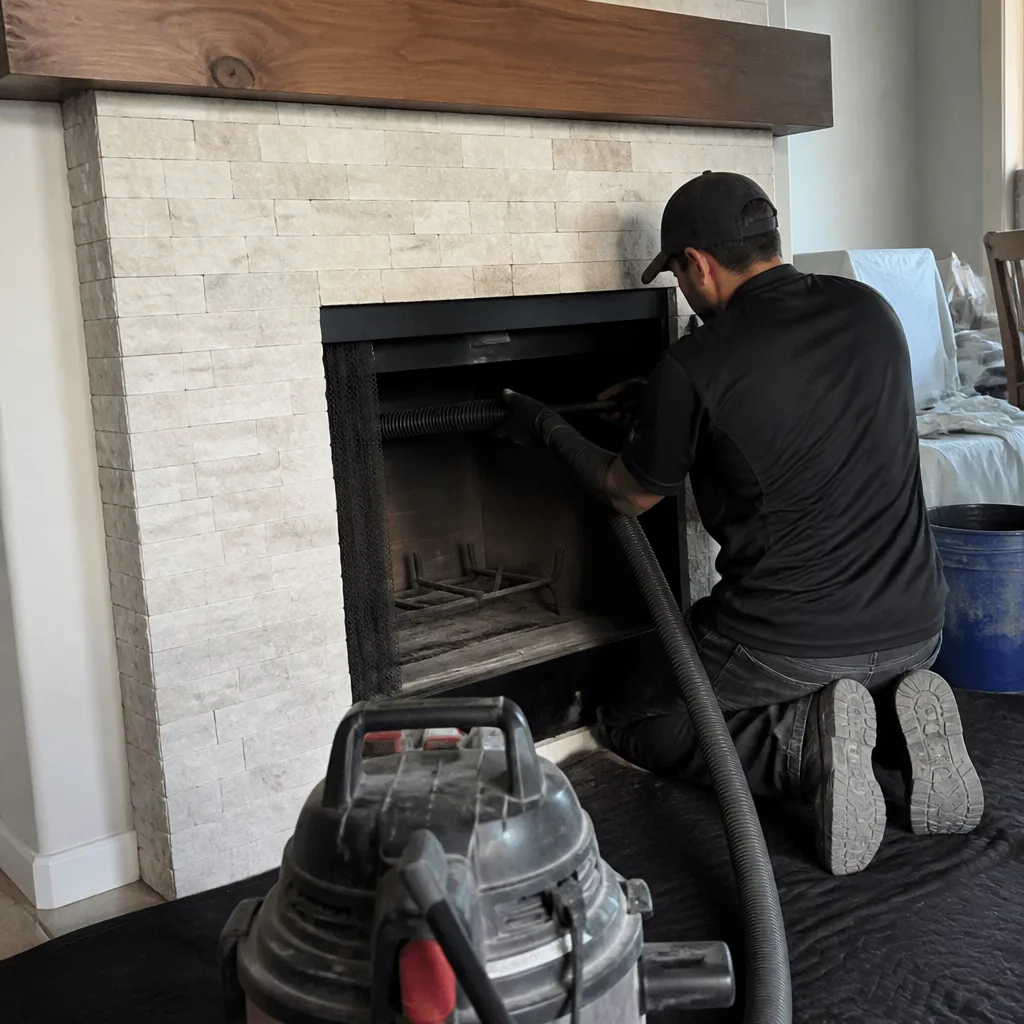
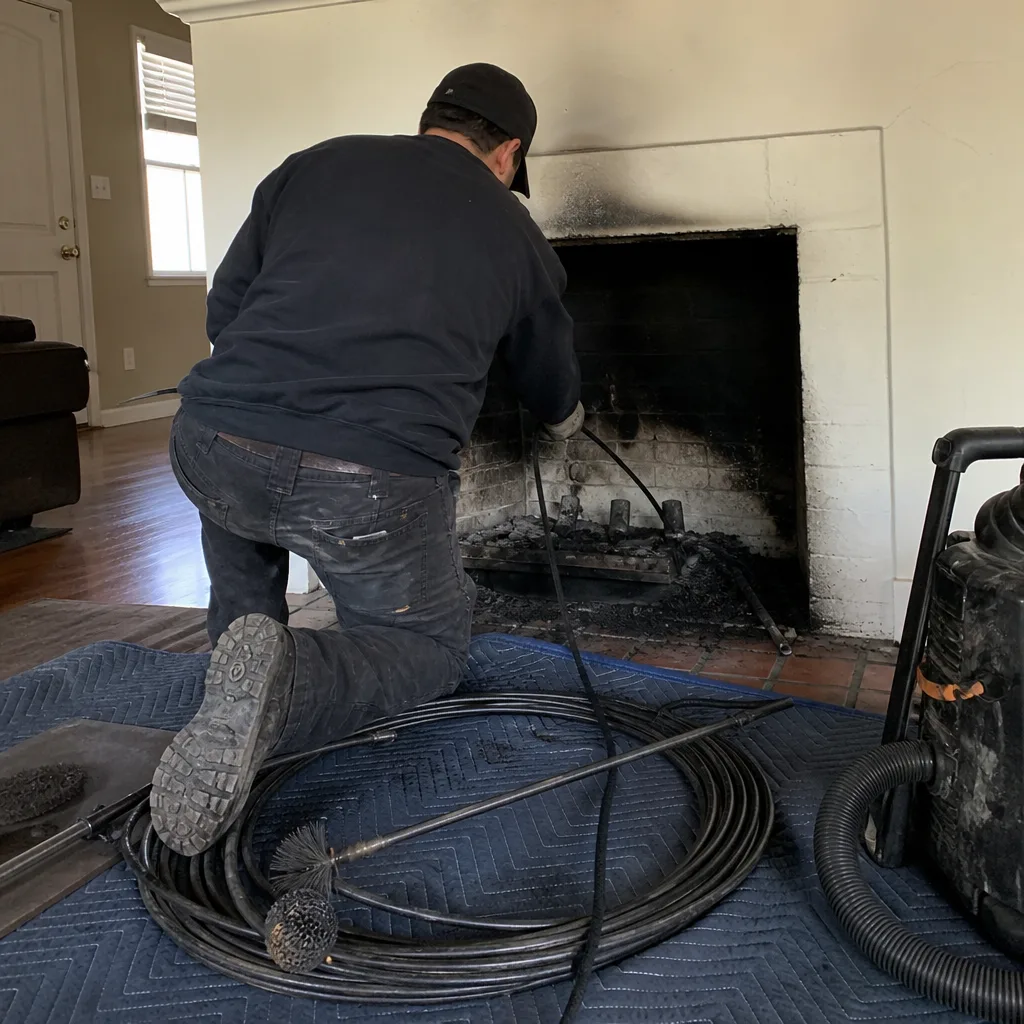
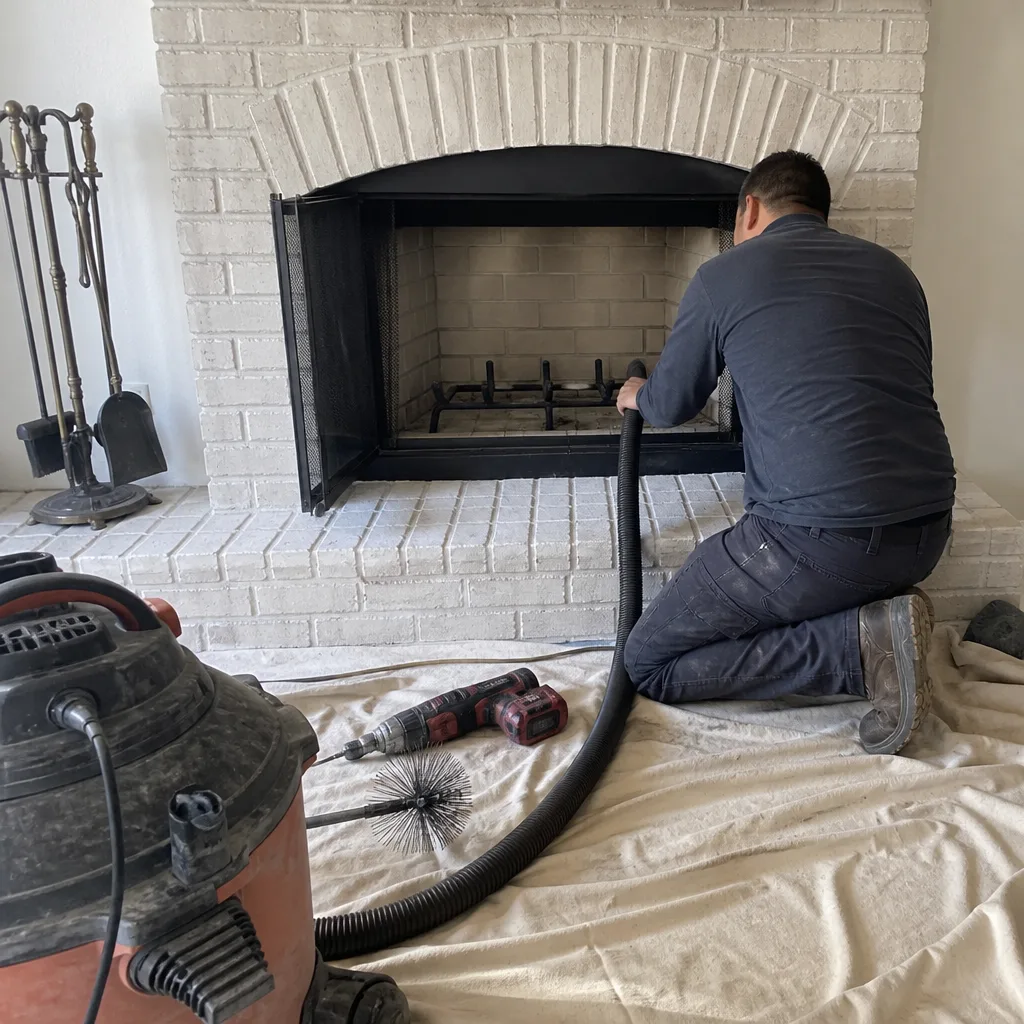
- Interior prep. The technician lays drop cloths in front of the fireplace and seals the firebox opening with plastic or canvas sheeting. A vacuum with a HEPA filter or fine-particle collection bag is set up before any brushing begins. The goal is to keep soot and creosote dust out of your living room. If a technician starts brushing without sealing the firebox and setting up a vacuum, that’s a red flag.
- Damper and firebox inspection. The damper is checked for full range of motion, rust, warping, or cracks. The firebox brick is examined for spalling (flaking or popping brick faces), missing mortar, and cracks wider than a hairline. The throat area above the damper is checked for debris that may have fallen from the flue.
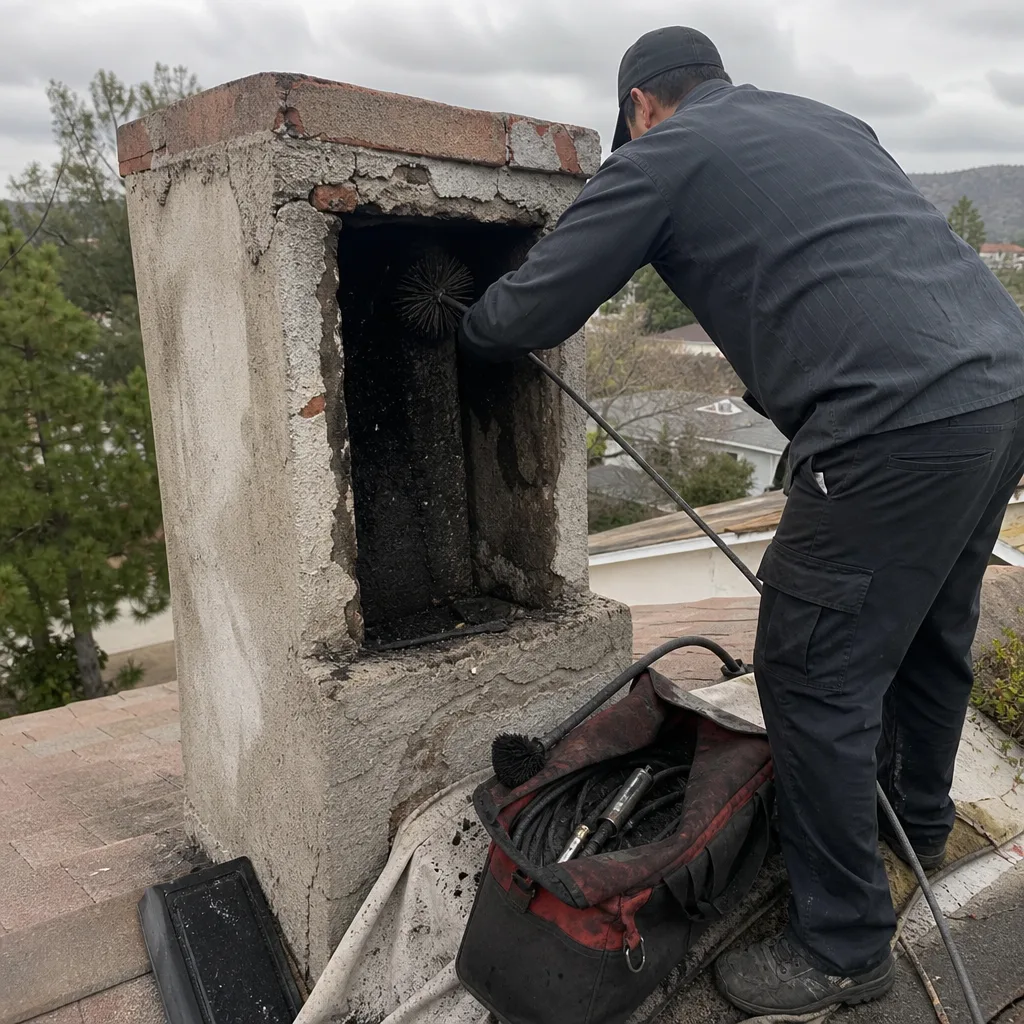
- Mechanical brushing of the flue. A wire or poly brush sized to the flue dimensions is run from the top of the chimney down through the flue, or from the firebox upward with a rotary brush system. The brush grade matters: standard stainless steel wire for clay tile flues, poly brushes for metal flues to avoid scratching, and specific chemical treatments or mechanical scrapers for Stage 2 or Stage 3 creosote (glazed or tar-like deposits).
- Camera inspection of the flue interior. After brushing, a video camera is sent down or up the flue to confirm the surface is clean and to look for cracks, gaps between tile sections, deteriorated mortar joints, and liner damage. We don’t recommend any repair without camera evidence you can see yourself. The camera is the difference between a guess and a diagnosis.
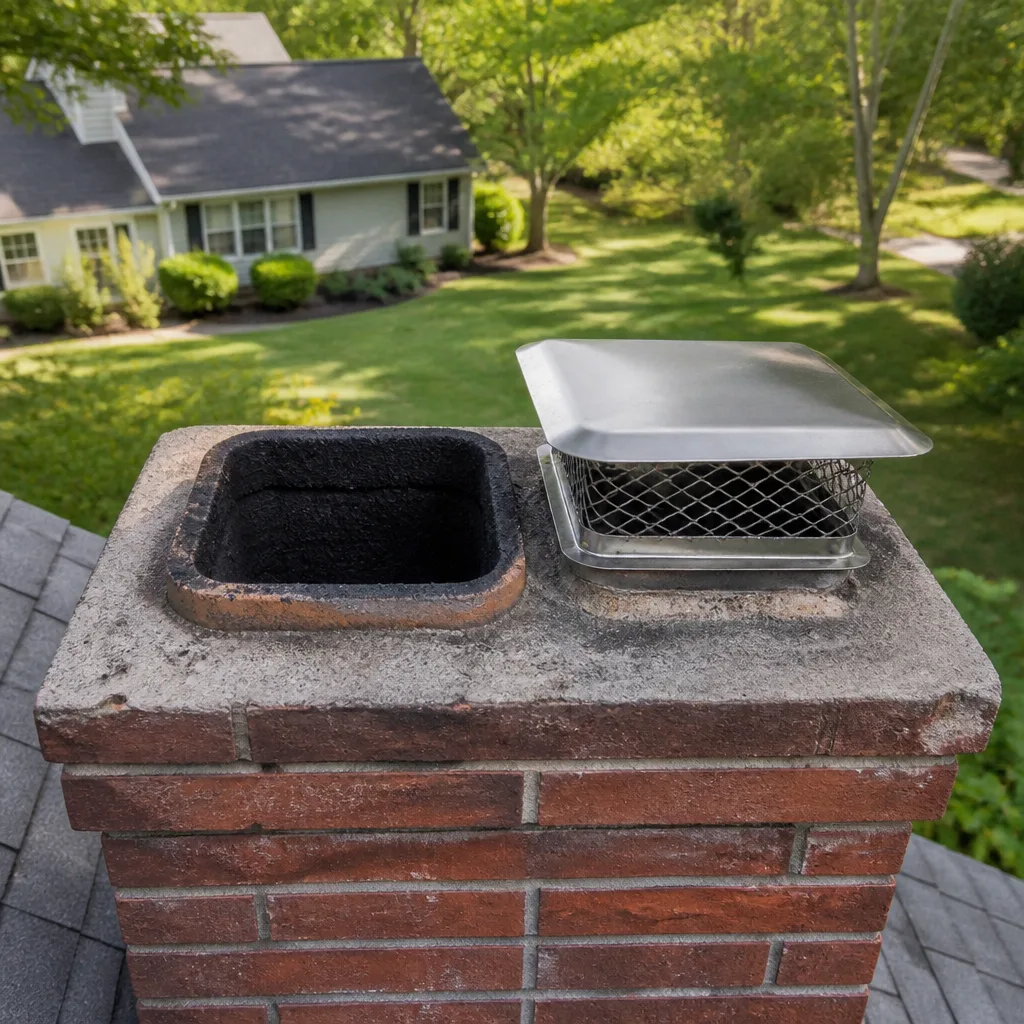
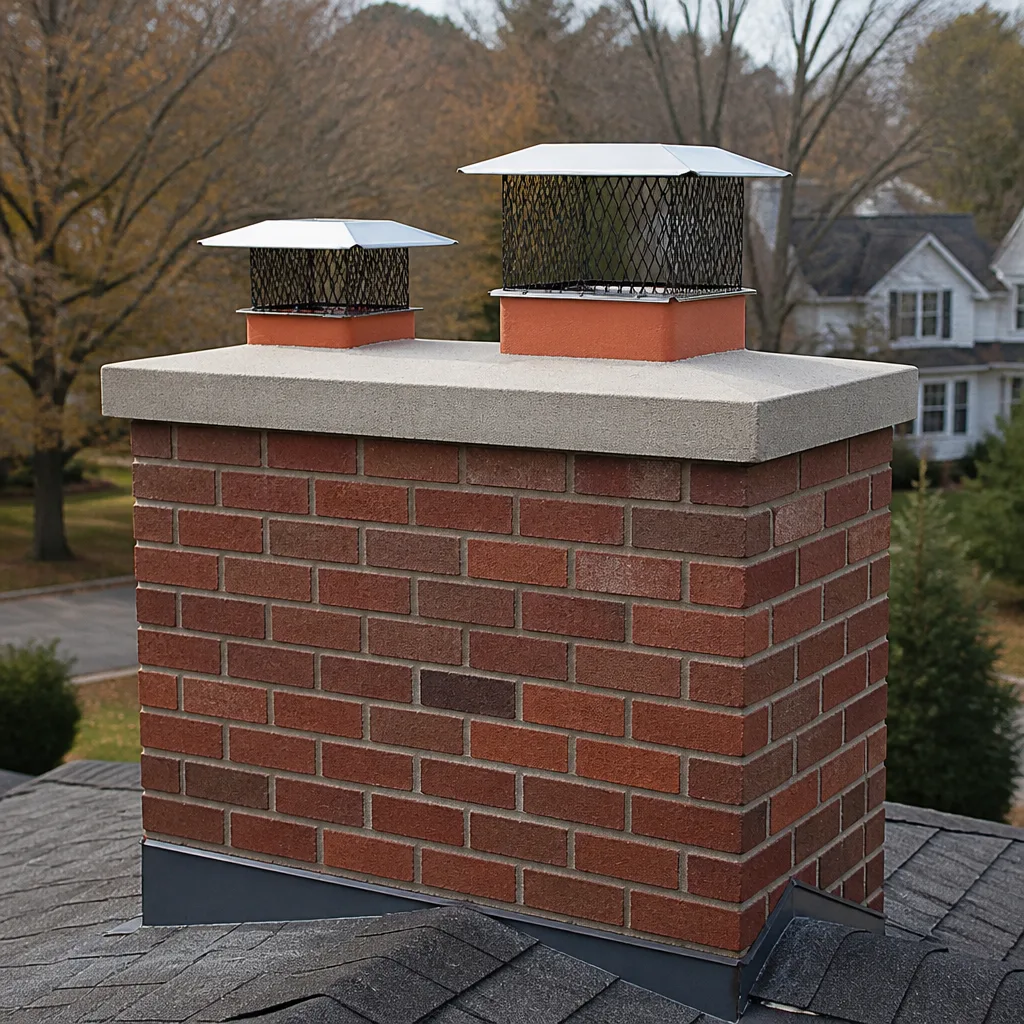
- Cap and crown check. The technician examines the chimney cap, spark arrestor mesh, and crown (the concrete slab at the top). In Glendale, caps take a beating from Santa Ana winds and UV exposure. Cracked crowns and rusted cap mesh are common even on chimneys that see little use.
- Final vacuum and report. The firebox is cleaned, the drop cloths are removed, and the technician should give you a written or photographed summary of what was found, what was cleaned, and what, if anything, needs follow-up. A sweep that doesn’t include a report with photos is an incomplete job.
The whole process on a straightforward Glendale chimney takes between 45 and 90 minutes. If the flue hasn’t been cleaned in several years or the technician finds a blockage, it may run longer. We work with professional chimney-industry equipment and materials, including brushes and liners from brands like Olympia Chimney and Famco, because a flue is not a place to cut corners with generic parts.
How Much Does a Chimney Sweep Cost in Glendale?
Pricing in the Los Angeles area runs higher than in other parts of the country, and Glendale sits toward the middle of the LA metro range. Expect these ranges for a standard residential chimney in Glendale, CA:
- Standard chimney sweep with Level 1 inspection: $150 to $250
- Chimney sweep with Level 2 camera inspection: $250 to $400
- Heavy creosote removal (Stage 2 or 3, chemical treatment or rotary scraping): $300 to $550
- Debris or animal nest removal (in addition to standard sweep): $75 to $200, depending on flue access and location
- Dryer vent cleaning as separate service: $100 to $175
These are honest ranges for the Glendale market, not quotes. Your exact price depends on flue height, roof pitch, access ladder setup, volume of debris, and the condition of the flue liner. A two-story chimney on a steep Verdugo Woodlands hillside lot with difficult roof access costs more than a single-story chimney with an easy walk-up roof. That’s the nature of the work, and any company quoting a flat rate without asking about your home’s roof configuration is guessing.
What should be included in the price: the sealing and vacuum setup, the brushing, the camera inspection, the cap and crown check, and the final report. Ask before booking whether the camera inspection is included or extra. Some companies advertise a low sweep price and then charge separately for the camera, and the camera is the part that actually tells you whether your flue is safe. Our estimates are line-itemed and free, and we tell you exactly what’s included before you commit. If you need your dryer vent addressed at the same visit, see our Dryer Vent Cleaning in Glendale page for service details.
Santa Ana Winds, Downdraft, and Cap Wear
Santa Ana winds are a defining feature of life in Glendale from October through January. They are dry, strong, and they don’t follow the normal onshore flow pattern. For a chimney, that creates two specific problems that don’t show up in the national chimney-sweep literature but are absolutely relevant here.
First, sustained high winds across a chimney cap can create a venturi effect that pulls air down the flue. If your flue is partially blocked by debris or a nest, the pressure difference can be enough to push smoke and combustion gases back into the house. Homeowners describe this as “the fireplace just won’t draw when the wind is up,” but it’s often a sign of partial blockage rather than a purely aerodynamic problem. A clean flue with a properly sized cap handles Santa Ana winds fine. A restricted flue does not.
Second, the wind physically wears the cap and crown. The chimney cap’s spark arrestor mesh, usually a wire screen wrapped around the cap, gets abraded by wind-driven dust and debris over time. Rips and tears in that mesh are exactly how birds and rats enter the flue in spring. A cap that looks rusty from the street may have mesh that is almost gone at the corners. We check this on every visit because in Glendale the cap is the first line of defense against the nesting problem we wrote about earlier.
Crowns crack too. The concrete crown is the slab on top of the chimney that sheds water away from the flue tile. Santa Ana winds don’t crack crowns directly, but the combination of hot, dry days, cool nights, and occasional winter rain causes expansion and contraction that widens small cracks into real ones. Once water gets into the masonry, spalling follows. If you see white efflorescence (salt staining) on your chimney exterior, that’s water moving through the masonry, and it’s worth a look before it becomes structural.
When a Standard Sweep Isn’t Enough
A chimney sweep is a cleaning service. It is not a repair service, and it should never be sold as one. However, a proper sweep includes enough inspection that the technician can see clearly when something needs more than a brush. Here are the conditions we flag on sweeps in Glendale that require follow-up repairs:
- Spalling firebox brick. Brick faces that are flaking, popping, or leaving crumbs on the floor of the firebox mean the brick has absorbed water and is failing from the inside out. This is not a surface issue. Individual brick replacement or panel replacement may be needed.
- Deteriorated damper. A damper that doesn’t close fully, has rust holes, or is warped from heat cannot properly regulate draft or keep conditioned air in the house when the fireplace isn’t in use. Replacement dampers are a standard repair.
- Stage 2 or Stage 3 creosote. Stage 2 is flaky, crusty creosote that resists brushing. Stage 3 is glazed, tar-like creosote that a standard brush will not remove. Both are fire hazards and require chemical treatment or rotary scraping. If your sweep report says “creosote present” without specifying the stage, ask for the stage. The answer matters.
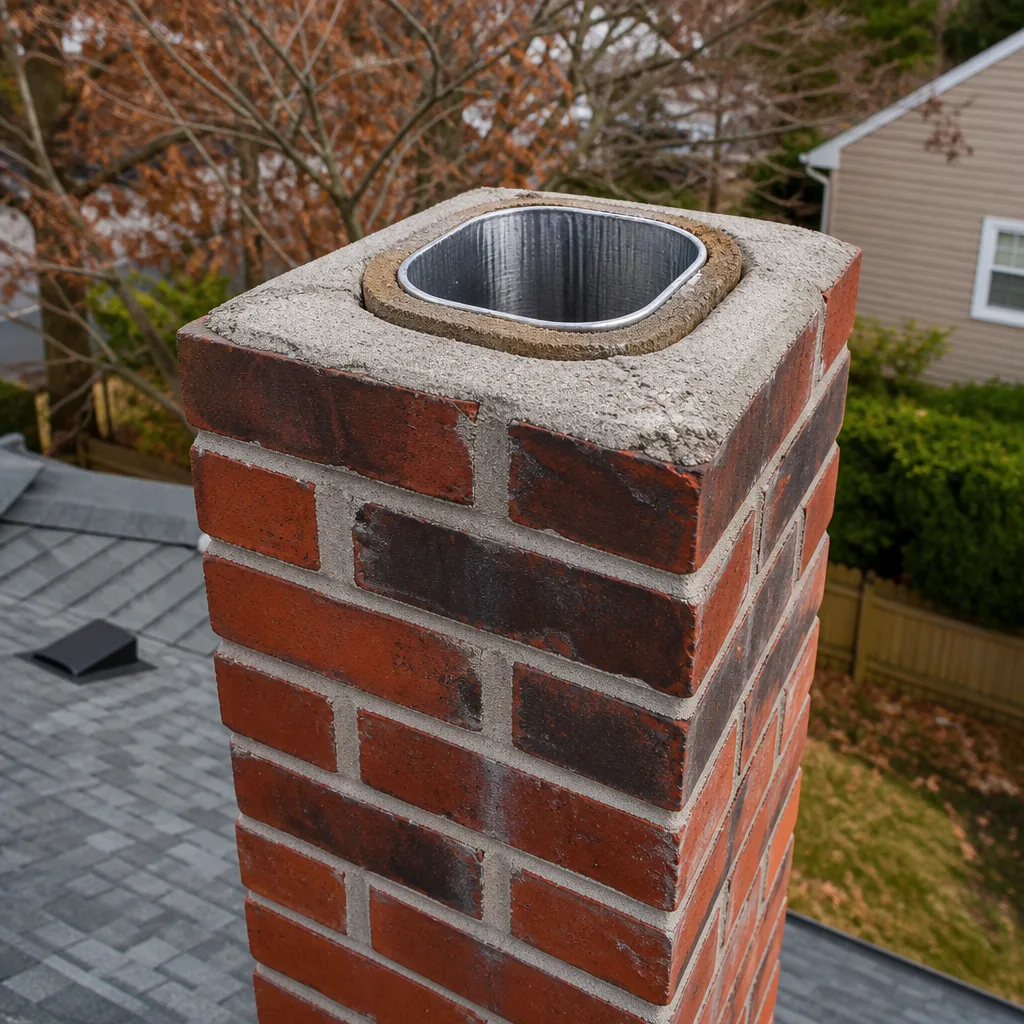
- Cracked flue tiles or gaps between tile sections. Clay tile flues crack from heat cycling or from the chimney settling. Cracks that go through the tile face allow heat and gases to reach the masonry behind the flue, which is exactly how chimney fires spread into house structure. Small cracks can sometimes be addressed with a resurfacing product; larger failures require a liner.
- Missing or damaged chimney cap. In Glendale, given the nesting pressure, a missing cap is not a cosmetic issue. It’s an open door. Replacement caps are inexpensive relative to the cost of animal removal plus debris cleanup.
- Water staining or efflorescence on exterior masonry. White mineral deposits on the chimney face mean water is inside the masonry. The fix ranges from crown repair to masonry sealing, but if you see it, don’t ignore it through another rainy season.
We don’t recommend repair work unless we can show you the camera evidence or the physical damage on site. A company that recommends a liner replacement without camera footage is selling you something. Ask for the footage. If there’s no camera, get a second opinion. When we find flue liner damage that qualifies, we can specify inside-mounted solutions like HeatShield resurfacing or a DuraFlex flexible liner, depending on the extent and location of the damage. The right call is driven by what the camera shows, not by a menu.
How Often Should You Sweep a Chimney You Barely Use?
The CSIA and NFPA 211 recommend annual inspection for every chimney, regardless of use, with sweeping as needed based on what the inspection finds. The phrase “as needed” is where Glendale homeowners tend to talk themselves out of the visit. They burn a few fires a year, so they figure the sweep can wait. But the inspection is the part that catches the nest, the debris pile, the cracked tile, and the broken cap mesh. The sweep is just the follow-up when the inspection says there’s something to clean.
Here’s a practical schedule for typical Glendale usage patterns:
- Wood-burning fireplace, used more than 20 fires per season: sweep and Level 1 inspection every year before the burning season starts.
- Wood-burning fireplace, used 5 to 20 fires per season: Level 1 inspection every year, sweep every 1 to 2 years depending on creosote stage found.
- Wood-burning fireplace, used fewer than 5 fires per season: Level 1 camera inspection every year in late summer or early fall. Sweep only when debris or light creosote is found. The camera is the important part here, not the brush.
- Gas fireplace with a vented chimney: inspection every 1 to 2 years. Gas doesn’t produce creosote, but it produces acidic condensate that can corrode metal flues, and vented gas chimneys still collect debris.
- House just purchased in Glendale, any fireplace type: Level 2 camera inspection before first use, regardless of what the listing or seller disclosed.
If you haven’t had the chimney looked at in three or more years, book a Level 2 inspection before you light anything this season. That covers the entire span of “we bought the house two years ago and never used the fireplace” customers we see throughout Glendale.
The Glendale Chimney Sweep home page gives an overview of how we schedule these visits, or call us at (833) 467-6493 and we’ll walk you through what your chimney needs.
What You Can Check Yourself (Without Climbing Anything)
You don’t need to get on your roof to do a basic pre-season visual check. We recommend homeowners do a quick three-point check before deciding whether to schedule a sweep. None of this replaces a professional inspection, but it gives you a starting point and helps you communicate what you’ve observed.
- Look up from the firebox with a flashlight. Open the damper and shine a bright flashlight up into the chimney. What you should see: a clear, straight passage and the underside of the cap or spark arrestor. What you might see instead: sticks, twigs, leaves, seed pods, visible nests, or a wall of debris. If the flue isn’t clear, don’t light a fire. Book a sweep and mention what you saw.
- Look at the chimney from the street or yard. Stand back far enough to see the full chimney. Check the cap, the crown, and the masonry face. You’re looking for missing cap sections, rusted mesh, visible cracks in the crown, and white staining on the brick. If anything looks wrong from the ground, it’s worth having a professional look from the roof.
- Look for animal activity signs. Birds flying in and out of the chimney area at dusk or dawn, scratching sounds in the walls near the fireplace, droppings on the hearth, or a distinct odor from the fireplace. If any of those are present, do not use the fireplace until a professional clears the flue. Live animals in a flue are both a fire hazard and a humane removal situation that a sweep should handle safely.
If your three-point check finds nothing, great. You still need the annual inspection if it’s been a year or more, but you can go into that call with the confidence that you’re probably looking at a standard clean-and-inspect. If you find something, you’ve earned yourself the best $200 to $300 you can spend on the house.
Common Mistakes to Avoid
- Assuming infrequent use means no service is needed. The low-use chimney is the one that collects debris and animals. Glendale’s eucalyptus and palm trees are working on your flue every day whether you burn wood or not.
- Skipping the camera inspection to save $100. A brush doesn’t tell you anything about the integrity of the flue liner. The camera does. Skipping it is like getting an oil change but declining the look under the hood.
- Hiring a sweep based on price alone. A $99 sweep special in the LA market usually means a subcontractor who isn’t carrying proper insurance or won’t do a camera inspection. The cost of a chimney fire or a smoke-damaged living room dwarfs the difference between a cheap sweep and an honest one.
- Burning unseasoned firewood in an occasional-use fireplace. Green or wet wood produces more smoke and creosote per fire. If you only light a fire three times a year, burn good dry hardwood so those few fires don’t leave a creosote deposit that smolders on the fourth fire.
- Ignoring the dryer vent while focusing on the chimney. Homes with gas or electric dryers are running a combustion appliance on every load. Lint buildup in the dryer vent is a documented fire risk. Same professional standard applies. See our Dryer Vent Cleaning in Glendale page for the details.
- Waiting until the first cold snap to book. In Glendale, the first rains tend to arrive in November, and the first real cold front is usually late November or December. Everyone books chimney sweeps in the same two-week window. Book in September or October instead, and you’ll have first-call availability.
- Converting to gas without a Level 2 inspection. A gas insert changes the flue’s thermal and condensate profile. If you’re planning a conversion, get the chimney inspected first. The right venting setup for gas is not necessarily the same flue that worked fine for wood.
See the difference
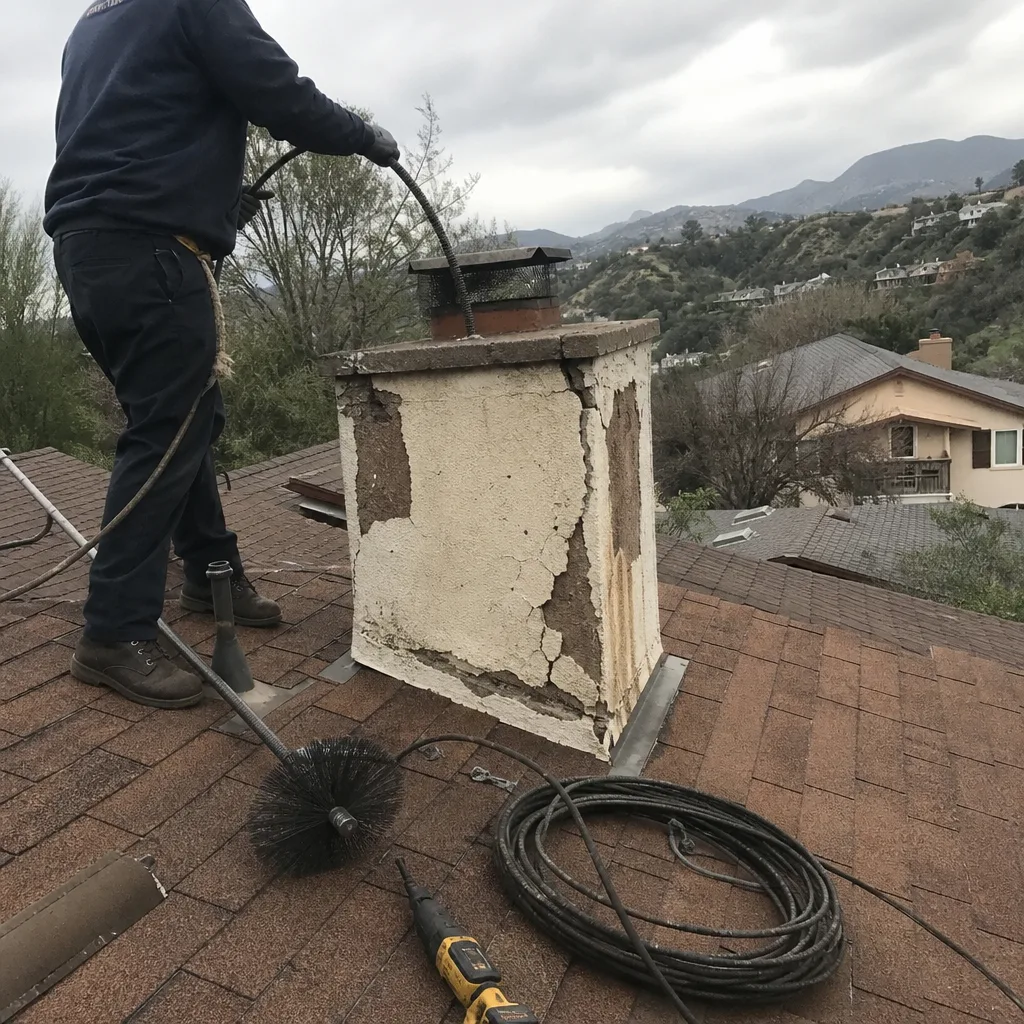 Before
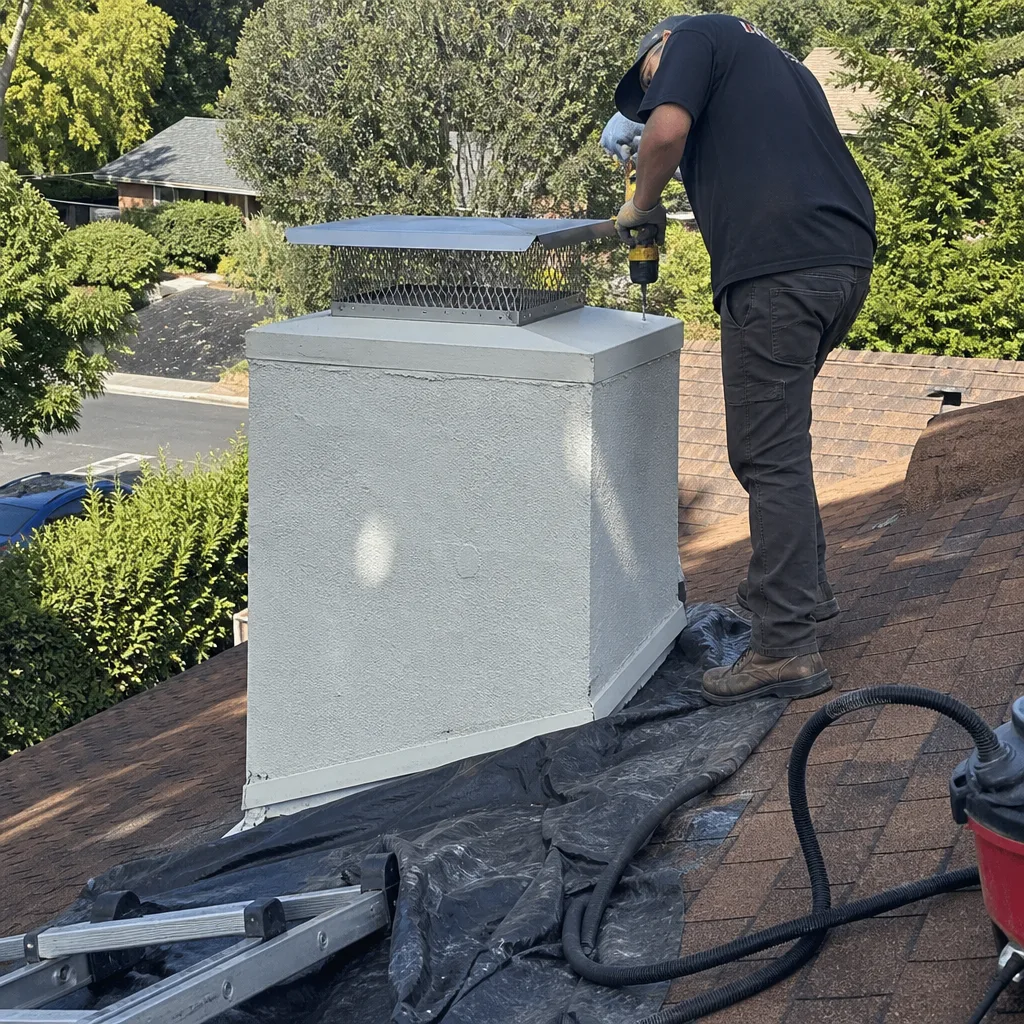 After
 Before
 After
 Before
 After
When to Call a Professional
Call a professional chimney sweep in Glendale if any of these apply: you’ve never had the chimney inspected since buying the home; it’s been two or more years since the last visit; you see debris, nests, or animal signs in the flue; you hear scratching or chirping in the chimney; there’s a smell coming from the fireplace when it’s not in use; or you see white staining, cracked brick, or a damaged cap from the ground. Also call proactively before burning season. Don’t wait for the first cold night to discover the flue is blocked. Glendale Chimney Sweep offers free estimates by phone, provides camera inspection as a standard part of our quotes, and works with professional chimney-industry materials from brands like DuraFlex and HeatShield when repairs are needed. Serving Glendale and surrounding areas, we give you photos and footage so you can see the condition of your chimney before deciding on any work. Call (833) 467-6493 for a free estimate in Glendale.
Frequently Asked Questions
A standard chimney sweep with Level 1 inspection in Glendale costs between $150 and $250, while a sweep with a full Level 2 camera inspection runs $250 to $400. Heavy creosote removal or structural issues add to the price, and roof access difficulty is a factor in the foothill neighborhoods. Call (833) 467-6493 for a line-itemed estimate specific to your home.
Yes, because the main hazard in a low-use Glendale chimney is blockage from debris and animal nesting, not creosote buildup. An annual camera inspection – not necessarily a full brush sweep every year – is the right service for a rarely used fireplace.
The technician seals the firebox, runs a mechanical brush through the flue, vacuums the resulting dust, performs a camera scan of the flue interior, checks the cap and crown, and gives you a written or photographic summary. A proper sweep takes 45 to 90 minutes and includes inspection, not just brushing.
Most Glendale homeowners with a wood-burning fireplace should have an annual inspection, with an actual sweep every 1 to 2 years depending on creosote levels and debris accumulation. Homes with gas fireplaces should be inspected every 1 to 2 years for condensate corrosion and debris. New homeowners should get a Level 2 camera inspection before first use.
Not necessarily. Cracked flue tiles can sometimes be addressed with HeatShield resurfacing, which restores the existing liner surface without a full tear-out. A flexible DuraFlex liner is the right call for more extensive damage or for retrofit installations in older or offset chimneys. Always ask for camera footage before approving any liner work.
In a low-use Glendale chimney, the likely sequence is: debris or nesting accumulates unnoticed, Santa Ana winds create downdraft pressure against the partial blockage, smoke rolls back into the living room on the one night you finally use the fireplace, and the underlying blockage may ignite. Annual camera inspection costs $150 to $300 and prevents a $5,000 smoke remediation job or worse. Call (833) 467-6493 to book before burning season.
The Bottom Line
A chimney in Glendale that gets lit five times a year is not the same as a chimney in Minnesota that burns every night from October to April, but it needs the same level of professional attention. The risks here are debris, nesting, wind-driven downdraft, cap wear, and years of skipped inspections compounding into hidden damage. The right annual routine for most Glendale homeowners is a camera inspection, a sweep when the inspection says one is needed, and honest repair recommendations supported by footage you can see. For material-specific repair work, we specify professional chimney-industry brands like Copperfield and HeatShield so you know exactly what you’re paying for. Book the inspection before the first cold snap. Call (833) 467-6493 for a free estimate, see our Chimney Sweep in Glendale page for service details, or review our Chimney Repair in Glendale page if you already know something needs fixing.
Written by the team at Glendale Chimney Sweep, serving Glendale since 2011.