Last updated October 30, 2026
 Sweep & inspection
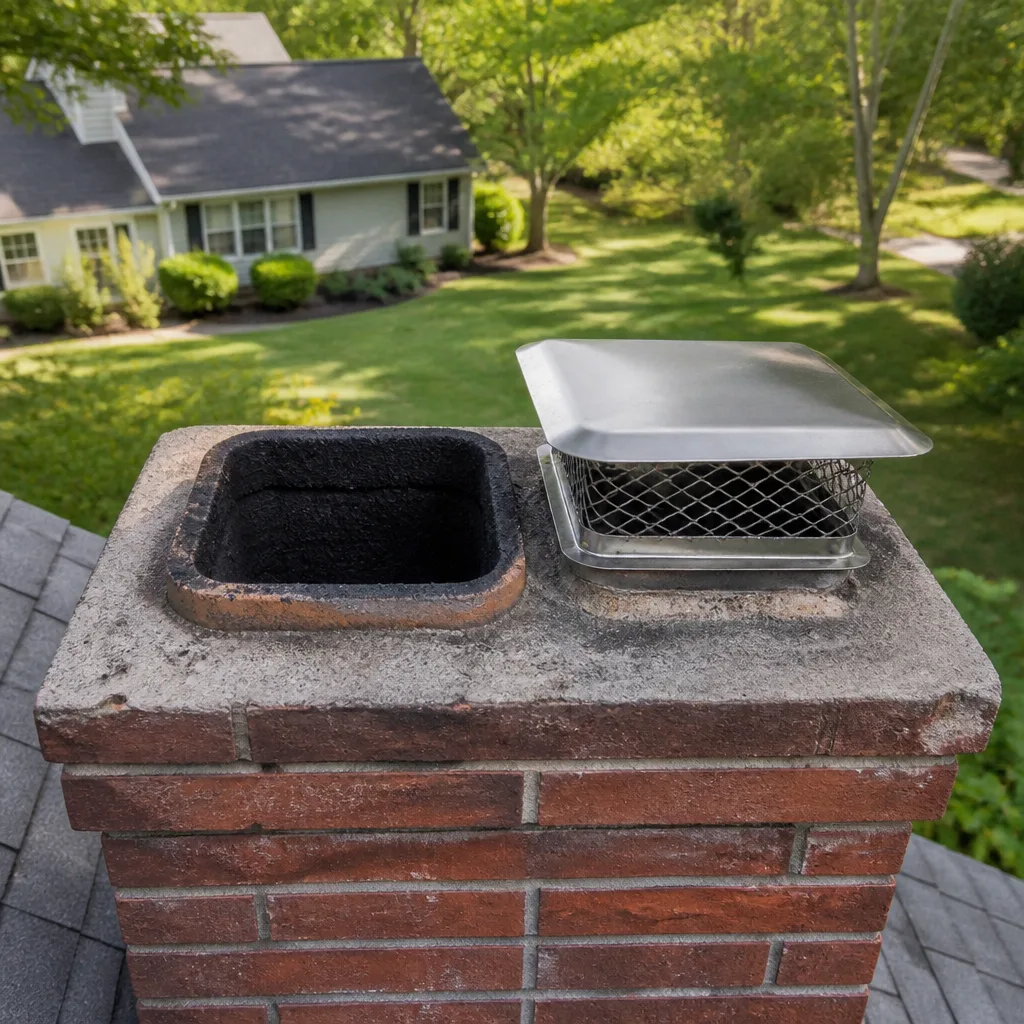
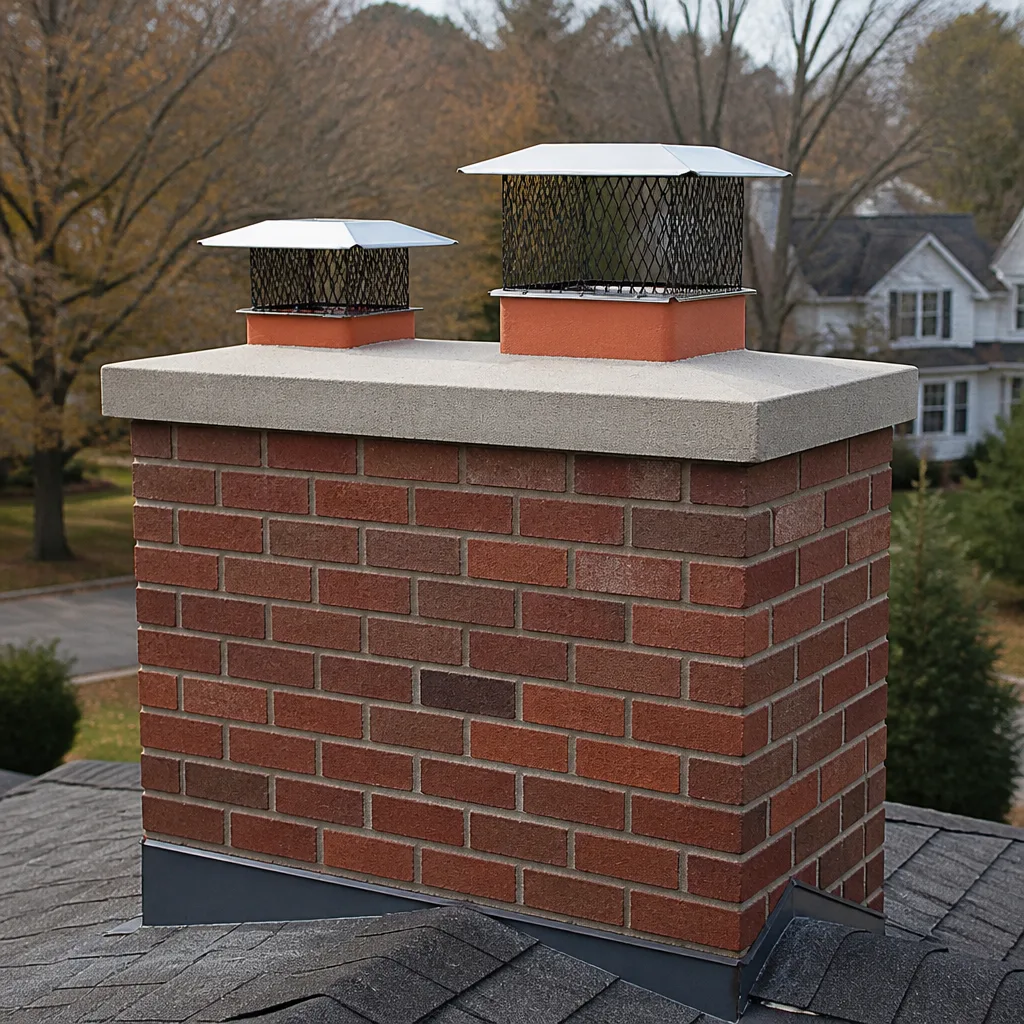 Caps & crowns
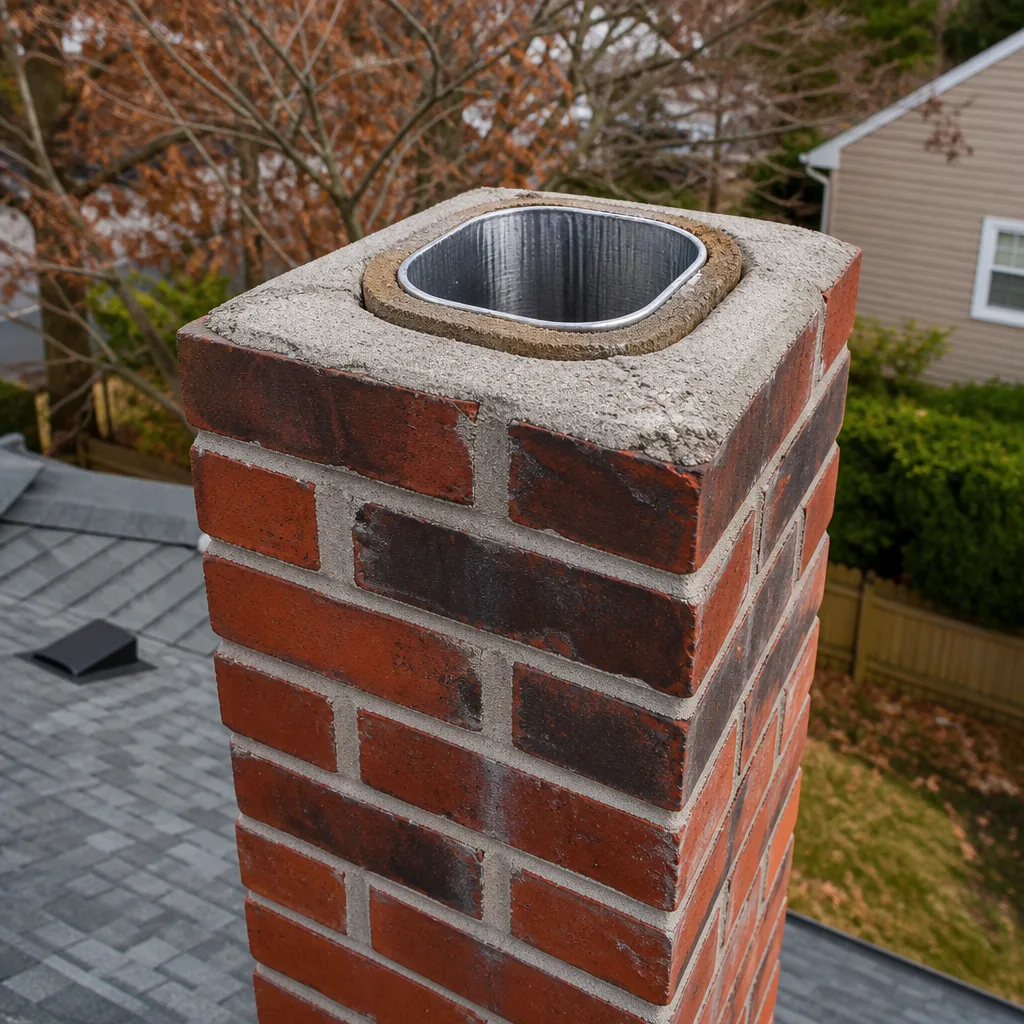 Flue relining
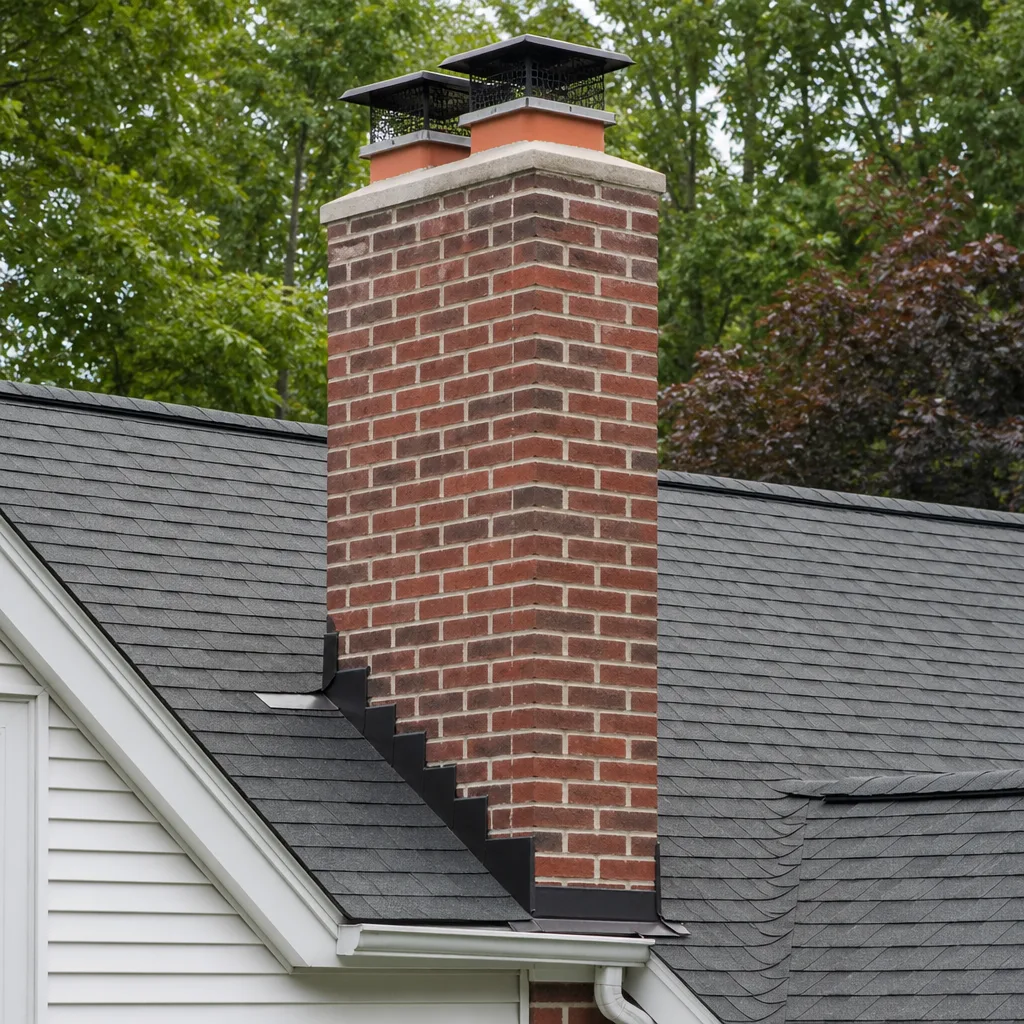 Masonry repair
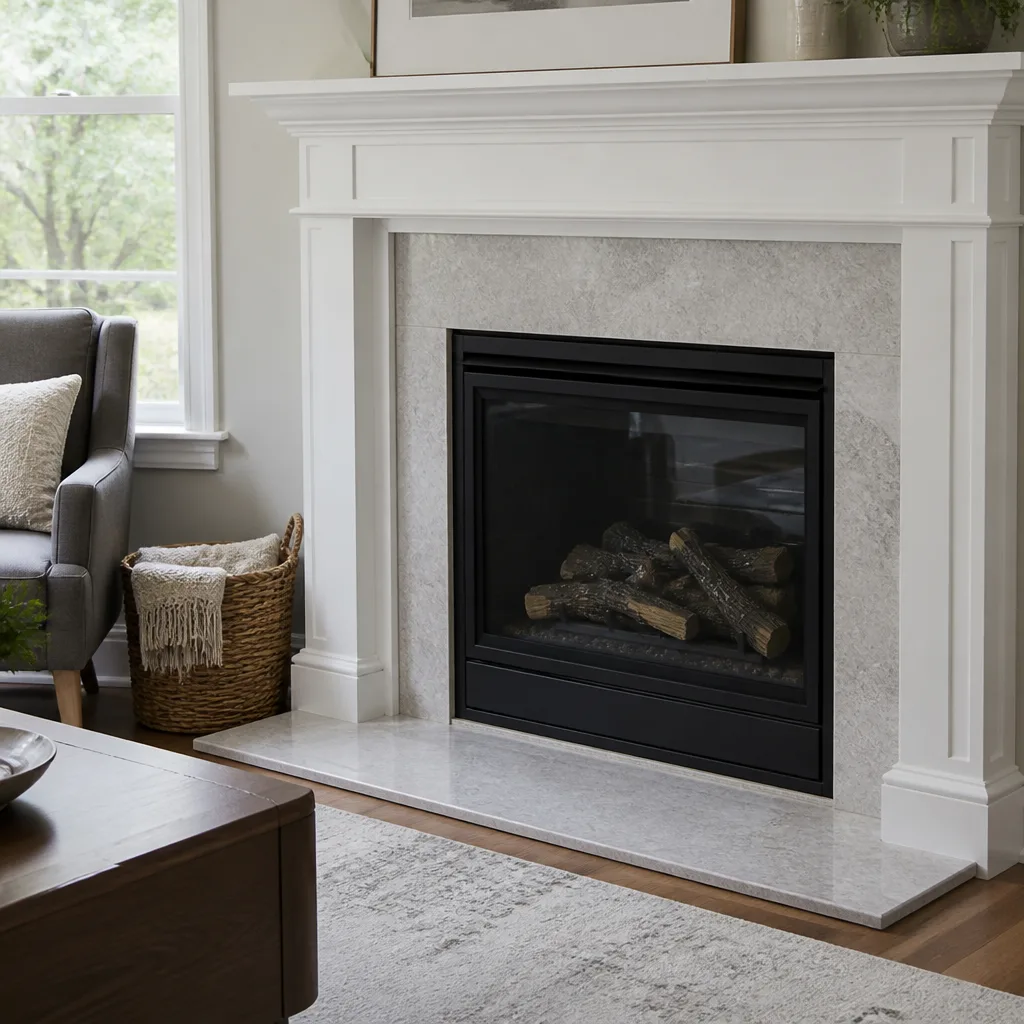 Gas fireplace service
Level 1 sweep and inspection to the NFPA 211 annual standard - flue, crown, cap, and flashing checked and photographed
Chimney sweep logs do not sweep chimneys. They loosen some creosote - which then falls where a brush and vacuum still have to collect it.
DIY vs Professional Chimney Cleaning: The Glendale Homeowner’s Decision Guide
A homeowner with a $60 brush kit can clean visible soot from the firebox and lower flue. But Stage 2 creosote, liner cracks, and smoke chamber deterioration require rotary cleaning systems and video inspection equipment that cost more than most cars. This guide draws a hard technical line between the surface maintenance you can safely handle yourself and the diagnostic work that requires tools most Glendale homeowners don’t own and training they don’t have. By the end, you’ll know exactly which category your chimney falls into this season.
Styles & brands we work with
Quick Answer
DIY chimney cleaning is reasonable for light ash removal from the firebox and brushing the first few feet of accessible flue, but it cannot replace a professional sweep and inspection. The reason isn’t skill: it’s equipment. Stage 2 and Stage 3 creosote, hidden liner cracks, and smoke chamber damage are invisible to the naked eye and unreachable with consumer-grade rods. For most Glendale homes, especially those with older masonry chimneys or post-earthquake settling, professional cleaning with video inspection is the only method that actually verifies the system is safe.
Table of Contents
- What DIY Chimney Cleaning Can Actually Do
- The Equipment Gap: What Professionals See That You Can’t
- Understanding Creosote Stages and Why Stage 2 Changes Everything
- Glendale-Specific Risk Factors: Earthquakes, Old Homes, and Gas Inserts
- California Insurance and Liability: What DIY Means on Paper
- The Three-Question Decision Framework
- Cost Comparison: DIY vs Professional in Glendale
- Common Mistakes to Avoid
- When to Call a Professional
- Frequently Asked Questions
- The Bottom Line
What DIY Chimney Cleaning Can Actually Do
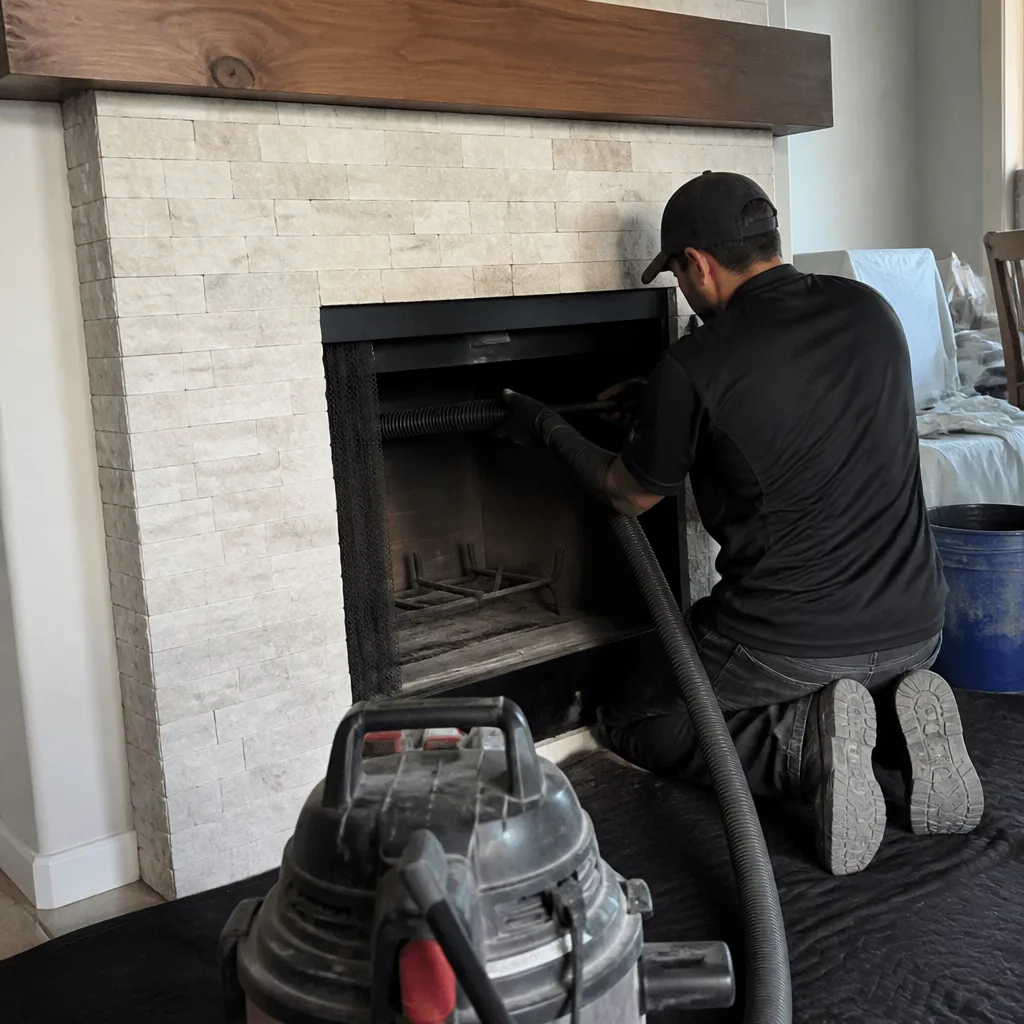
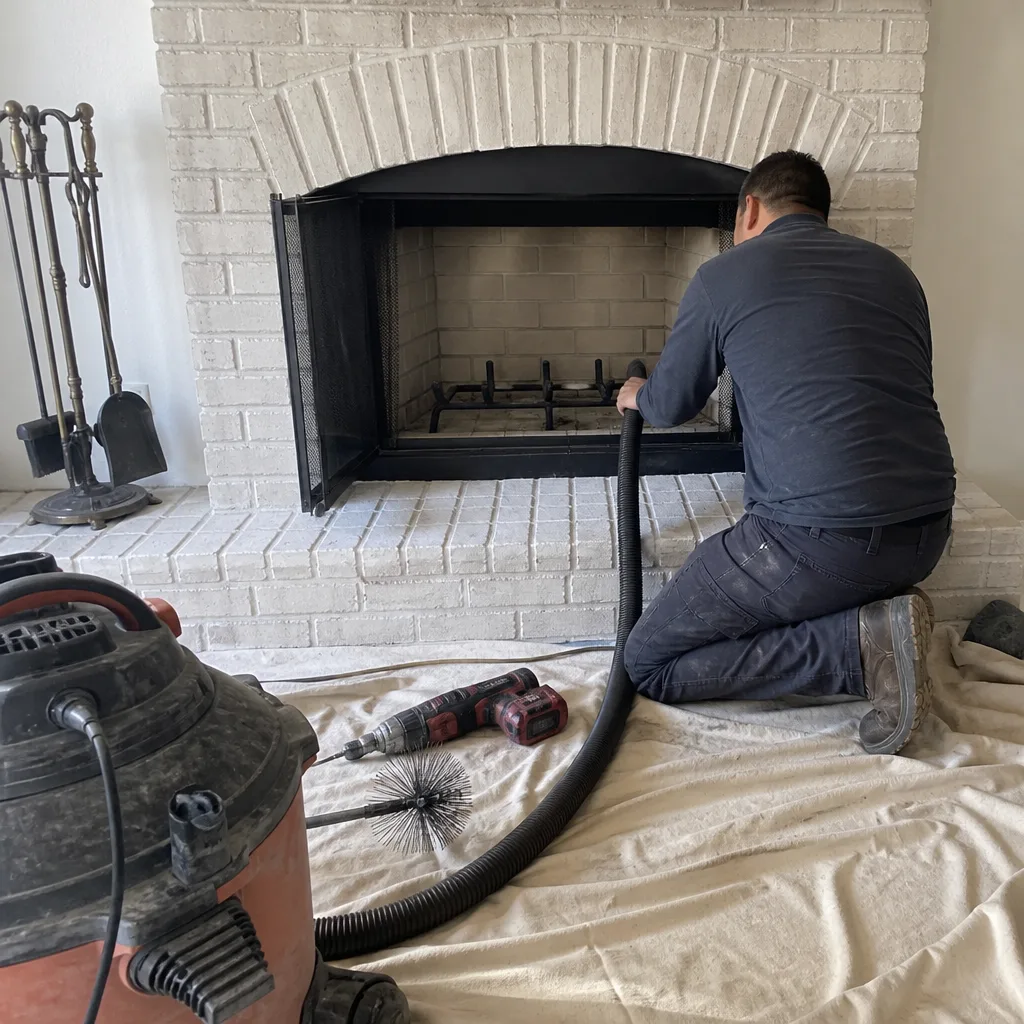
Let’s be clear about what a competent homeowner can safely accomplish with basic tools. The firebox, which is the chamber where the fire burns, collects loose ash and light soot after every burn season. Removing that material is straightforward and safe. You’ll need a shop vacuum with a HEPA filter, a stiff-bristle brush, a metal ash bucket, and basic protective gear: an N95 mask, eye protection, and gloves.
Here’s what we consider reasonable DIY maintenance for a Glendale homeowner:
- Firebox ash removal: Wait at least 72 hours after the last fire before vacuuming. Use a metal container with a lid for ash disposal. Never use a household vacuum without a HEPA filter; fine ash will destroy the motor and blow particulates through your living room.
- Accessible soot brushing: With a basic chimney brush and rods from the hardware store, you can brush the first three to five feet of flue above the damper. This removes loose, powdery Stage 1 soot. It does nothing for hardened creosote deposits higher up or around flue offsets.
- Visual damper inspection: Open the damper fully and look for obvious obstruction, rust, or warping. If the damper doesn’t open and close smoothly, or you see daylight gaps around the frame when closed, you’ve found a problem worth professional attention.
- Exterior cap visual check from the ground: Use binoculars to look at the chimney cap and crown. If you see a missing cap, cracked crown, spalling brick, or vegetation growing from the masonry, that’s a structural issue, not a cleaning issue, and it belongs in the Chimney Repair in Glendale category.
That’s the full extent of legitimate DIY scope. Everything beyond these four tasks involves either working at height, working inside a confined flue, or interpreting conditions that require trained eyes and specialized tools.
The Equipment Gap: What Professionals See That You Can’t
The real difference between DIY and professional chimney cleaning isn’t effort. It’s instrumentation. A professional sweep in Glendale arrives with equipment that falls into three categories, each of which reveals problems consumer tools physically cannot access.
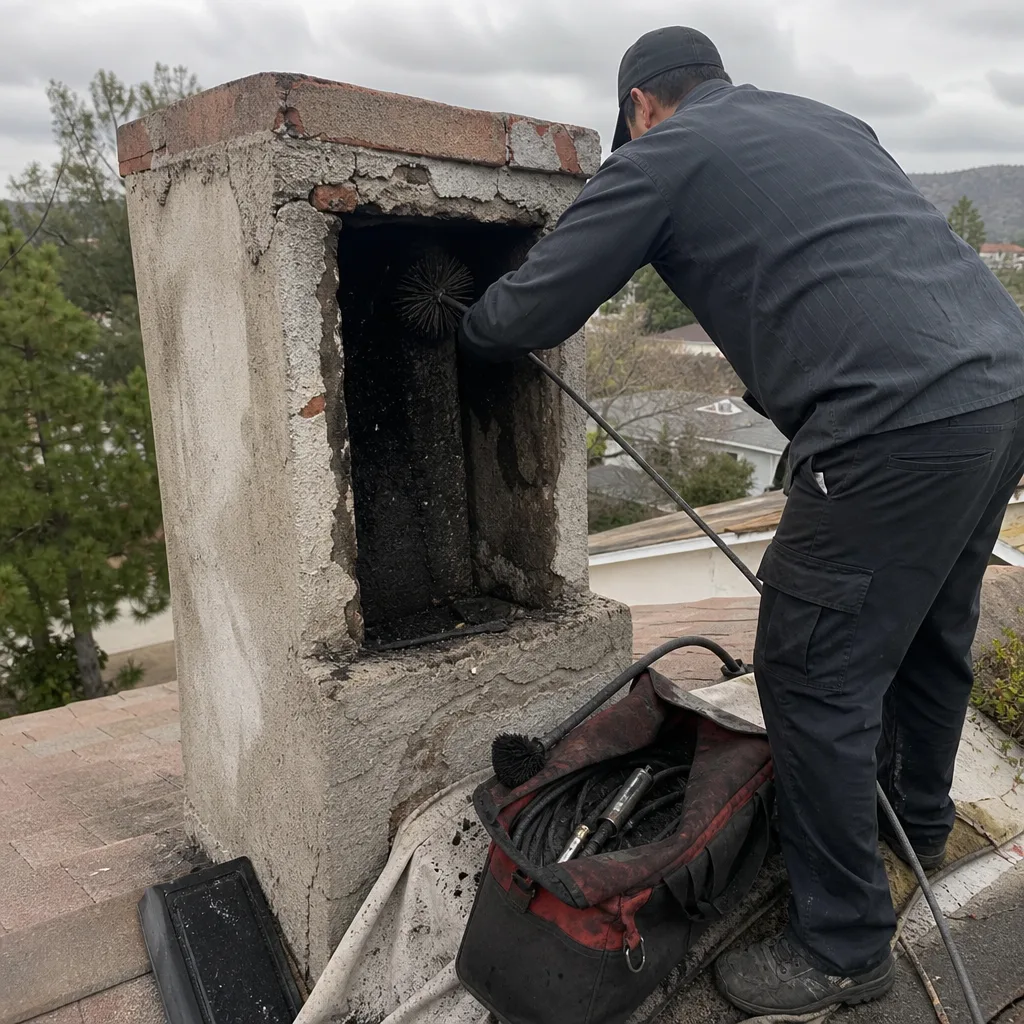
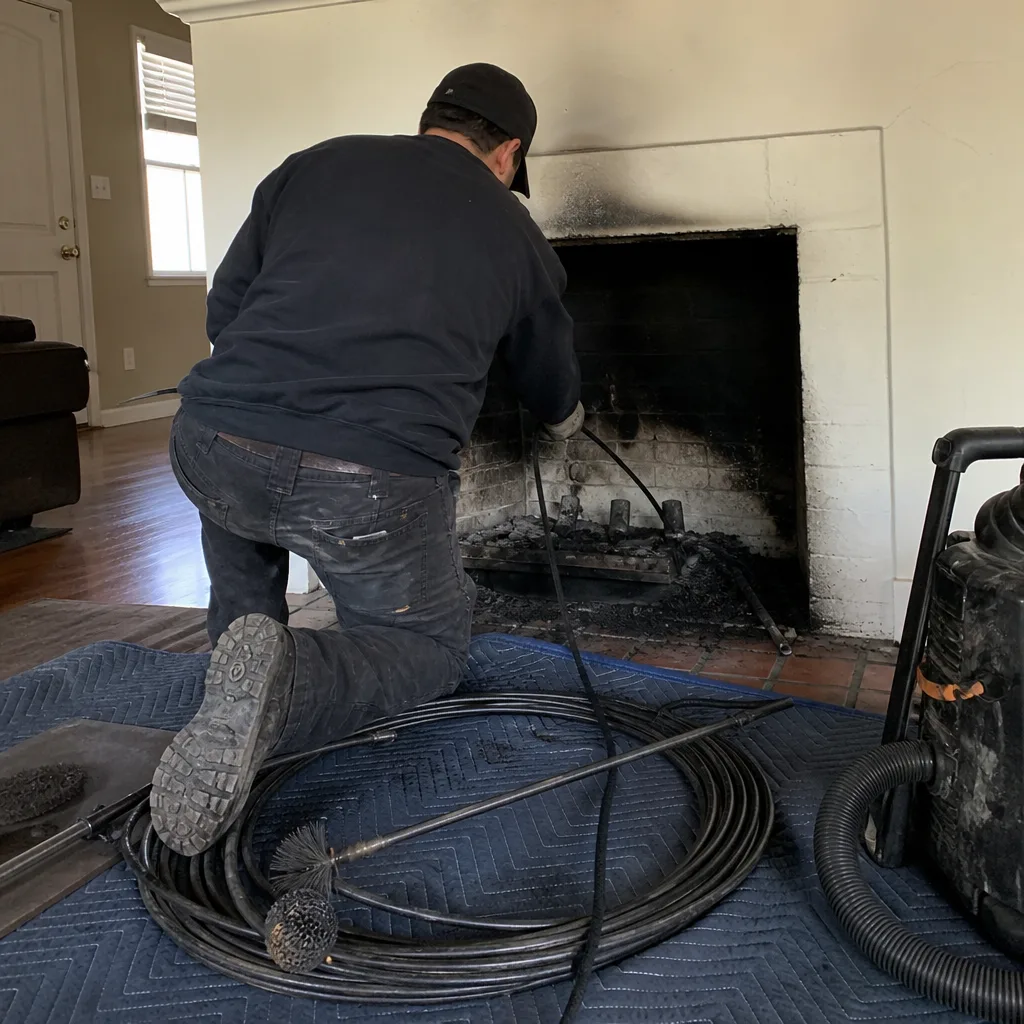
Rotary cleaning systems. A consumer brush kit uses a stiff wire or poly brush on rigid rods. A professional rotary system uses a spinning head driven by a power drill, with flexible rods that follow the contours of offset flues. The spinning action scrubs hardened Stage 2 creosote, the glossy tar-like deposit that a push-pull brush simply slides over. If your chimney has an offset, which is common in Glendale homes with fireplaces on lower floors and chimneys routed through upper stories, a straight rod brush can’t even reach the offset. The rotary system follows it.
Video inspection cameras. After cleaning, a professional runs a high-resolution camera up the full flue length. This produces a visual record of the entire interior: every flue tile joint, every crack, every patch of remaining creosote, every area of spalling. Consumer tools don’t offer this. You cannot see a hairline crack in a clay flue tile from the firebox, and you cannot see it from the roof, either. That crack is where heat and combustion gases escape into the chimney chase. The only way to know it’s there is to film it.
Structured light inspection for liner assessment. This is newer technology that projects a ring of light around the flue interior and measures distortion. It reveals ovalized liners, offset shifts, and cross-sectional deformation that standard video can miss. This level of assessment matters in Glendale specifically because seismic activity over decades can shift masonry chimneys by fractions of an inch, and those shifts show up as liner misalignment. No homeowner tool detects this. Most general handymen don’t have this equipment, either.
When we specify brands like Copperfield for caps and dampers, or HeatShield when a liner shows early-stage deterioration, the recommendation is based on what the camera and structured light revealed. That’s the workflow: inspect, document, then specify. The cleaning is just the first step.
Understanding Creosote Stages and Why Stage 2 Changes Everything
Creosote is the byproduct of incomplete wood combustion. It condenses on the flue walls as smoke cools. It’s a variable material. What forms in your chimney depends on what you burn, how hot the fire gets, and how often you use the fireplace. Understanding the three stages is the key to evaluating what DIY cleaning can and cannot claim to accomplish.
Stage 1: Powdery Soot
This is dry, flaky, dark-brown or black dust. It brushes off easily with a standard chimney brush. If this is all that’s in your flue, a careful homeowner can remove most of it with a consumer brush kit. This stage is typical of homes that burn dry hardwoods at hot temperatures and get regular professional sweeps. In our experience serving Glendale, we see Stage 1 in roughly a third of the chimneys we inspect, mostly in homes that burn less than a cord per season.
Stage 2: Glazed Tar Deposits
Stage 2 is the game-changer. It’s a hard, shiny, tar-like coating that forms when creosote is baked in place by repeated hot fires. It adheres to flue walls and cannot be removed by a push-pull brush. It requires mechanical removal: a rotary loop system, chemical treatment, or both. Attempting to brush Stage 2 yourself accomplishes nothing, and worse, it gives a false sense of security. You’ll think you cleaned the chimney. The fire danger remains fully intact.
Stage 3: Fully Glazed Creosote
This is a thick, hard, glassy layer that can reduce flue diameter significantly and is extremely combustible. Stage 3 is a structural fire hazard. It sometimes requires multiple professional treatments to remove, and in severe cases, a liner replacement or resurfacing. HeatShield resurfacing is designed for situations where creosote removal or moisture damage has compromised the original clay liner. A DIY brush does nothing to Stage 3. Nothing.
Here’s the key point: you cannot identify which stage you have without seeing the flue interior. Creosote high in the flue is not visible from the firebox, and what you can see from the top is limited without a camera. So “I’ll clean it myself” really means “I’ll clean whatever is reachable and assume the rest is fine.” That’s the assumption that leads to chimney fires.
Glendale-Specific Risk Factors: Earthquakes, Old Homes, and Gas Inserts
Glendale has three local conditions that make professional assessment more important than in many other communities. First, seismic activity. The Verdugo Fault runs along the northern edge of Glendale, and the Raymond Fault runs through the southern part of the city. Chimneys are the most vulnerable structural component of any house during an earthquake. Unreinforced masonry chimneys crack, shift, or collapse entirely, and even small shifts can open gaps between flue tiles. A homeowner can’t assess post-earthquake chimney integrity from the ground or the firebox. If your home experienced noticeable shaking in the last few years, the flue interior needs a professional camera inspection before you burn.
Second, Glendale has a large inventory of pre-1960s housing stock. Many of these homes have original masonry chimneys with unlined flues or clay tile liners that have been in service for 60 to 80 years. Clay liners crack from thermal cycling over decades. When they crack, combustion gases and heat reach the surrounding structure. Some of these older homes also have unlined flues, which is a condition that requires a trained assessment: in many cases, a DuraFlex flexible liner installation is the appropriate fix for an unlined or offset flue in an older home. That’s a professional installation. It’s not a conversation that starts with a brush kit from Home Depot.
Third, the number of Glendale homes with gas log inserts is significant. Inserts change the risk profile. It’s a common misconception that gas fireplaces don’t need cleaning. They produce less creosote than wood, but they still produce combustion byproducts, and an insert in a wood-burning firebox creates flow dynamics that can accelerate soot accumulation. We also see a specific failure pattern in Glendale: homeowners who think their gas insert means they never need chimney service, skip inspections for years, and then discover that the chimneys above the inserts have deteriorated from neglect, moisture, or pre-existing creosote that was never removed before the insert was installed. A professional Chimney Sweep in Glendale evaluates the entire system, not just the firebox you can see.
California Insurance and Liability: What DIY Means on Paper
Let’s talk about the part nobody discusses: what happens with your insurance company if a chimney fire occurs and there’s no professional inspection or cleaning on record. California homeowners insurance policies typically cover chimney fires. But adjusters look for evidence of maintenance. If you cleaned the chimney yourself, the question becomes: what documentation exists that the chimney was safe before the fire?
A professional sweep produces a dated inspection report. In many cases, the report includes video or photographic documentation of the flue’s condition before and after cleaning. That’s a maintenance record that demonstrates due diligence. If the chimney was found to have defects, the report recommends repairs, and the homeowner can show they acted on those recommendations, the liability picture is completely different.
A homeowner who cleans their own chimney has none of this. The insurance claim proceeds anyway in most cases, but the process is slower, more adversarial, and may result in a lower settlement if the adjuster can argue that lack of professional maintenance contributed to the severity of the fire. This is not about skill. It’s about documentation. The question isn’t “can you clean a chimney?” It’s “what can you prove about the condition of your chimney before the fire?”
There’s also the matter of seller disclosure. California law requires sellers to disclose known material defects. If you’re selling a Glendale home and your chimney has never been professionally inspected, you’re disclosing from a position of ignorance. Buyers are increasingly requesting chimney inspection reports as part of the due diligence process. A clean professional inspection record is a genuine asset at sale time.
The Three-Question Decision Framework
Here’s a practical decision tool. Answer these three questions honestly, and you’ll know whether DIY maintenance is reasonable for your Glendale chimney this season or whether professional service is warranted.
- When was the last professional inspection with video documentation? If the answer is “never” or “more than two years ago,” you’re operating without baseline data. DIY cleaning without knowing the actual flue condition is maintenance by guesswork. Get a professional inspection first. After that, you’ll know whether your chimney is a candidate for DIY ash removal between professional sweeps, or whether there are defects that need professional attention.
- What do you actually burn, and how much? If you burn a cord or more of wood per season, or you burn unseasoned wood, pine, or construction scraps, you’re generating creosote at a rate that makes annual professional cleaning necessary. DIY brushing won’t keep up. If you burn occasionally and only dry hardwoods, and you’ve had a professional inspection within the last two years, DIY ash removal and accessible soot brushing between professional visits is reasonable. The exception: gas log inserts, which change the equation even with light use. Professional inspection applies regardless of usage frequency.
- Has the house experienced any seismic activity, leaks, or visible masonry changes since the last inspection? Earthquake shaking, roof leaks around the chimney flashing, spalling brick, efflorescence on the exterior masonry, or a damp smell inside the firebox after rain are all indicators of possible structural compromise. None of these are things you can assess yourself with any reliability. If any of these apply, professional assessment comes first.
If you answered “never” to question one, “a cord or more” to question two, or “yes” to any part of question three, DIY maintenance should not be on your schedule this season. Call a professional. The cleaning is the entry point. The inspection is the value.
Cost Comparison: DIY vs Professional in Glendale
The DIY toolkit is seductive because it looks cheap at the entry point. A basic chimney brush kit with rods, a shop vacuum attachment, and safety gear runs $60 to $150. Here’s what that buys you, and here’s what it doesn’t.
Typical DIY Investment
- Basic brush kit with fiberglass rods: $40 – $80
- HEPA filter for shop vacuum: $30 – $50
- N95 mask, eye protection, gloves: $20 – $40
- Total: $90 – $170 (reusable for multiple years)
Typical Professional Sweep and Inspection in Glendale
- Standard chimney sweep with inspection: $180 – $300 depending on flue height, accessibility, and creosote stage
- Video inspection add-on: Often included with full-service sweeps; $75 – $150 when billed separately
- Stage 2 creosote removal (rotary treatment): $250 – $400 when heavy buildup is present
- Dryer vent cleaning (separate service): $100 – $180; see our Dryer Vent Cleaning in Glendale page for details
Here’s the comparison that actually matters: $150 in DIY equipment can give you a false sense of security about a chimney that still has dangerous creosote buildup or liner damage. $250 for a professional sweep with camera inspection tells you exactly what’s in your flue, what state the liner is in, and whether anything needs repair. One is an expense with no verification. The other is a diagnostic procedure with a documented result.
If the professional inspection reveals that the system is clean and sound, you know that DIY ash removal between annual professional sweeps is safe for your specific chimney. If it reveals defects, you’ve caught them before they become fires or carbon monoxide exposure. Either way, you’ve bought information, not just labor. That’s the difference.
Common Mistakes to Avoid
- Assuming a clean firebox means a clean flue. The firebox is the combustion chamber. The flue is where creosote condenses. These are different parts of the system with different conditions. A spotless firebox tells you nothing about the condition of the flue 20 feet above it. You cannot see the flue from the firebox. That’s why cameras exist.
- Burning a “chimney cleaning log” and calling it done. Chemical logs sold at hardware stores can loosen some Stage 1 soot, but they don’t remove it. They also don’t remove Stage 2 or Stage 3 creosote, and they don’t inspect anything. They create a false sense of maintenance. In our experience in Glendale, homes that rely on chemical logs are among the ones that most need professional attention when we finally see them.
- Cleaning from the roof without proper equipment. Working at height requires fall protection, proper ladder setup, and ideally a second person. A fall from even a single-story roof in Glendale can cause permanent injury. Professional sweeps clean most chimneys from the bottom up using rotary equipment. If you’re picturing yourself standing on the roof with a brush, you’re picturing the old method.
- Ignoring the dryer vent because “this is about the fireplace.” Dryer vents and chimney flues share one thing: they both carry combustion byproducts. Lint buildup in dryer vents is a documented house-fire hazard. Many Glendale homeowners handle the chimney and forget the dryer vent for years. A full venting-safety plan covers both. The Glendale Chimney Sweep home approach is full venting safety under one service roof.
- Waiting until the burning season starts to schedule an inspection. Fall is the busiest season for chimney professionals everywhere. If you schedule in late summer, you get faster service, more scheduling flexibility, and you’re ready before the first cold night. Waiting until November in Glendale means you’re competing with every other wood-burning household for the same service windows.
- Treating a gas log insert as a no-maintenance appliance. Gas inserts still produce combustion byproducts. They also hide the condition of the flue behind and above them. If you have a gas insert that’s been in service for more than two years without a professional look at the full venting path, you’re flying blind. We see this pattern regularly in Glendale homes with 1980s and 1990s inserts.
- Assuming the chimney has a liner at all. Many older Glendale homes were built with masonry chimneys that have no clay tile liner or whose original liner has fully deteriorated. If you don’t know whether your chimney is lined, you don’t know whether it’s safe to operate. A professional inspection answers this definitively in under an hour.
When to Call a Professional
Call a professional chimney sweep in Glendale if any of these apply: you can’t remember the last professional inspection; you’ve burned more than a cord of wood since the last cleaning; you notice smoke backing into the room, a strong odor from the firebox, or visible creosote flakes falling into the fireplace; your home experienced earthquake shaking; your chimney shows spalling brick, efflorescence, or crown damage; you’re buying or selling a home; or you have a gas insert that’s never been professionally evaluated. If you’re anywhere in this list, don’t burn until the system has been assessed. Glendale Chimney Sweep offers free estimates in Glendale, and the inspection report gives you a documented baseline for future maintenance decisions. Call (833) 467-6493.
Frequently Asked Questions
A standard chimney sweep with inspection in Glendale typically runs $180 to $300, with additional cost for Stage 2 creosote removal or video inspection if those services aren’t already included. Your exact price depends on flue height, roof accessibility, and the condition of the chimney. Call (833) 467-6493 for a free estimate specific to your house.
Removing ash from the firebox and brushing the accessible lower flue is safe when done with a HEPA vacuum, proper mask, and cool ashes, but it is not a substitute for professional cleaning and inspection. The dangerous conditions in a chimney are the ones you can’t see or reach from the firebox. Professional evaluation is the only way to verify that the system is actually safe to operate.
The National Fire Protection Association standard says chimneys should be inspected at least once per year and cleaned when creosote accumulation reaches 1/8 inch or more. For Glendale homeowners who burn a cord or more of wood per season, annual professional cleaning is the minimum. Lighter users can sometimes extend to two years if a professional inspection confirms low creosote levels.
Yes. Gas fireplaces produce combustion byproducts and can accumulate deposits in the flue, and the insert hides the condition of the chimney behind it. A gas insert that’s never been professionally evaluated is a maintenance blind spot. Professional inspection applies to gas systems as much as wood-burning ones.
A professional inspection uses video cameras and sometimes structured light to document the full flue interior, revealing cracked clay tiles, hidden creosote stages, unlined flues, damaged smoke chambers, and offset shifts that are invisible from the firebox or roof. The inspection produces a dated report with documentation, which matters for insurance and resale purposes.
Glendale Chimney Sweep handles both. The company offers chimney sweeping, full chimney repair, and dryer vent cleaning. Repair capabilities include HeatShield flue resurfacing for deteriorated clay liners and DuraFlex flexible liner installations for offset or unlined flues. One call covers inspection, cleaning, and repair recommendations with a single documented workstream.
The Bottom Line
DIY chimney maintenance has a legitimate place in Glendale homes, but its place is narrow: firebox ash removal and accessible soot brushing between professional inspections, not a replacement for them. The equipment gap is real and it is not closable with consumer tools. Without a camera in the flue, you’re guessing. Without a dated inspection report, you’re exposed on documentation if something goes wrong. A professional sweep costs less than the deductible on a chimney fire claim and delivers what no brush kit can: verifiable information about the system that protects your house. If you’ve been maintaining your own chimney or haven’t had it looked at in years, the highest-value move this season is a professional inspection. Call (833) 467-6493 for a free estimate in Glendale.
Written by the team at Glendale Chimney Sweep, serving Glendale since 2011.
See the difference
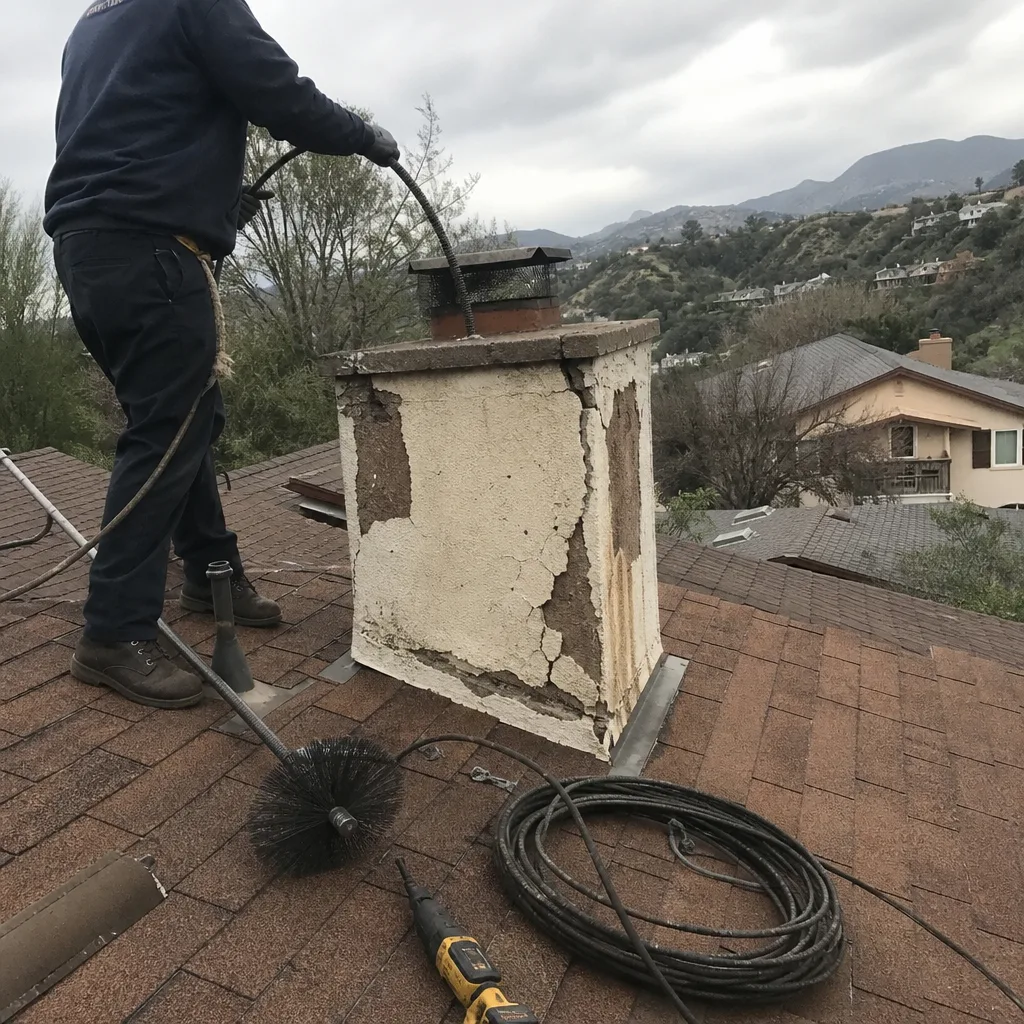 Before
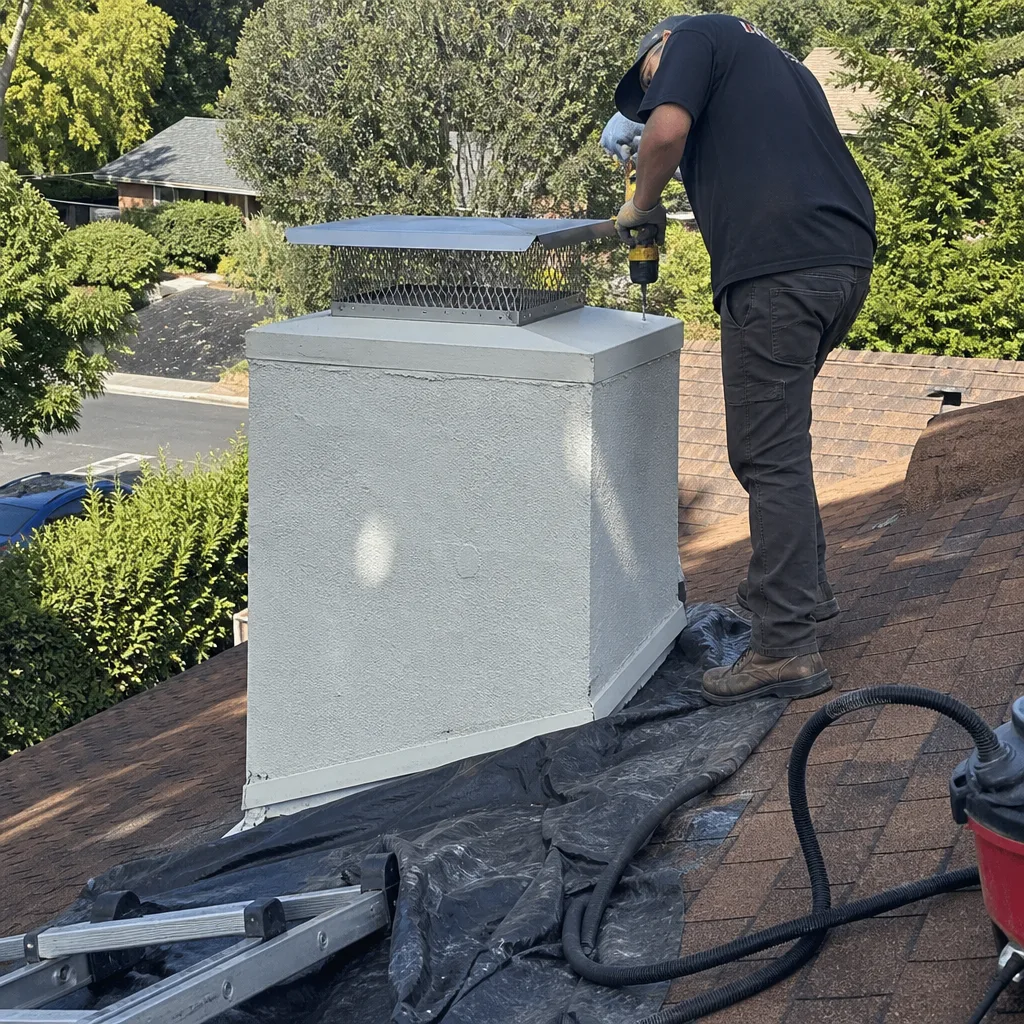 After
 Before
 After
 Before
 After