Last updated October 30, 2026
 Sweep & inspection
 Caps & crowns
 Flue relining
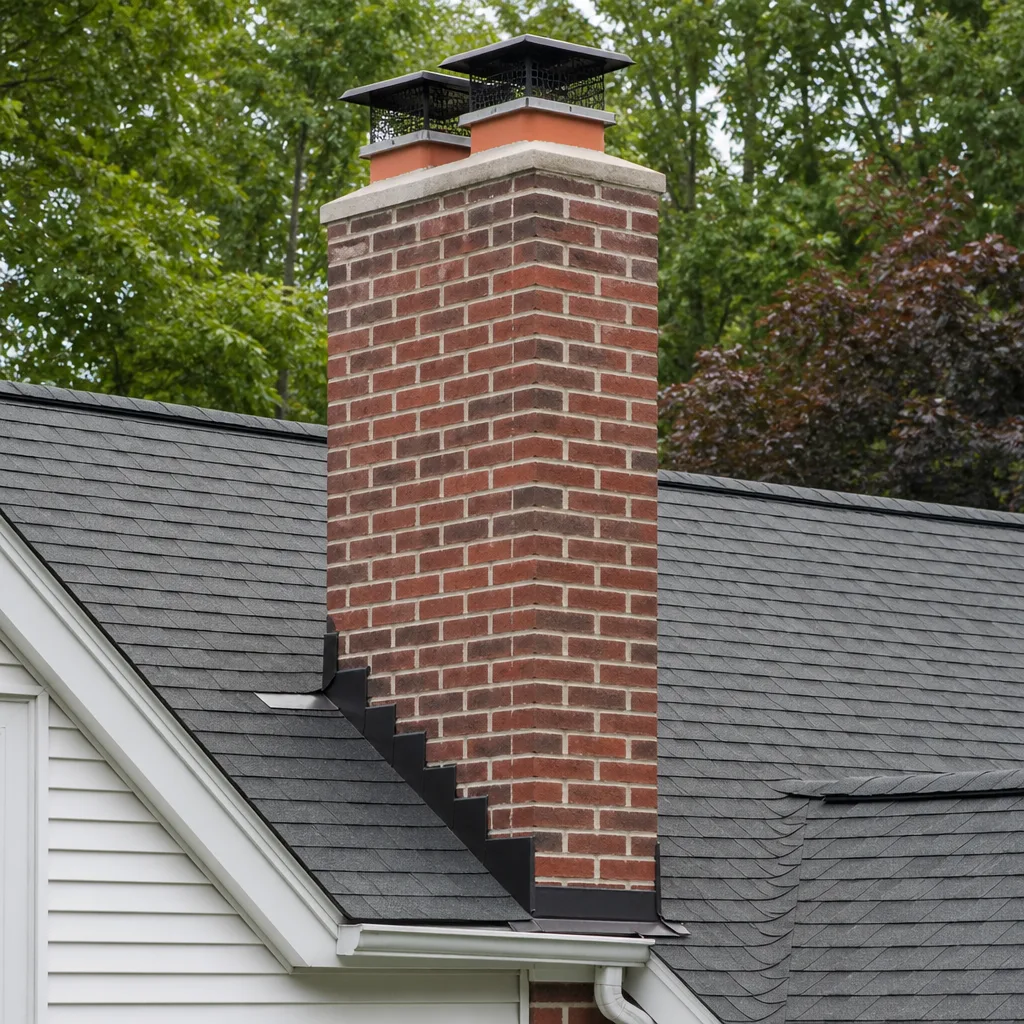 Masonry repair
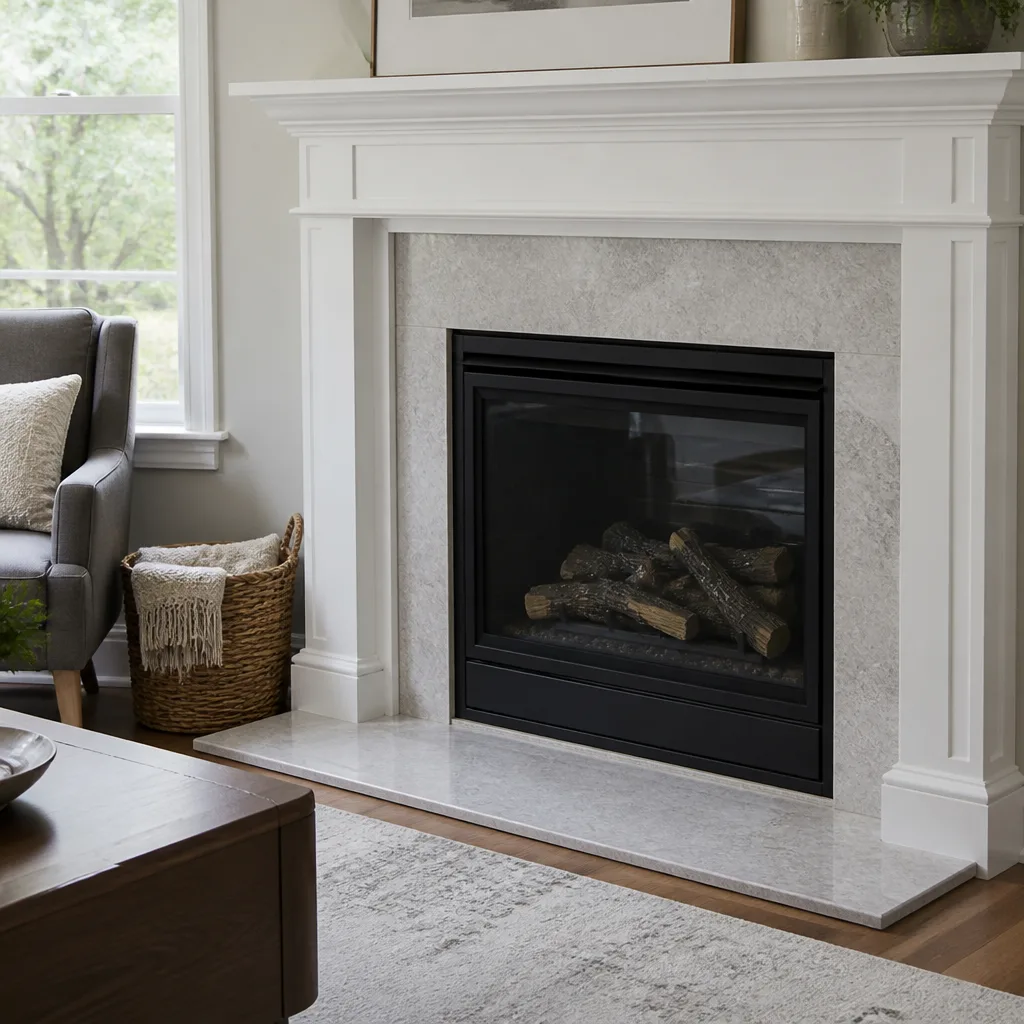 Gas fireplace service
Level 1 sweep and inspection to the NFPA 211 annual standard - flue, crown, cap, and flashing checked and photographed
Chimney sweep logs do not sweep chimneys. They loosen some creosote - which then falls where a brush and vacuum still have to collect it.
Chimney Cleaning Permits, Codes & Inspections in CA: What You Need to Know
A chimney relining job done without a permit in Los Angeles County can legally require the new owner to tear it out and redo the whole thing at time of sale. That’s not a scare tactic. It’s written into the California Residential Code and it catches buyers, sellers, and contractors off guard every single year. In this guide we’ll walk through exactly where the line sits between routine maintenance (no permit) and repair work that triggers a permit, how Glendale’s local enforcement adds another layer, what inspectors actually look at, and how to protect yourself whether you’re maintaining a fireplace, buying a house, or filing an insurance claim after an earthquake.
Styles & brands we work with
Quick Answer
Routine chimney sweeping and visual inspections do not require a permit anywhere in California. However, structural repairs, liner replacements, firebox rebuilding, and any alteration to the chimney’s construction typically do require a permit under the California Residential Code, and in Glendale that permit runs through the Community Development Department. If you’re not sure which category your job falls into, call the building department before work starts or work with a contractor who can document that the work was maintenance, not alteration.
Table of Contents
- The Permit vs. Maintenance Line Under California Residential Code
- When Glendale Specifically Requires a Permit
- CSIA Level 2 Inspections: What Insurers and Escrow Officers Need
- Why Uncredentialed Contractors Can Fail Escrow Inspections
- How to Pull Records on Prior Chimney Work Before You Buy
- High Fire Hazard Severity Zones: Extra Code Layers
- Common Mistakes to Avoid
- When to Call a Professional
- Frequently Asked Questions
- The Bottom Line
The Permit vs. Maintenance Line Under California Residential Code
The California Residential Code (CRC) draws a functional distinction between work that maintains an existing system and work that alters, repairs, or replaces part of the structure. Here’s the plain-language version: sweeping a chimney, brushing creosote off the flue walls, and conducting a visual inspection are maintenance. No permit, no plan check, no inspection record. But the moment you remove a damper, cut out a section of clay liner, pour a new crown, rebuild a firebox, or install a stainless liner, you’ve crossed into alteration territory. That triggers a permit in most jurisdictions, including Glendale.
Let’s make this concrete with examples we see all the time in our Chimney Sweep in Glendale work:
- No permit needed: Removing soot and creosote buildup from the flue with brushes and a vacuum. This is cleaning. It restores function without changing structure.
- No permit needed: A Level 1 or Level 2 video inspection with a written report. Nothing is modified; you’re documenting condition.
- Permit triggered: Replacing a cracked clay flue liner, even if you’re swapping one clay tile for another. You’re modifying the load-bearing chimney system.
- Permit triggered: Installing a DuraFlex stainless flexible liner. This is a retrofit alteration, not maintenance, even though it often solves the problem faster and with less demolition than a full rebuild.
- Permit triggered: Paraphrasing concrete firebox panels, rebuilding the smoke shelf, or reconstructing the chimney crown.
- Gray zone – ask first: HeatShield resurfacing. This is a flue-restoration system applied inside the existing liner. Some California jurisdictions classify it as repair and want a permit; others treat it as an interior resurfacing within the existing flue and don’t. In Glendale, we advise confirming with the Community Development Department before scheduling HeatShield work if you’re worried about permit exposure.
The mistake homeowners make is assuming a chimney sweep who offers repairs will automatically know the permit threshold. Some do. Many don’t. And the liability for unpermitted work lands on the property owner, not the contractor who did it.
When Glendale Specifically Requires a Permit
Glendale operates its own building department through the Community Development Department, and it enforces the California Residential Code locally rather than deferring to county or state enforcement. That means the city has its own interpretation about which chimney jobs need paperwork, and the interpretation leans stricter than some neighboring cities.
In practice, Glendale requires a building permit for any of the following chimney-related work:
- Chimney rebuilding – any demolition and reconstruction of the structure above the roofline, including the crown and cap area.
- Firebox repair that involves cutting out and replacing masonry – patching hairline cracks with refractory mortar is generally considered maintenance, but removing and resetting firebrick panels crosses the line.
- New flue liner installation – whether it’s a rigid stainless system or a flexible DuraFlex liner pulled through an offset flue.
- Chimney relocation or structural modification – changing the footprint, height, or path of the chimney.
What does not require a Glendale permit: chimney sweeping, video inspection, dryer vent cleaning, smoke test, and minor refractory mortar touch-ups that don’t involve removing masonry units.
One thing we’ve noticed working in Glendale for years: the city is responsive when you call. The permit counter staff will tell you plainly whether your job needs a permit, and they’ll often give you the CRC section number so you can read it yourself. That’s a smarter first step than asking a contractor who may have a financial interest in telling you no permit is needed so the job closes faster.
If you’re having other venting work done, like Dryer Vent Cleaning in Glendale, that’s a maintenance service with no permit implications. It only becomes a code question if the vent run itself is being rerouted or replaced, which is a different scope of work.
CSIA Level 2 Inspections: What Insurers and Escrow Officers Need
The Chimney Safety Institute of America (CSIA) defines three inspection levels. Here’s what matters for California homeowners:
Level 1 is a visual check of the readily accessible parts of the chimney. You’re confirming basic condition when nothing has changed: fuel type, appliance, liner, and clearances are all the same as before. Most annual chimney checks are Level 1.
Level 2 adds video scanning of the entire flue interior, plus inspection of the attic, crawlspace, and other accessible areas around the chimney. This is what gets triggered when you sell a property, when you change fuel type or appliance, or after an earthquake, chimney fire, or weather event that may have damaged the flue.
Level 3 involves opening up walls or the chimney structure itself. It’s invasive and rare, usually reserved for cases where Level 2 raised a serious concern that can’t be resolved any other way.
For insurance purposes, a CSIA Level 2 inspection report is the document that matters. Here’s why. After an earthquake in Southern California, insurers routinely ask for a documented chimney inspection before paying out on damage claims tied to masonry or flue deterioration. If a homeowner files a claim for chimney damage but has no inspection report showing the chimney was sound before the event, the carrier often denies coverage on the grounds that the damage predated the incident. A dated Level 2 report with video documentation closes that gap.
The same thing happens at escrow. Buyers’ inspectors flag chimney concerns, sellers produce a receipt for a recent “chimney cleaning” that proves nothing about structural condition, and the deal stalls. A Level 2 report that says the flue was scanned, here are the images, here’s what we found, here’s what we recommend – that’s what moves the transaction forward.
Glendale specifically sits in a seismic zone where Level 2 inspections after any significant quake are smart practice. We recommend homeowners in the area keep their Level 2 reports on file the same way they’d keep a roof inspection report. It’s the chimney equivalent of documented maintenance.
Why Uncredentialed Contractors Can Fail Escrow Inspections
Here’s the uncomfortable truth: work can be technically correct and still fail to satisfy code compliance during an escrow inspection. That happens more often than people realize, and it usually traces back to one of three contractor problems.
Problem one: no permit record exists. The contractor did the work correctly, but nobody pulled a permit. When the buyer’s inspector checks city records in Glendale and finds no permit history for the chimney repair visible on the exterior, the question becomes whether the work was actually done to code. It doesn’t matter that it might have been. There’s no paper trail proving it.
Problem two: the contractor wasn’t licensed for the work performed. California requires a C-29 (masonry) or C-61/D-40 (limited specialty, service and equipment) license depending on the scope. If a handyman with no license does a liner replacement, the work technically violates contractor licensing law, which can void certain insurance protections and complicate a future sale.
Problem three: no material documentation. This is where the generic “quality materials” problem bites. If a liner was installed, the invoice should say what liner: manufacturer, model, gauge, listing. An escrow inspector who sees a receipt for “chimney repair, $2,800” without material specs can’t verify anything. When we do a Chimney Repair in Glendale, the documentation names what went in: the specific liner system (like DuraFlex or Copperfield), the insulation kit, the connector, the crown, whatever applies. That’s not marketing language. It’s the paper trail an escrow officer can verify.
The takeaway for homeowners: before you hire anyone for chimney work that might be repair rather than maintenance, ask three questions. Will you pull a permit if one is required? Are you licensed for this scope in California? Will the invoice specify exactly which materials and manufacturer systems were installed? A contractor who hesitates on any of those is telling you something.
How to Pull Records on Prior Chimney Work Before You Buy
If you’re buying a home in Glendale or anywhere in California, you can check the permit history on the property before you close. Here’s the step-by-step process.
- Get the Assessor’s Parcel Number (APN). It’s on the listing paperwork, the tax bill, or you can look it up on the county assessor’s website. In Los Angeles County, the Assessor’s office has an online tool for this.
- Go to the Glendale Community Development Department’s online permit portal. If the property is in Glendale, the city maintains its own permit database separate from LA County. If the property is elsewhere in California, check that city’s building department website.
- Search by APN or street address. This pulls up all recorded permits: building, electrical, plumbing, mechanical. Look for anything referencing chimney, fireplace, flue, or masonry.
- Cross-reference with the seller’s disclosure package. California law requires sellers to disclose known material facts about the property. If the seller mentions chimney repairs but no permit shows in the database, that’s a red flag to raise with your agent.
- Ask for the Level 2 inspection report. If the sellers had the chimney inspected in the last five years, the report should be in the disclosure package. If it’s not, request it. If it doesn’t exist, order one yourself. The cost of a Level 2 inspection is trivial compared to a $15,000 unpermitted liner replacement you inherit at close.
One specific warning for older Glendale homes: many houses built in the 1920s through 1950s had their chimneys modified or “repaired” during the 1970s and 1980s, before the city’s digital permit records. A lot of that work was never permitted because enforcement was looser then. If you’re buying a home from that era and the chimney looks newer than the house, assume there’s unpermitted work until proven otherwise. It doesn’t mean you shouldn’t buy the property. It means you should know what you’re buying.
High Fire Hazard Severity Zones: Extra Code Layers
Parts of Glendale sit in or near High Fire Hazard Severity Zones (HFHSZ), which adds a layer of complication to chimney work. The California Fire Code and the CRC both have provisions about chimney construction in fire-prone areas, and they mostly come down to three things:
- Spark arrestor requirements. In HFHSZ areas, chimneys serving solid-fuel appliances must have an approved spark arrestor at the top. If your chimney needs a crown replacement or any work that touches the top of the flue, the spark arrestor question comes up.
- Clearances. The distance between a chimney and combustible materials (roof framing, eaves, adjacent walls) is prescribed in the code and gets tighter in high-hazard zones. An older home in the Verdugo foothills may not meet current clearance requirements, which means any permitted repair triggers a requirement to bring the whole assembly up to current standard.
- Liner condition. In fire hazard areas, a cracked or spalled liner is not just an efficiency problem. It’s a safety issue that local fire inspectors flag during defensible-space reviews. A chimney with a compromised liner can be written up as a correction item.
What this means practically: if you live in the Glendale foothills, the line between “routine cleaning” and “permitted repair” matters more for you than for someone in a flat area. That’s because fire inspectors, not just building inspectors, can require documentation of your chimney’s condition. We’ve talked to homeowners in the Chevy Chase and Verdugo Woodlands neighborhoods who got letter from the fire department after a defensible-space inspection asking for proof of chimney maintenance. Having your sweep and inspection records on file makes that conversation less stressful.
Speaking of fire safety: dryer vent cleaning, which we also handle through our dryer vent cleaning service, falls under the same broad umbrella. The US Fire Administration identifies clogged dryer vents as a leading cause of home dryer fires. It’s not a code issue the way chimney repair is, but it’s a documented fire risk that homeowners in high-hazard zones should take seriously.
Common Mistakes to Avoid
- Assuming all chimney work is maintenance. Cleaning and sweeping need no permit. Liner replacement, firebox rebuilding, and crown reconstruction usually do. The distinction is in the California Residential Code, and guessing wrong is how owners end up with unpermitted work on their property record.
- Taking the contractor’s word on permits without verifying. The contractor won’t be the one explaining an unpermitted liner to a buyer’s inspector in five years. Call the Glendale Community Development Department and confirm what’s required before the work starts.
- Keeping receipts instead of material documentation. A receipt that says “chimney repair” proves you paid someone. An invoice that lists the specific liner manufacturer and model plus the permit number proves the work was done correctly. Those are different documents with different value at escrow.
- Skipping the Level 2 inspection after an earthquake. Southern California shakes. A Level 1 visual check doesn’t see inside the flue. If you felt it strongly enough to check your water heater strapping, you should probably get the chimney scoped too.
- Not pulling records before buying. The time to discover unpermitted chimney work is during escrow, not after you own the house and the city cites you for something the previous owner did 15 years ago.
- Confusing a sweep with a repair. A chimney sweep is a maintenance professional. A chimney repair contractor is a masonry and liner specialist. Some companies do both, some don’t. We do both at Glendale Chimney Sweep home, but we clarify which scope applies to each job before work begins.
- Waiting until a sale is pending to fix known issues. If your chimney has a cracked liner and you’re thinking about selling next year, fix it now. You’ll have time to pull the permit, get the inspection, and have clean documentation ready for disclosure. Fixing it under escrow deadline pressure costs more and raises buyer suspicion.
When to Call a Professional
Call a chimney professional when you see spalling brick or deteriorating mortar on the chimney exterior, when you smell smoke in the house after the fire has been lit for an hour, when your Level 2 inspection shows a cracked or separated liner, or when you’re buying a home and the disclosure package contains no chimney inspection report. These are not DIY situations, and with high-tension components, gas appliance venting, and structural masonry involved, amateur repairs create risks that far outweigh the cost of hiring someone who does this work daily. Glendale Chimney Sweep offers free estimates in Glendale, and we’ll tell you plainly whether the work you need is a maintenance call or a permitted repair. Call (833) 467-6493.
Frequently Asked Questions
No. Routine chimney sweeping and creosote removal is classified as maintenance under the California Residential Code and does not require a permit anywhere in the state, including Glendale. Permits come into play when the work changes, repairs, or replaces part of the chimney structure, such as a liner, firebox, or crown.
A standard chimney sweep in Glendale typically runs between $150 and $300 depending on the level of creosote buildup, the roofline access, and whether a video inspection is added. A full Level 2 inspection with video scanning usually adds $100 to $200. Call (833) 467-6493 for an exact quote, estimates are free and we’ll tell you what’s included before you commit.
Yes, in nearly all California jurisdictions, installing a new flue liner, whether clay tile or a flexible stainless system like DuraFlex, is a repair that requires a building permit. Some areas have specific interpretations for HeatShield resurfacing, which is why we recommend confirming with the Glendale Community Development Department before scheduling that specific work.
The National Fire Protection Association (NFPA 211) says chimneys serving wood-burning fireplaces should be inspected at least once a year and cleaned when creosote accumulation reaches 1/8 inch or more. In practice, most Glendale homeowners who burn wood regularly during winter need one cleaning per year. Occasional gas-log users can stretch that to every 2 to 3 years.
Creosote builds up on the flue walls over time. It’s flammable, and once it ignites, it burns hot enough to crack clay liners, warp metal liners, and potentially spread fire to the surrounding roof structure. A chimney fire may not be visible from outside the house, a video inspection afterward is the only way to confirm what damage occurred. Call (833) 467-6493 if you’re unsure when your chimney was last cleaned.
It depends on the cause and your documentation. Sudden damage from an earthquake, chimney fire, or falling tree is typically covered, but insurers often deny claims for deterioration they classify as maintenance neglect. This is why keeping a dated Level 2 inspection report with video documentation matters: it proves the chimney was in good condition before the damaging event.
No, California code does not mandate a specific dryer vent cleaning schedule for homeowners, but the state fire code and the manufacturer installation standards both require that dryer exhaust ducts be maintained in safe working condition. Clogged vents are a leading cause of dryer fires, and cleaning them regularly is the practical way to meet that obligation. We handle that as part of our dryer vent cleaning service.
The Bottom Line
The clean-versus-repair line in California is the difference between a maintenance service with no paperwork and a permitted structural alteration with a paper trail that follows the property. Cleaning, sweeping, and inspection: no permit, ever. Liner replacement, firebox rebuild, crown reconstruction: permit required in Glendale, and unpermitted work becomes a liability at sale and in insurance claims. Protect yourself by pulling permit records before you buy, getting a Level 2 inspection on file, working with contractors who document materials and scope, and confirming permit requirements directly with the city before repair work begins. The homeowners who avoid five-figure escrow surprises are the ones who treat their chimney paperwork as seriously as their roofline.
Written by the team at Glendale Chimney Sweep, serving Glendale since 2011.
See the difference
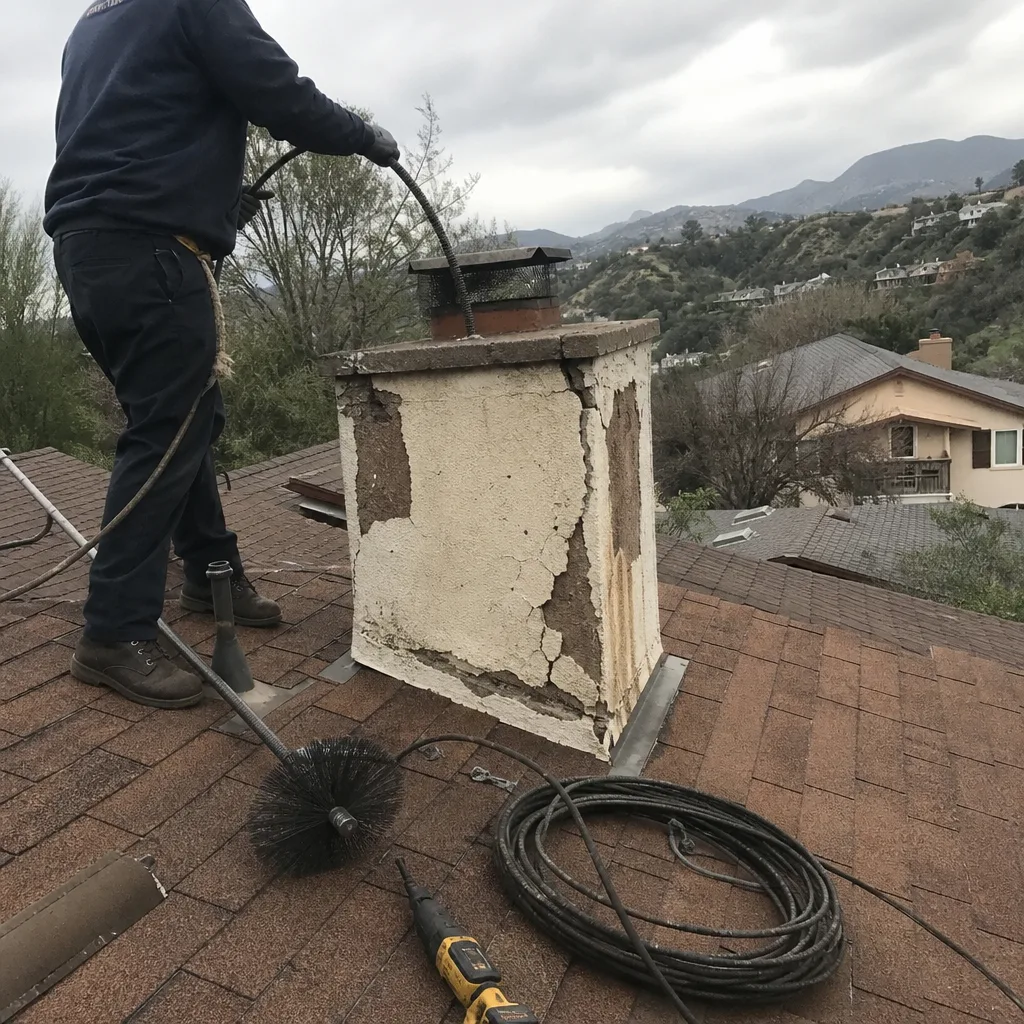 Before
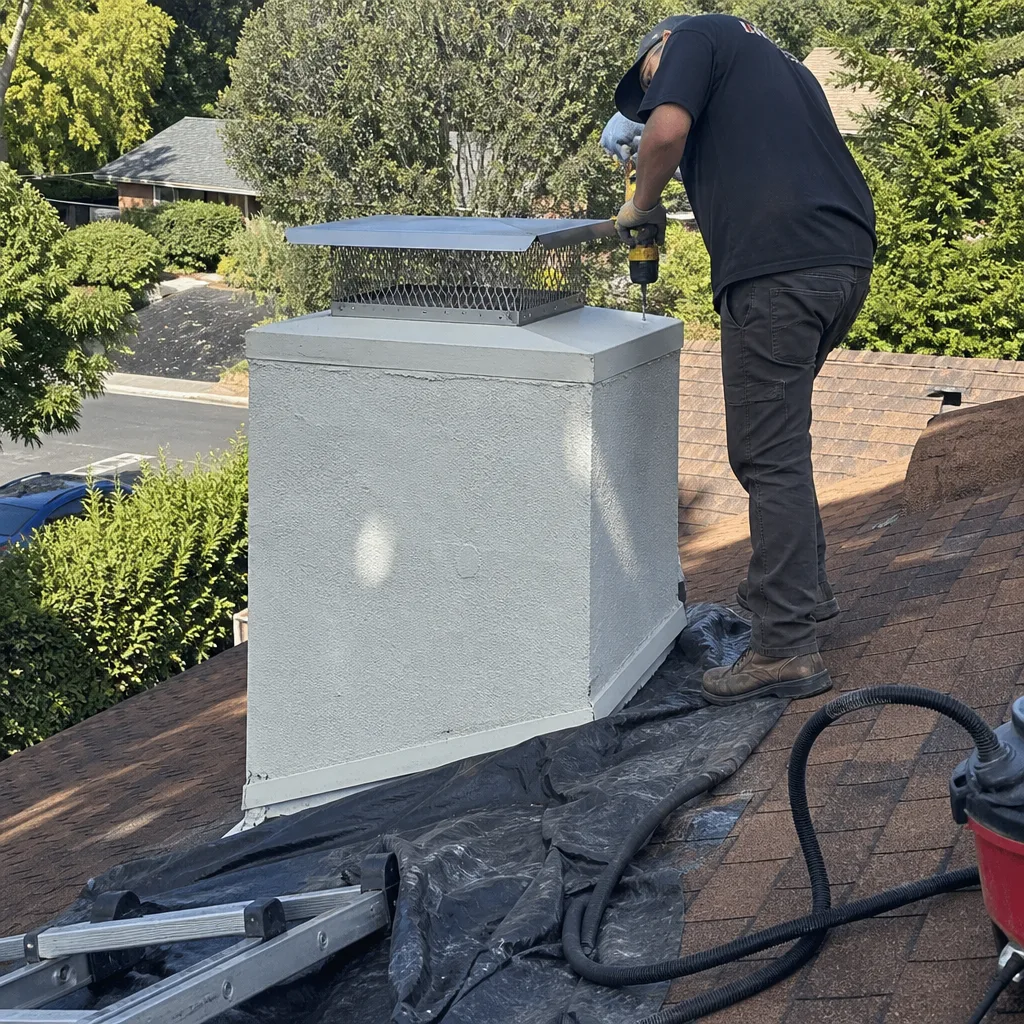 After
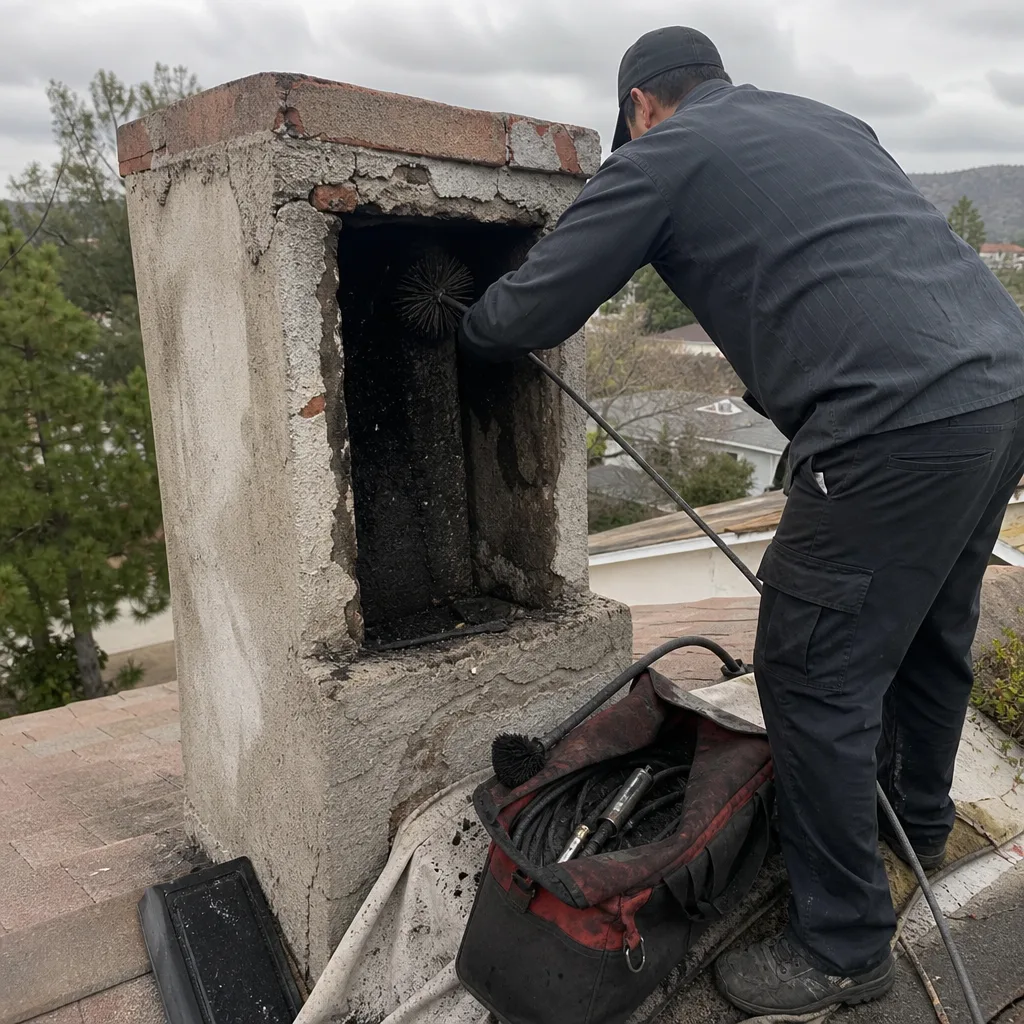 Before
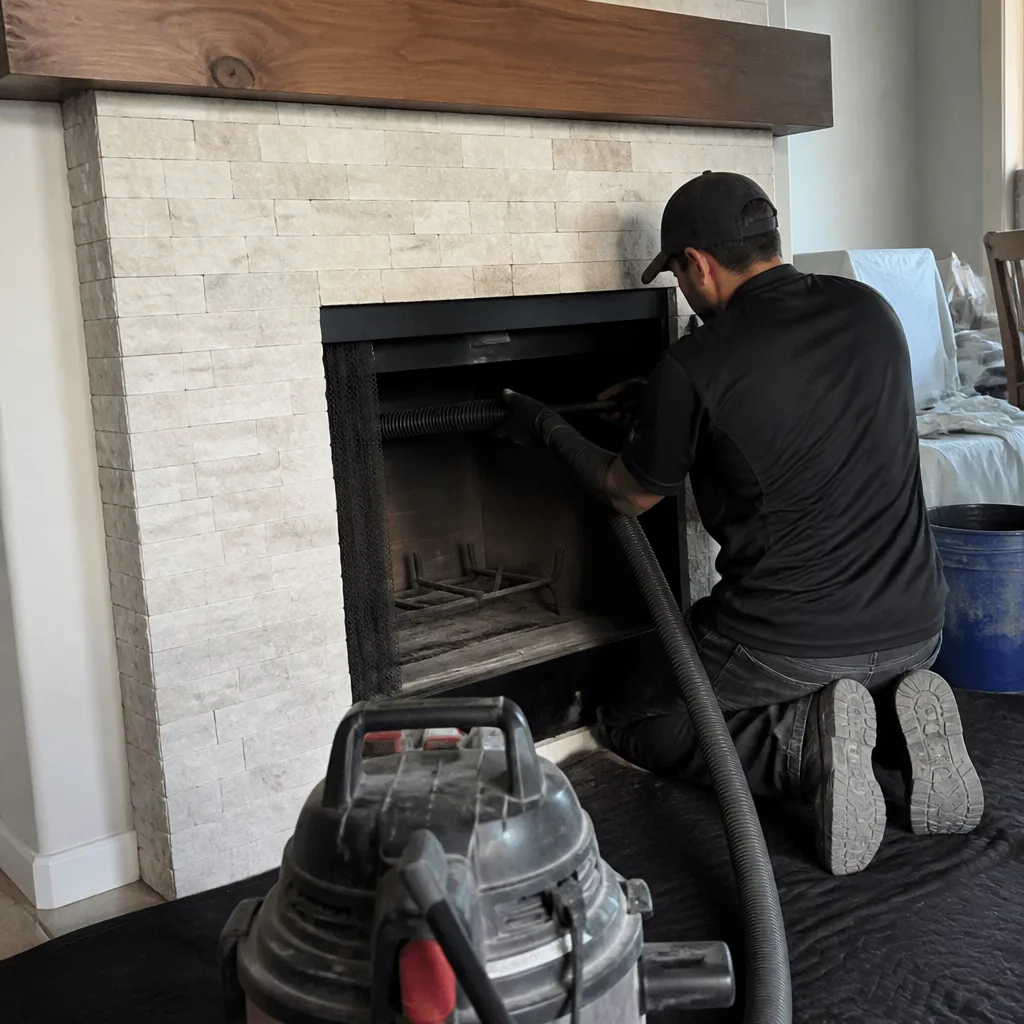 After
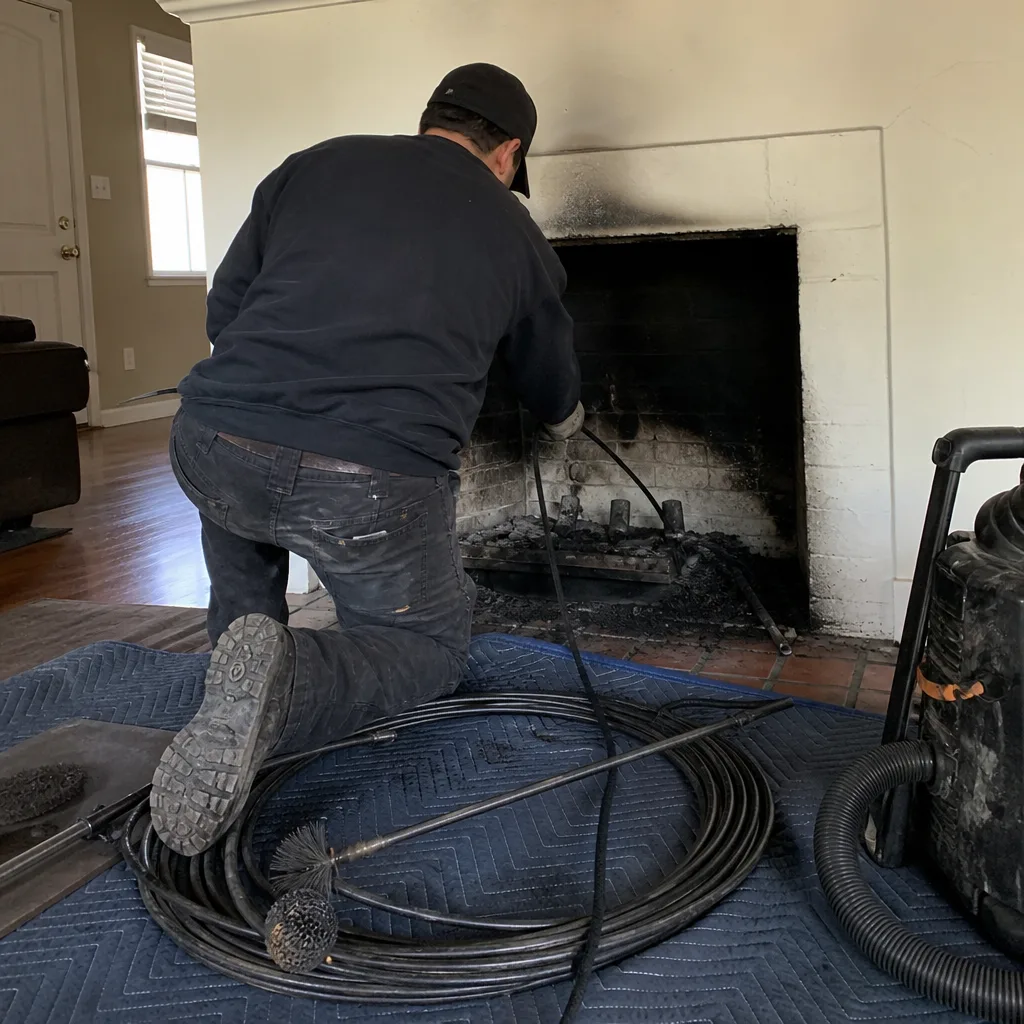 Before
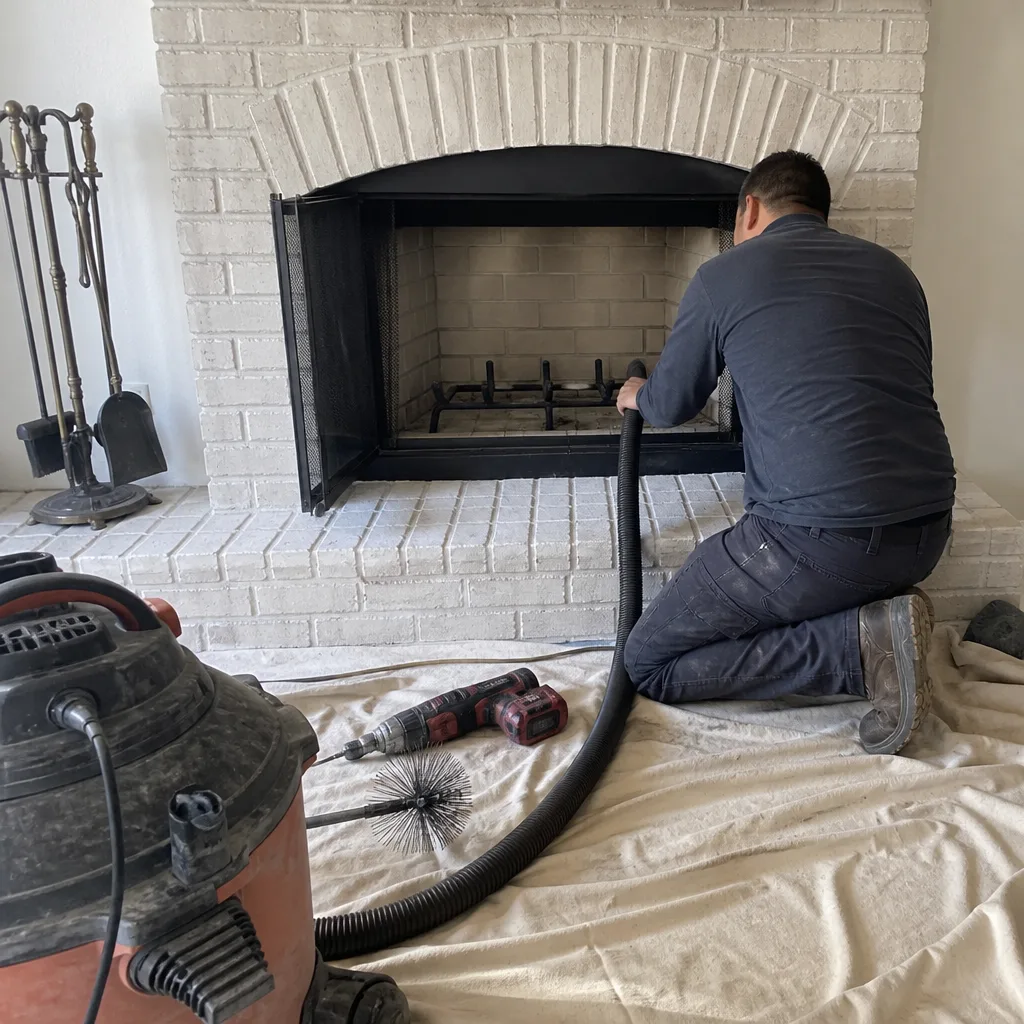 After